





Mario Balotelli's career marked by controversy and talent on the pitch since 2007
The Italian footballer has played for 13 clubs across six countries, including Manchester City and Inter Milan.
Italian footballer Mario Balotelli's career has been marked by controversy as much as it has by talent on the pitch.
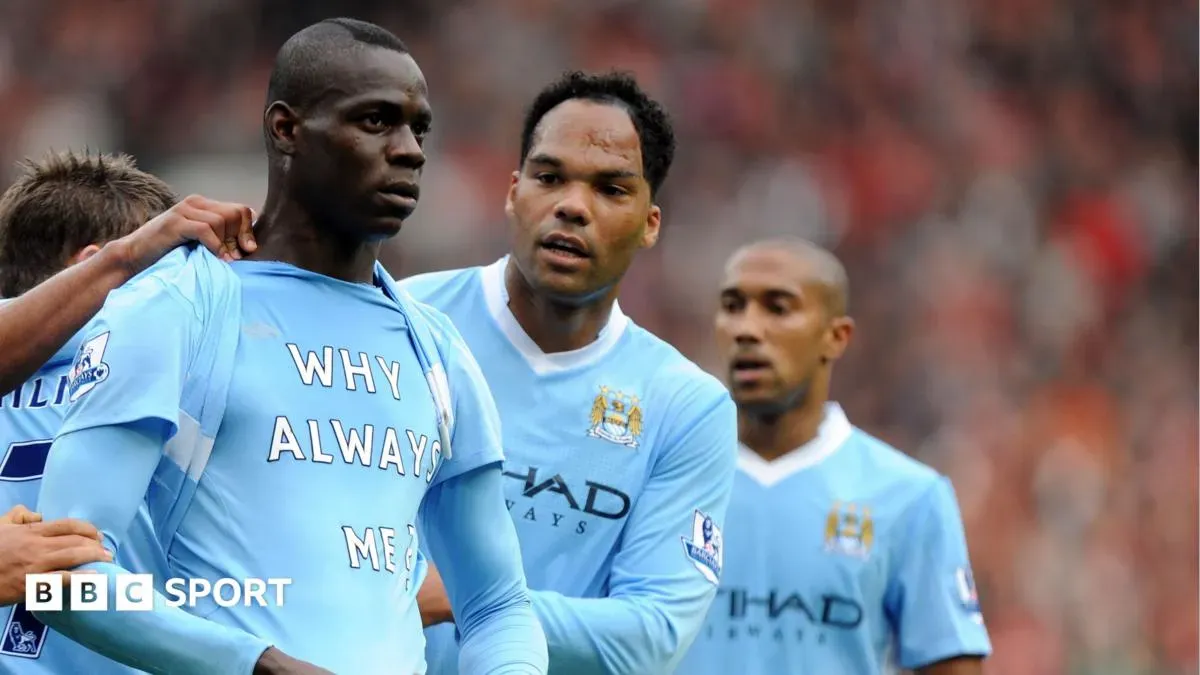
Fifteen years have passed since he caused a stir in Manchester when he wore a 'Why always me?' T-shirt to celebrate his team's win over Manchester United, just days after a firework exploded in his bathroom, causing a house fire.
At 36, Balotelli is still playing professionally, now with Al-Ittifaq in the UAE first division. His career has taken him to 13 different clubs across six countries, where he has made a name for himself as one of football's most unpredictable players.
A key aspect of his unconventional upbringing was that it did not involve training at an elite club's academy from a young age. Instead, by the time he was in his mid-teens, Balotelli was playing for Italian third-tier side Lumezzane, near his family home in Concesio.
Balotelli's early career took him to Barcelona on trial, but it was Inter Milan that eventually signed him up in 2006. It was at Inter that he met the coach who would become a mentor and father figure - Roberto Mancini.
Under Mancini's guidance, Balotelli flourished as a player, helping Inter win the Serie A title in 2007-08 when he was just 17 years old. He also scored twice against Juventus to send his side through to the Coppa Italia semi-finals that year.
The arrival of Jose Mourinho at Inter would change things for Balotelli, however. The Italian coach and the player had a fractious relationship, with Mourinho describing Balotelli's attitude as "unmanageable at one point, and criticizing one performance as being close to zero.
Balotelli joined Manchester City in August 2010, reuniting with his mentor Mancini at a crucial juncture of his career.
Mancini's strategy was to capitalize on Balotelli's immense talent by finding ways to channel it towards the team's benefit, which was not possible under Mourinho.
By spring 2011, Balotelli had established himself as one of England's most exciting footballers, but also someone who struggled with controversy and discipline issues.
His antics included being sent off twice for City and getting involved in a car crash, although this time it wasn't in his infamous camouflage Bentley, but an Audi R8.
The striker further demonstrated his immaturity when he threw a dart at a youth-team player, showing that despite his exceptional skills on the pitch, he still had much to learn about discipline.
Balotelli's impressive performances for City culminated with helping them win the FA Cup in 2011, ending their 35-year major trophy drought, but he soon found himself under scrutiny again during a pre-season friendly against LA Galaxy.
During this match, Balotelli attempted an audacious backheel trick shot when through on goal, prompting Mancini to swiftly hook him from the game.
The notoriety surrounding Balotelli's personal life made his antics seem plausible, even if he denied them.
His supposed love of luxury and carefree attitude were often referenced in chants by Manchester City fans. The irony was not lost on them when they noted his grass allergy that forced him to sit out a Europa League match in 2011. This quirk was just one aspect of the eccentric persona he cultivated.
A season-defining moment seemed within reach for Balotelli, but it nearly slipped through his fingers. His red card against Arsenal in April 2012 raised concerns about his impact on Manchester City's title bid.
Balotelli did manage to redeem himself a month later with an assist in the match against Queens Park Rangers that gave Manchester City their first Premier League title. This was the only time he contributed to a goal for his team that season, despite being known as a creative force on the pitch.
Team-mate Micah Richards has fond memories of Balotelli's presence around the squad. He described him as crazy in a good way, but also praised his skills and contributions on the field. According to Richards, Balotelli was not arrogant and was just a bit eccentric.
The nonsense" that often surrounded Balotelli made one wonder if it was worth the moments of brilliance he displayed. He was known for pushing boundaries both on and off the pitch.
Despite expressing patience with his player, Manchester City manager Mancini eventually had to re-evaluate their relationship. The final straw came when they argued at the training ground in January 2013, after which Balotelli left for AC Milan later that month.
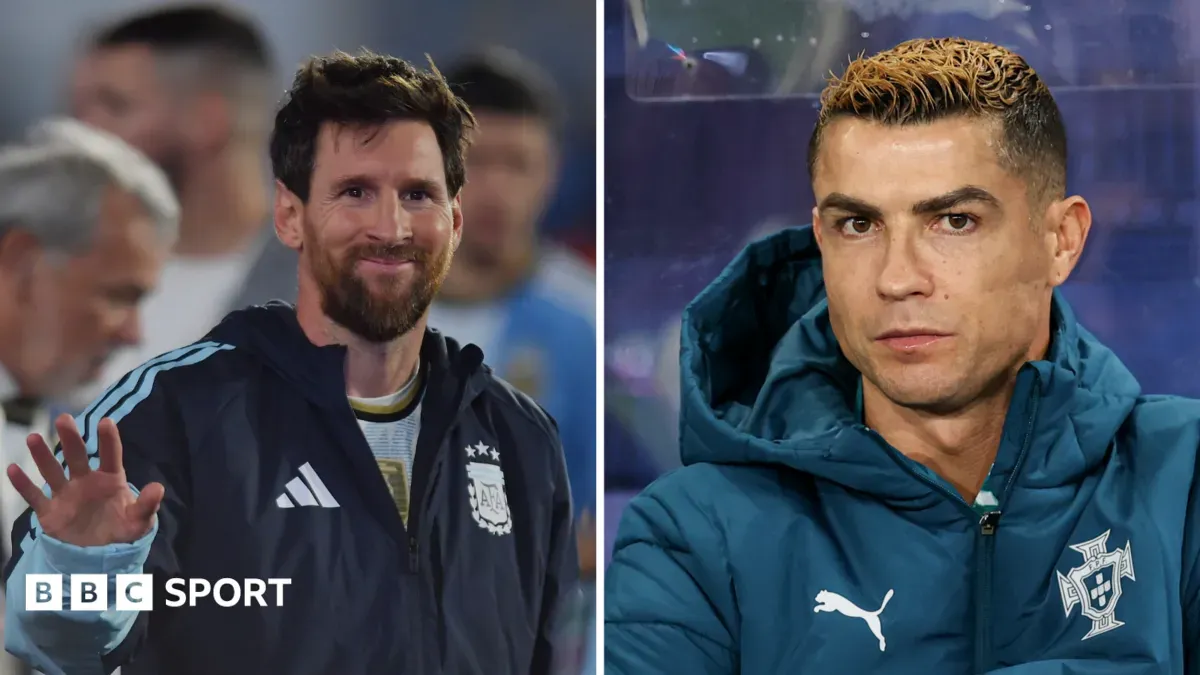
The memory of that training ground conversation still lingers for some who witnessed it. A discussion about Lionel Messi and Cristiano Ronaldo had been ongoing when Mario Balotelli chimed in, making a bold claim that he was on par with the two superstars. The seriousness behind his statement was unmistakable, sparking both amusement and curiosity among those present.
The trajectory of Balotelli's career has been marked by moments of brilliance, but also periods of disappointment. Despite not quite reaching the same level as Messi or Ronaldo, he has still managed to achieve more than many players can even dream of. His determination and work ethic have been key factors in his success.
Euro 2012 remains a defining moment in Balotelli's international career, where he made history by becoming the first black player to feature for Italy at a major tournament. He played a crucial role as Italy reached the final, scoring three goals along the way. The image of him flexing his muscles after scoring against Germany still resonates with fans.
However, that tournament proved to be the peak of Balotelli's international career. Italy's national team began to decline, and so did his club career. By 2015, he had largely fallen out of favor with the Azzurri. Despite enjoying some memorable moments in an Italy shirt, the love was not always mutual.
Before Euro 2012, Balotelli faced a significant challenge: racist abuse from fans and players alike. He threatened to walk off the pitch if subjected to such treatment, highlighting the difficulties he had faced throughout his career. The vitriol he experienced at Inter is just one example of the racism that has followed him.
Born Mario Barwuah in Palermo to Ghanaian parents, Balotelli was placed into foster care at a young age. This early life experience would shape his future and influence his determination to succeed on the pitch. Despite facing numerous challenges, he continued to work towards achieving his goals.
Balotelli's refusal to tolerate racist abuse is commendable, given the extent of the problem he has faced throughout his career. His courage in speaking out about these issues has raised awareness and sparked important conversations.
Balotelli's early life was marked by regular transitions between his foster and biological families in Brescia, Italy.
He spent weekdays with Silvia and Francesco Balotelli, before returning to his birth parents on weekends, eventually becoming a full-time foster child and adopting the Balotelli surname.
The Italian-Ghanaian player has often struggled to reconcile his love for both nations, particularly when faced with verbal abuse from fans who targeted his Ghanaian heritage.
Balotelli's international career has been marred by inconsistency, with 36 caps and 14 goals accumulated since 2018 nowhere near the heights he had initially aspired to.
Former teammate Onuoha praised Balotelli's drive and ambition, noting that playing for Italy was always a top priority for him.
Italian coach Mancini once predicted that Balotelli could become one of the world's best players while in Serie A, but this potential has largely gone unrealized.
Balotelli's return to AC Milan in 2013 was initially successful, with a string of goals scored at the San Siro before he made a surprise move back to the Premier League just over a year later.
As Balotelli's career winds down, he has found a new sense of purpose in playing for his brother's team in the UAE.
The question on everyone's mind is what could have been if he had stayed in Manchester and fully realized his potential, but it's also easy to understand why he's opted for a simpler approach now.
Onuoha notes that playing with a family member will bring Balotelli immense happiness, and at this stage in his life, who can argue against him finding joy in the game?
The fact is, many people have come to accept that Balotelli will never meet expectations, but it's refreshing to see him prioritize his own happiness over external pressures.
For now, it seems that Balotelli has found a way to end his career on a positive note, doing exactly what he wants and sharing the experience with someone close.
Facts based on reporting originally published by BBC Sport.
You may republish this story, in full or in part, if you credit Noti Group and link to it (licence CC BY 4.0). Photos are not included.