






E-cadherin's Role in Cellular Removal Explored
Researchers have discovered a new role for E-cadherin in removing dead cells from tissues.
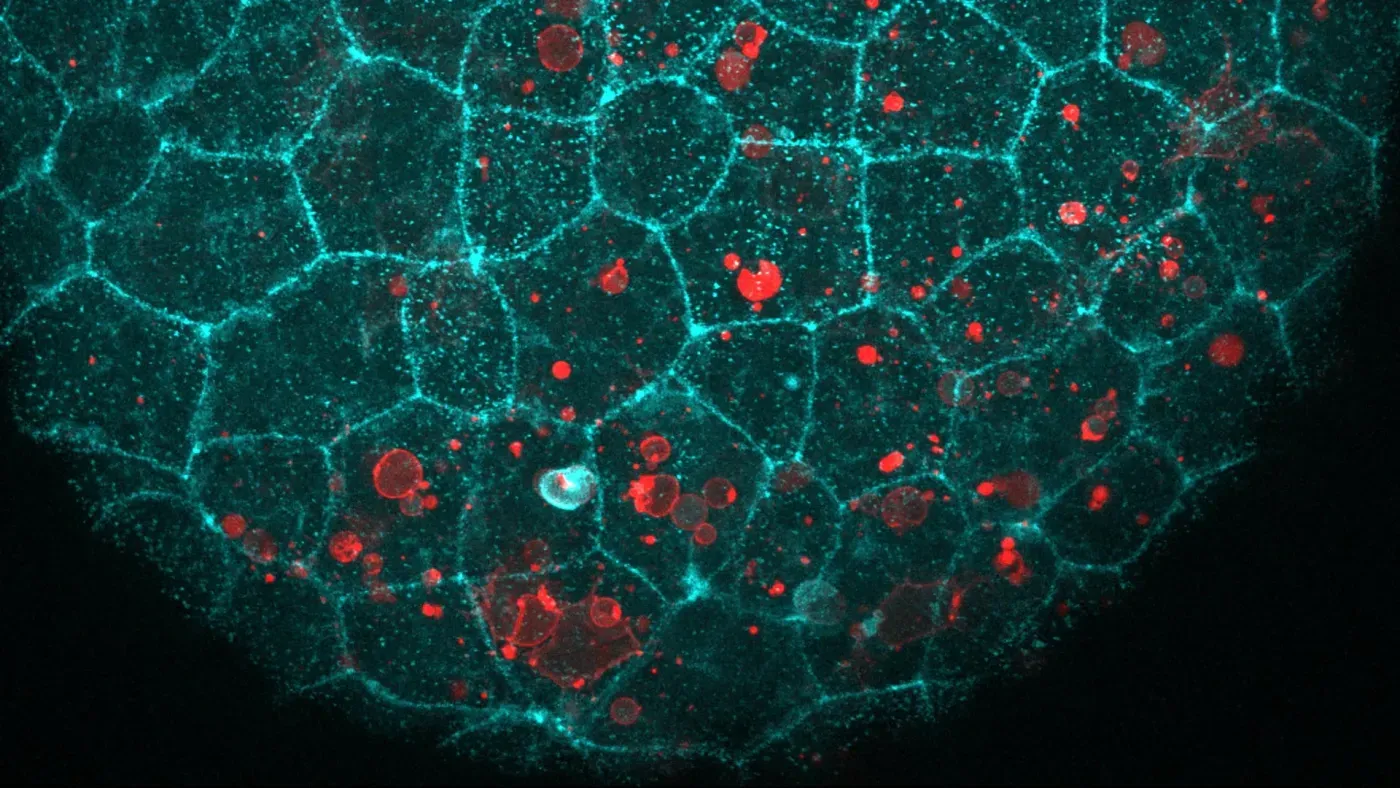
A newly discovered role has been found for E-cadherin, a protein that helps maintain cell connections in tissues throughout the body. This protein is also involved in removing dead cells from epithelial layers, which are crucial for preventing chronic inflammation.
The connection between E-cadherin and cellular removal was made through research on the protein's molecular complex, which includes three additional proteins. In tissues such as skin, gut, and airways, this complex gives structural strength to epithelial cells by connecting them with neighboring cells via E-cadherin molecules.
E-cadherin is a crucial component of the molecular machinery that maintains tissue integrity in areas like the skin, gut, and airways. Researchers have found that the same machinery also gathers at the site where dying cells meet the tissue.
To investigate this further, scientists led by Verena Ruprecht studied epithelial tissues in living zebrafish and mouse embryos to see how E-cadherin interacts with dying cells. They discovered that the molecular complex forms at the exact location where a dying cell comes into contact with the tissue.
The researchers designed two experiments to determine whether E-cadherin's role is specific to connecting epithelial cells or if it also plays a part in removing dead cells. In one experiment, they presented tissues with dying cells stripped of E-cadherin and found that the cells were still removed effectively.
In another test, scientists introduced artificial droplets containing signals similar to those displayed on the surface of dying cells but devoid of any protein content. These droplets were also engulfed by epithelial cells, indicating a broader role for E-cadherin in cellular removal.
Epithelial cells have long been known to play a crucial role in forming barriers that separate internal organs from the external environment. However, these cells also possess an unusual ability - they can consume dead or dying cells without compromising their own barrier function.
Research has shown that when epithelial cells encounter a dead cell, they use their molecular adhesion machinery to engulf it. This process is made possible by the unique behavior of the cells' surfaces. Live imaging revealed that while one surface of an epithelial cell undergoes significant deformation during the engulfment process, the opposite surface remains relatively unchanged.
The upper surface of the epithelial cell, which faces the outside environment or open spaces like lumens, maintains its integrity throughout the process. Measurements taken before, during, and after engulfment indicated that this surface changed very little in area. In contrast, the lower surface underwent substantial deformation as it stretched and bent around the dead cell.
The researchers likened this behavior to a row of dancers standing with their arms linked, where the upper bodies remain steady while the feet perform increasingly complicated movements when a dying cell appears. This comparison highlights the unique choreography that epithelial cells employ to maintain their barrier function while consuming dead or dying cells.
Further investigation into this phenomenon is necessary to fully understand its implications for tissue health and disease. The study's findings have shed light on an intriguing aspect of cellular biology, revealing new details about the complex interactions between epithelial cells and their environment.
The team delved deeper into the mechanics behind cellular cleanup by analyzing the forces involved in engulfing dead cells. One key protein within the E-cadherin complex acts as a molecular tether, linking the assembly to the cell's internal skeleton and allowing for the transmission of forces across the surface.
This tethering function is crucial, as without it, cells struggle to swallow dead cells. When this protein or its attachment site is missing, cells are unable to perform their cleanup duties effectively. The absence of this molecular connection severely hampers the cellular process.
Another component within the E-cadherin complex functions more like a regulatory brake on the cell's contractile machinery. Unexpectedly, removing this brake does not improve the efficiency of cellular cleanup. Instead, it causes the cells to become overly rigid and lose their ability to properly remove dying cells.
The researchers then sought to determine if this mechanism is exclusive to zebrafish or shared among vertebrates. Studies on early mouse embryos revealed that blocking E-cadherin leads to a buildup of uncleared dead cells, mirroring the results seen in zebrafish.
This finding supports the notion that the cellular cleanup process is an innate immune defense mechanism present from the earliest stages of development. The transparent nature of embryos allows researchers to observe these events with unprecedented detail, shedding new light on the intricate interactions between epithelial cells and their environment.
The discovery of E-cadherin's role in removing dying cells from embryos has sparked curiosity about its potential function in adult tissues. Researchers are now investigating whether this mechanism is also at play in zebrafish, mice, and humans.
There are several reasons to believe that E-cadherin-dependent cleanup could be a widespread process. For one, epithelial tissues in adults have already been shown to eliminate dying cells from various locations, including the retina, colon, airways, and mammary gland. Moreover, E-cadherin is present throughout these tissues and has remained structurally similar across different species.
The medical implications of this potential mechanism are significant. When dead cells linger in tissues, they can eventually rupture and release their contents, contributing to chronic inflammation. This process can lead to a range of health problems, making efficient cleanup crucial for maintaining tissue integrity.
To facilitate effective removal of dying cells, it appears that cells must not only receive the correct chemical signals but also be physically capable of changing shape, applying force, and wrapping around dead material without compromising themselves or surrounding tissues.
The study's findings underscore the importance of understanding how dying cells are removed from tissues for human health. This knowledge could potentially lead to new insights into various diseases characterized by chronic inflammation.
Funding for the research came from several organizations, including the Spanish Ministry of Science and Innovation, the Human Frontier Science Program, and the European Union's Horizon Europe program, with additional support from the European Social Fund.
Research has revealed that cells in the body are held together by an unexpected mechanism, one that not only provides structural support but also plays a crucial role in cellular communication.
This "glue" is known as hyaluronic acid, and it has been found to have a surprising second job: facilitating cellular interactions. The discovery sheds new light on the complex mechanisms governing cell-to-cell adhesion and highlights the importance of this process in maintaining tissue integrity and function.
Facts based on reporting originally published by ScienceDaily Health.
You may republish this story, in full or in part, if you credit Noti Group and link to it (licence CC BY 4.0). Photos are not included.