Ireland Team Refuses Handshakes with Israeli Counterparts Before Match
A 1-1 draw between Ireland and Israel occurred on Sunday, with Ireland's team continuing their protest against Israel.
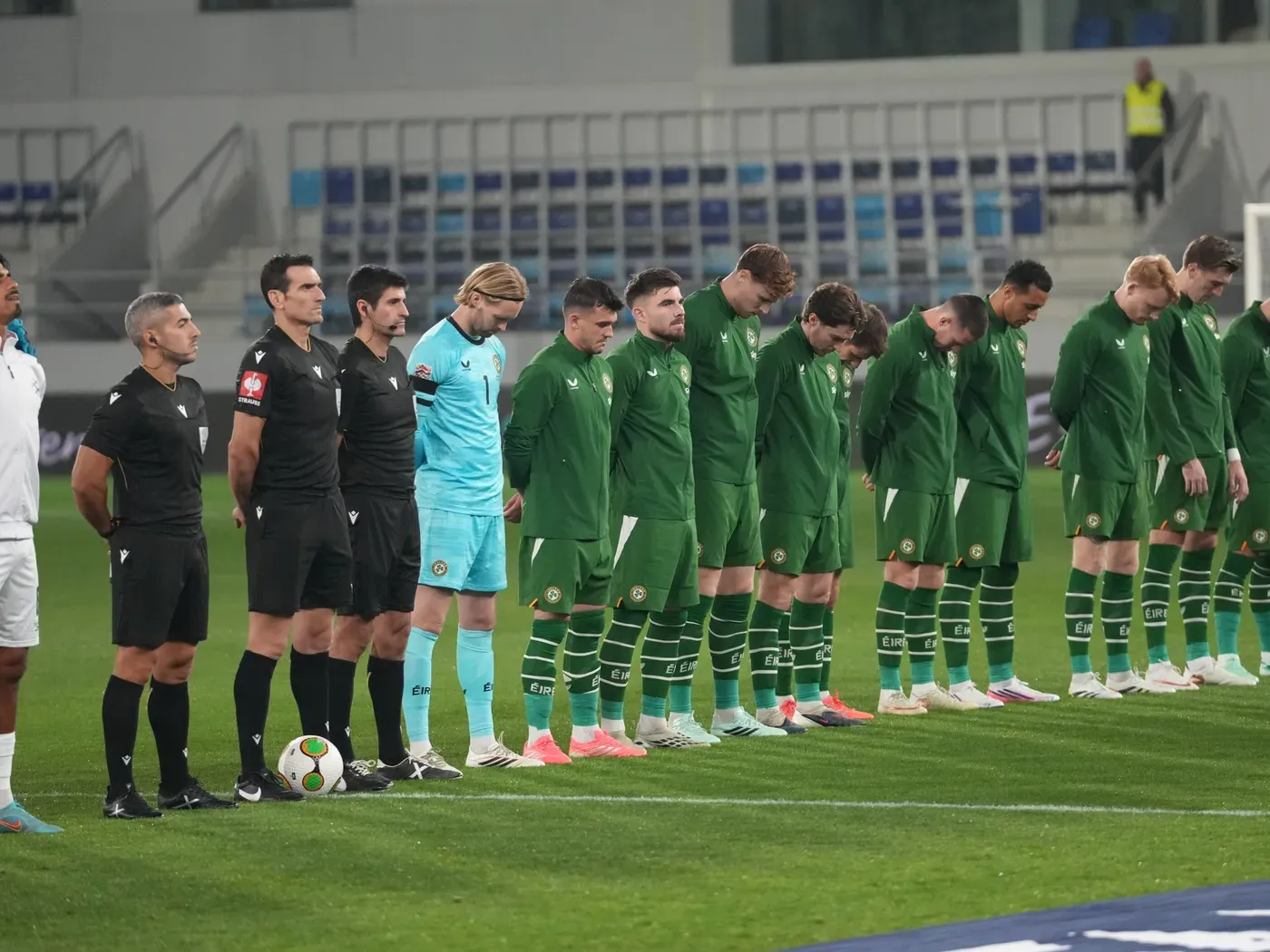
Ireland's football team continued their protest against Israel by refusing to shake hands before their UEFA Nations League match on Sunday. The game, played behind closed doors in Serbia, ended in a 1-1 draw between the two teams.
In a repeat of last week's gesture, Ireland's goalkeeper Caoimhin Kelleher pointedly avoided shaking hands with Israel's captain Dor Peretz during pre-match formalities. This move was seen as a continuation of the team's stance against Israel following their previous match.
The protest is in solidarity with Palestinians who have been affected by the conflict in Gaza. Ireland players wore black armbands before the game to show their support for the Palestinian cause, just like they did last week. The gesture has sparked controversy and debate about sports politics.
Ireland's captain Dara O'Shea was absent from the match due to a family commitment, with Kelleher taking his place as team leader. O'Shea had previously refused to shake hands with Israel's captain Manor Solomon before their first match in Hungary last week.
The game itself saw both teams score one goal each, with Ireland's protest against Israel dominating the headlines rather than the football on display. The controversy surrounding the match is likely to continue in the coming days as international attention focuses on the role of politics in sports.
The controversy surrounding Ireland's decision not to shake hands with Israel and wear armbands in their Nations League tie continues to simmer. Finn Azaz, a player of Irish descent with Israeli heritage, was among those on the substitutes' bench for Ireland as they took on Austria.
In Thursday's match against Austria, Ireland got off to a good start when Troy Parrott scored from the penalty spot in the 39th minute after Jimmy Dunne was fouled by Peretz. However, tensions were already running high before the break as players clashed on the sidelines.
Peretz scored an equalizer for Israel just minutes into the second half with a close-range effort that gave Ireland's goalkeeper little chance of saving it. The scoreline remained 1-1 until the final whistle blew.
The match was moved from its original venue in Dublin to a neutral site due to widespread calls for a boycott following Israel's actions in Gaza, which sparked outrage among fans and players alike. The decision was made by the Football Association of Ireland (FAI) back in June when they cited "operational reasons as their motivation.
The FAI had previously called on UEFA to ban Israel from international competitions, citing concerns over the country's treatment of Palestinians. This stance has put pressure on Irish players and coaches alike, with some feeling compelled to take a stand against Israel's actions.
As Ireland's football team prepared to depart for Hungary, protests erupted outside their team hotel in Dublin. Demonstrators gathered with signs urging the players to boycott the upcoming matches against Israel, citing concerns over the country's actions towards Palestine.
The protests were part of a wider campaign, with over 160 Irish sportspeople signing an open letter calling on the Football Association of Ireland (FAI) to reconsider their decision to proceed with the games. The letter highlighted the moral implications of participating in matches against Israel amidst ongoing tensions between the two nations.
In a statement, reserve goalkeeper Gavin Bazunu explained that he was opting out of both contentious games due to his personal conviction that the killing of innocent people is wrong. This stance has added weight to the protests, with many calling on the players to use their platform to raise awareness about the issue.
The FAI's decision to proceed with the matches has been met with criticism from various quarters, including former Ireland coach Brian Kerr. He argued that the governing body had lost the respect of the Irish people by choosing to go ahead with the games despite the controversy surrounding them.
Meanwhile, tensions were running high at a pre-match news conference in Hungary, where an Israeli journalist made an unsubstantiated claim about the Irish players using derogatory language towards their Israeli counterparts. The assertion was swiftly denied by Ireland's communications officer, Kieran Crowley, who described it as a lie" and ended the press conference abruptly.
The decision by Irish players to participate in their Nations League tie against Israel was made after an intense deliberation session on the day of the match. The team had initially considered boycotting the game due to Ireland's stance on Israeli-Palestinian relations.
Ireland's national broadcaster RTÉ scaled back its coverage of the games, only providing basic reporting to fulfill contractual obligations. This move followed a similar decision not to broadcast advertising or sponsorships related to the matches.
Facts based on reporting originally published by Al Jazeera.
You may republish this story, in full or in part, if you credit Noti Group and link to it (licence CC BY 4.0). Photos are not included.