






Ancient Egyptian Servants May Have Been Sacrificed When Rulers Died
A new study has found fractures in skulls of individuals buried at the royal cemetery of Umm el-Qa'ab near Abydos, suggesting they may have been sacrificed when their ruler died.
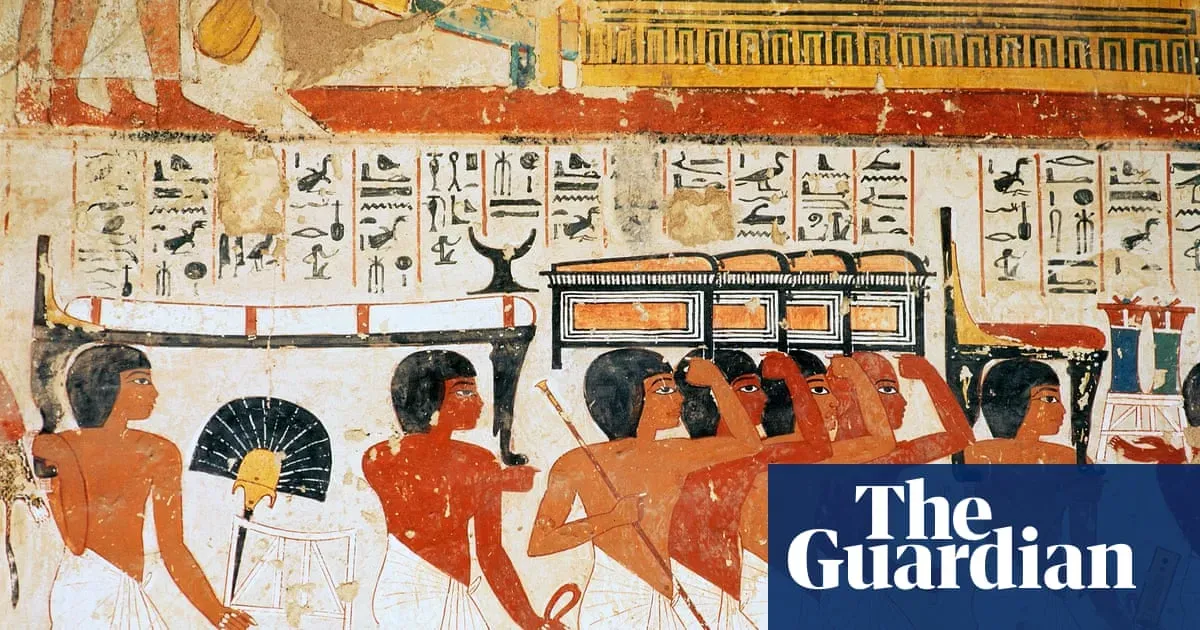
A research study has uncovered evidence suggesting that servants and court officials serving ancient Egyptian kings may have been sacrificed when their ruler died. The investigation found fractures in several skulls of individuals buried at the royal cemetery of Umm el-Qa'ab near Abydos.
This discovery appears to confirm a theory proposed by early Egyptologist Flinders Petrie, who excavated the graves of retainers in the 1920s. At that time, he believed these subsidiary burials were an example of human sacrifice. Some later experts concurred with his assessment.
The Umm el-Qa'ab cemetery contains the tombs and enclosures of the First Dynasty rulers of Egypt, dating back to around 3,000BC. The site is significant not only for its royal graves but also for the numerous subsidiary burials surrounding these structures.
Further analysis of 46 retainer skulls from Abydos has shed new light on the long-debated question of whether servants of ancient Egyptian kings were sacrificed upon their deaths.
The research, which focused on remains from graves surrounding the funerary enclosures of King Djer, King Djet, and Queen Merneith, was led by Campbell. The study examined human remains from tombs themselves, a departure from previous investigations.
Eighteen skulls showed signs of potentially lethal trauma, including fractures and in one case, an injury to the eye that suggests a chopping blow. These findings are significant because they suggest that at least some of these retainers may have died violently.
Campbell's research challenges earlier theories proposed by Petrie, who suggested the retainer remains were buried alive or that they died naturally and were later reburied.
The fractures found on some of the skulls suggest they were caused by flat, wide objects made of wood or antler rather than a mace.
This conclusion is significant because it implies that the servants may have been subjected to violent deaths as part of their burial rituals. However, Campbell also acknowledges that the evidence is not conclusive and that further research is needed to determine the full extent of these funerary practices.
The sample size of the original burial population is small, which limits the conclusions that can be drawn from the data. As a result, it's difficult to say for certain whether all the retainers were sacrificed or if some were spared.
Salima Ikram, a professor at the American University in Cairo, notes that while the idea of retainer sacrifice is not new, Campbell's paper offers a rigorous and methodologically sound evaluation of the evidence. This is an important contribution to the field, as it sheds light on the burial practices of ancient Egyptian kings.
The discovery of skull fractures at an ancient Egyptian burial site has sparked debate about the treatment of servants who worked for pharaohs. Researchers believe that some of these individuals may have been sacrificed as part of a short-lived practice where they were replaced by statuettes.
Egyptologist Dr Dawn McCormack suggests that this practice was not unique to ancient Egypt, pointing out similar instances of sacrifice in other cultures and time periods. While it is unclear whether all the individuals found at the site met their demise violently, the presence of skull fractures suggests a grim reality.
The study's findings are based on a limited number of skulls from the burial site, but they offer valuable insights into the lives of those who served ancient Egyptian kings. Ultimately, this research sheds light on the darker side of these ancient societies, revealing a complex and often brutal world behind the grandeur of pharaohic rule.
Facts based on reporting originally published by The Guardian World.
You may republish this story, in full or in part, if you credit Noti Group and link to it (licence CC BY 4.0). Photos are not included.