




Anthropic Introduces System Prompt to Prevent AI-Assisted Game Cloning
A new system prompt has been introduced by Anthropic to prevent its Claude models from re-creating specific existing video games.
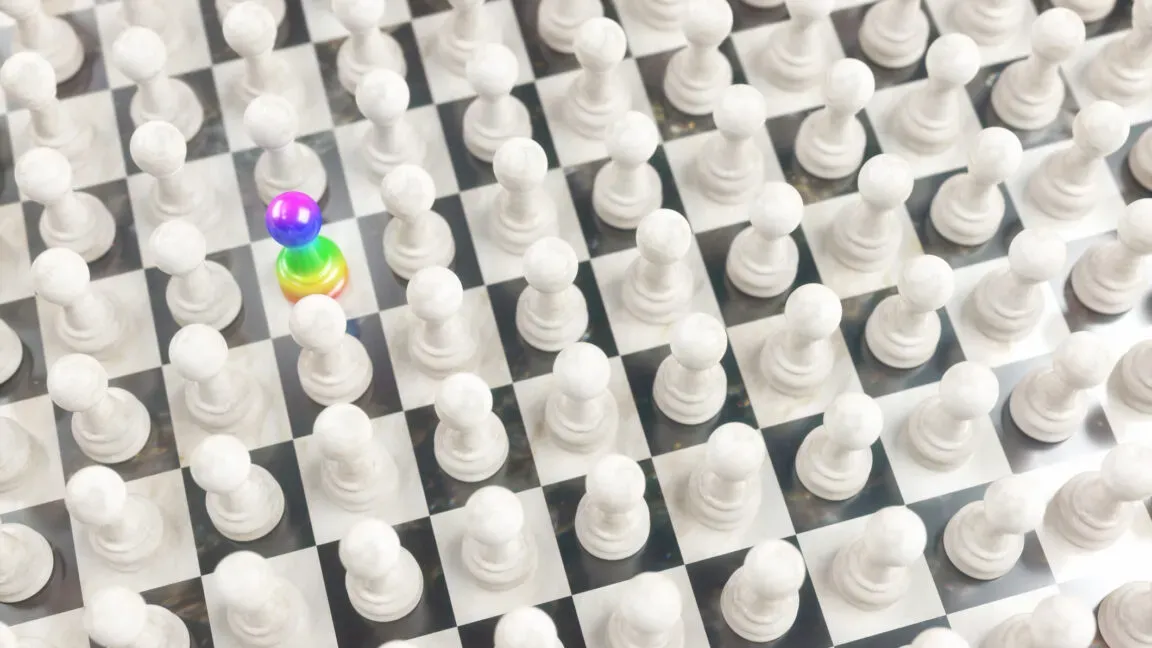
A new development has emerged in the ongoing debate over AI-assisted game cloning, with Anthropic introducing a system prompt designed to prevent its Claude models from re-creating specific existing video games.
The change is unlikely to have a significant impact on the broader trend of AI-assisted game porting and copying, which has gained momentum in recent months. This phenomenon involves using AI tools to recreate popular games, often with minimal modifications or changes to the original code.
A social media user known as "chasm was among the first to notice the prompt change, reporting that a new rule had been added to the Claude Code prompt on or around October 27. The new rule is included in a json file under the name tengu_heron_brook.
The rule explicitly states that Claude models should not build a recreation of a specific existing game, even if it is renamed or called original. This change was independently verified by XDA, which reported that the same rule appears in version 2.1.314 of the Claude Code binary, released on October 30.
XDA also found evidence suggesting that the tengu_heron_brook rule had been used for other purposes in earlier versions of the Claude system prompt bundle. The company's Opus 5.5 model specifically includes its own distinct and independent instructions restricting game recreations as part of its system prompt bundle.
Anthropic has taken steps to mitigate the issue of game cloning by adding two new sentences to its Opus 5.5 model's prompt bundle.
The updated instructions aim to steer Claude away from recreating specific games owned by others, as using the AI for this purpose is against Anthropic's usage policy.
This change was confirmed by Addy Osmani, a software engineer at Anthropic, on social media, where he explained that the new prompt still allows users to create original games, genre-specific games, and titles built from their own designs and assets.
However, it appears that the revised prompt may be causing issues for some game developers, as evidenced by a handful of issue reports on Anthropic's GitHub.
These reports suggest that the new instructions are getting in the way of certain game development use cases, highlighting the need for further refinement to strike the right balance between protecting intellectual property and enabling creative freedom.
Anthropic is continuing to iterate on its prompt to address these concerns and ensure that users can create innovative games without infringing on others' rights.
The trend of game cloning using AI has reached alarming levels, prompting decomp.dev, a community dedicated to game decompilation, to shut down last month.
Community members had been motivated by the prospect of contributing to and seeing progress on decompilations, but the rise of AI tools has transformed the process into a numbers game. Newcomers are now racing to port games, often relying on pre-existing decompilations without making any significant contributions of their own.
This shift has led to a loss of community spirit in decomp.dev, where members were once driven by a sense of accomplishment and progress. Today, the focus is solely on achieving high numbers or porting games to other platforms, with little regard for the original contributors.
The AI industry's failure to address this issue is evident in the ease with which game copiers can simply switch to other frontier models that don't impose similar restrictions. Even if the entire industry were to bar this kind of use case, developers could opt for cheaper open-weight models that offer comparable capabilities but aren't subject to these restrictions.
These alternative models are not far behind in terms of performance and would likely become the new standard for game cloning, rendering Anthropic's efforts to curb AI-powered copying ineffective.
The introduction of a new anti-game copying prompt for Claude may provide some short-term benefits to Anthropic, helping to shield the company from potential liability for copyright infringement.
However, this move is unlikely to stem the tide of AI-powered game cloning, as developers continue to experiment with decompilation techniques that can bypass such limitations. As long as these efforts focus on underlying code rather than expressive elements like art and sound assets, they are generally considered legal.
But even with Anthropic's guardrails in place, there is a risk that individual developers using Claude may not be diligent enough to exclude copyrighted content from their projects. This could expose the company to further liabilities down the line.
The new prompt also raises questions about what constitutes a legitimate use of AI in game development. For instance, the trend of merging two different game concepts into one, such as combining Mario with Elden Ring, may be seen as either a creative reinterpretation or an infringement on existing copyrights.
Ensuring that an AI model like Claude can distinguish between direct copies of popular games and similar titles within the same genre poses significant challenges. For instance, how would the model differentiate between a game that is an exact replica of Tetris and one that simply belongs to the same genre? This distinction is not only crucial for copyright laws but also for maintaining creativity in game development.
The task of defining what constitutes a direct re-creation" or a mere "game in the same genre" is complex, even for human courts. As such, asking an AI model like Claude to reliably draw this line is a daunting endeavor, especially with its new two-sentence prompt designed to curb game cloning.
Facts based on reporting originally published by Ars Technica.
You may republish this story, in full or in part, if you credit Noti Group and link to it (licence CC BY 4.0). Photos are not included.