








US Stock Markets Experience Significant Decline
Global stock markets experienced a significant decline on Friday following the US tech sector's downfall on Thursday.
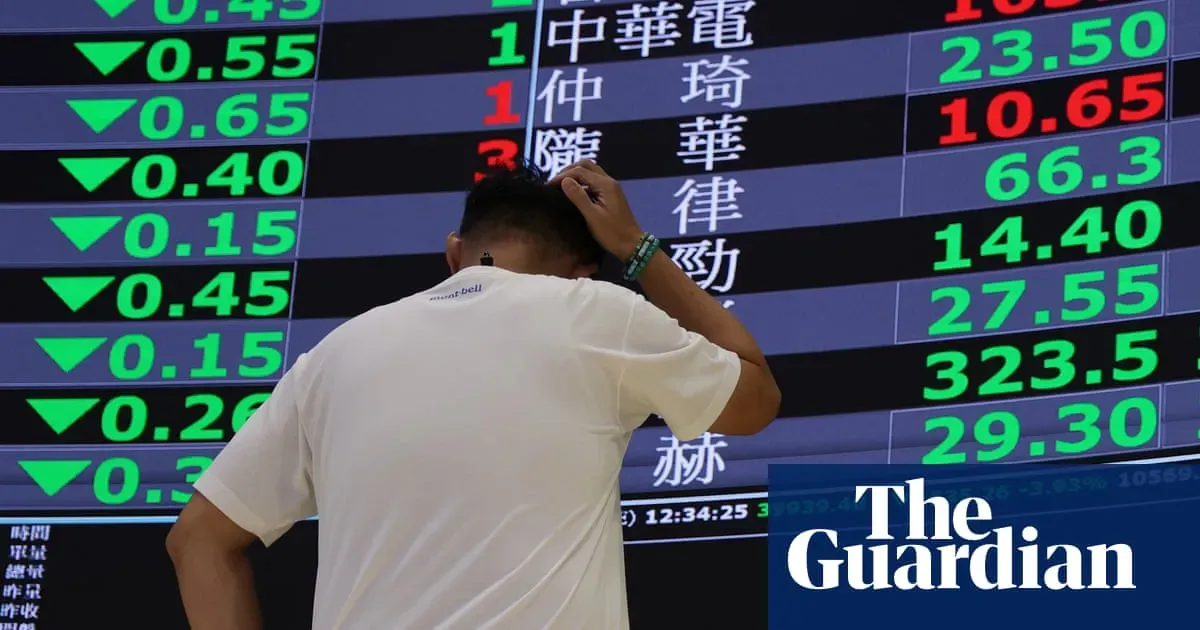
Global stock markets experienced a significant decline on Friday, following the US tech sector's downfall on Thursday. The Democrats' decisive victory in the midterms triggered a sharp sell-off in US tech stocks, causing ripple effects across global markets.
Asian markets were among the first to feel the impact of the US tech rout, with many analysts predicting further waves of selling to come. The investor sentiment then reached Europe, where stock prices plummeted on Friday morning, with some markets experiencing their worst day since March.
The FTSE 100 index in London was one of the hardest hit, falling by as much as 254 points or 2.35% during morning trading before recovering slightly by the close of the day to be down just 1%. This modest recovery was largely due to a rise in US stocks when Wall Street reopened.
Stock markets across Europe also took a hit, with Germany's Dax index falling by 2%, France's Cac 40 dropping by 0.8%, and Spain's Ibex losing 0.6% of its value.
Global stock markets remained under pressure as investors grappled with concerns over the impact of artificial intelligence on the economy.
The tech sector was a major contributor to the market's woes, with chip stocks taking a particularly heavy hit. SanDisk suffered a 22% decline, while Western Digital fell by 17%, underscoring the growing uncertainty in the industry.
Meanwhile, Wall Street showed some signs of respite, with tech stocks rebounding in early trading on Friday. The S&P 500 share index rose by 0.8% and the Nasdaq by 1.6%, partially offsetting losses from the previous day.
The US economy's employment report provided a glimmer of hope, however, as it revealed that 165,000 new jobs were added in October, pushing the unemployment rate down to 4.1%.
Global stock markets continued to plummet on Friday, with investors still reeling from the sudden downturn that began on Thursday. The sharp losses have left many wondering if the current market volatility is a result of growing concerns over artificial intelligence.
The AI-related fears appear to be driving investor anxiety, leading some to question whether the recent downturn is more than just a temporary correction. Market analysts are warning that investors should be prepared for further selling as long as these concerns persist.
Despite the sharp losses, many global indices remain in positive territory for the year. The Nasdaq Composite index has continued to climb, with a gain of 6.35% since January, although it is now more than 10% below its peak.
The FTSE 100 has also seen significant gains in recent months, rising almost 7.5% so far this year. However, the index remains well off its record high set in July, with a decline of over 300 points.
The decline in global stocks shows no signs of slowing down as investors remain cautious about the impact of artificial intelligence (AI) on the economy.
Economists are divided over the significance of Thursday's losses, but Mohit Kumar from Jefferies Investment Bank believes that AI investment remains a key driver of US growth. He points out that datacentres and AI infrastructure create jobs, which Democrats would be reluctant to let go of due to concerns about job migration.
The London Metal Exchange is also feeling the effects of this uncertainty, with copper prices plummeting. Benchmark three-month copper has dropped 0.61%, putting it on track for a 2.79% weekly decline, its largest since March.
Analysts attribute the price drop in copper to shifting sentiment towards datacentre expansion, which is closely tied to the AI market. This development highlights the increasingly intertwined relationship between these sectors and their influence on global markets.
Facts based on reporting originally published by The Guardian Business.
You may republish this story, in full or in part, if you credit Noti Group and link to it (licence CC BY 4.0). Photos are not included.