







Turbine Blade Production Reaches New Level of Sophistication
Materials scientists can create complex shapes in turbine blades by cooling molten metal alloys with precise technique developed in the 1960s.
The production of turbine blades used in aircraft engines has reached a remarkable level of sophistication, where materials scientists can create complex shapes by carefully cooling molten metal alloys.
This precise technique, developed in the 1960s, involves casting molten metal into the desired shape and then gradually solidifying it over several hours. The result is a single crystal or grain of metal alloy with unique properties that are essential for turbine blade performance.
The process requires immense control and precision to achieve the desired outcome, which is why only a handful of companies worldwide have mastered this technology. These include major engine manufacturers such as Rolls-Royce, GE, and Safran from France.
The creation of single crystal turbine blades has become an extremely challenging task that pushes the boundaries of materials science and engineering expertise. The fact that it can be done in just five countries is a testament to the rarity of this capability, with each country having its own specific know-how.
As Ben Fifoot, a manufacturing engineer at Rolls-Royce, notes, the production of these blades is an incredibly complex process that requires dedication and motivation from those involved. Only a few companies have perfected the end-to-end process, making it a highly sought-after technology in the industry.
GE Aerospace's recent acquisition of its turbine blade supplier for $11.75bn is likely aimed at securing a steady supply of critical components.
The move has been described as an effort to ensure a consistent flow of these essential parts, which are crucial for aircraft manufacturing.
Meanwhile, Rolls-Royce has invested £19m in its Rotherham blade casting facility, indicating the company's commitment to improving its turbine blade production capabilities.
This significant investment is part of ongoing efforts by industry players to perfect the single crystal casting process, a technology that has been around for decades but remains highly specialized.
The demand for high-quality turbine blades is enormous, and only a few companies have managed to master this complex process, giving it an air of exclusivity.
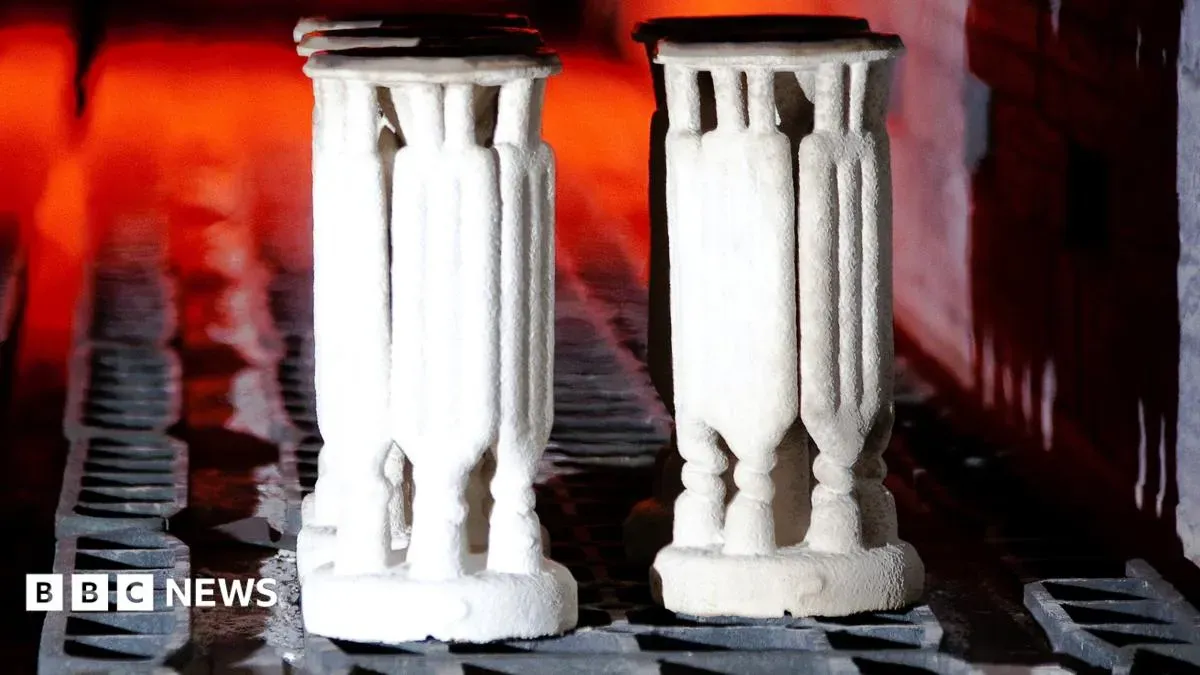
The intricate process of creating turbine blades for high-performance engines involves more than just carefully cooling molten metal. Manufacturers must also employ a unique technique called a pigtail to ensure that only one crystal forms in the blade, rather than multiple ones.
This pigtail is a small spiral at one end of the blade that temporarily restricts the flow of solidifying crystals, allowing a single crystal to dominate and take shape. The process is not unlike navigating a critical turn on a racing track, where a skilled driver can seize control and emerge victorious.
To fine-tune this delicate process, manufacturers like Rolls-Royce experiment with variations in the pigtail's design, adjusting factors such as its number of turns or angles to promote favorable crystal growth. This painstaking attention to detail is crucial for producing blades that meet demanding performance standards.
The Trent XWB-84 engine, which powers the Airbus A350-900, and the Trent 1000 XE engine, used in the Boeing 787, both rely on turbine blades crafted by Rolls-Royce using this precise method. The single crystal structure is essential to achieving optimal blade performance, as even minor deviations can compromise the engine's overall efficiency.
To further enhance their durability, these high-performance blades are coated with specialized ceramic materials that shield them from extreme temperatures within the engine. Additionally, intricate channels within each blade allow a controlled flow of cooler air to form a protective film around the metal, ensuring reliable operation under demanding conditions.
Researchers are pushing the boundaries of cooling technology by creating intricate passages within engine blades that allow for precise control over airflow.
These complex channels enable a turbulent flow of cooler air to interact with the hotter surrounding air, effectively knocking out excess heat and improving overall efficiency.
Manufacturers also aim to minimize the weight of these components as much as possible, which would enable engines to run more efficiently using less fuel, operate at higher speeds, and withstand increased temperatures.
China is attempting to join a select group of countries that have mastered the entire technology chain for single crystal blade casting, including producing high-performance alloys with superior strength and durability.
However, Western manufacturers hold a significant advantage due to their established supply chains, access to innovative technologies, and lengthy safety records in commercial airliner production.
Demand for aircraft is currently high and this trend is expected to continue as one of the major manufacturers plans to launch a new short-haul plane in the next few years.
This development could lead to a surge in demand for engine parts, including single crystal turbine blades, which are critical components in commercial airliner production. The competition for these supplies is likely to be fierce, with Withey describing it as an intense "bun fight" among manufacturers and suppliers.
Facts based on reporting originally published by BBC News Technology.
You may republish this story, in full or in part, if you credit Noti Group and link to it (licence CC BY 4.0). Photos are not included.