







Significant Breakthrough in Understanding Fatty Liver Disease
Researchers have made a significant breakthrough in understanding fatty liver disease, identifying a protective enzyme that could potentially halt its progression to more severe forms of...
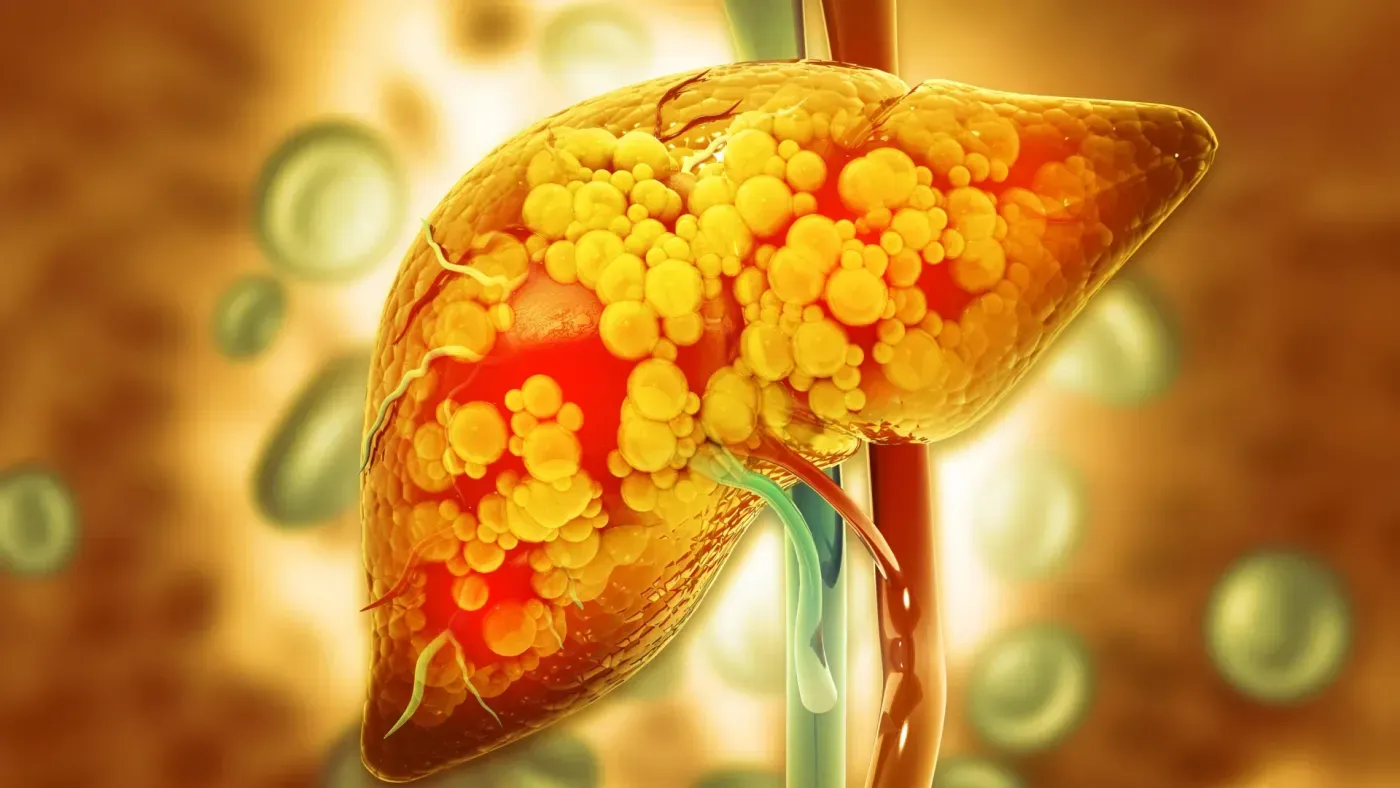
Researchers have made a significant breakthrough in understanding fatty liver disease, identifying a protective enzyme that could potentially halt its progression to more severe forms of the condition.
Metabolic dysfunction-associated steatotic liver disease (MASLD), also known as nonalcoholic fatty liver disease, is a common form of liver disease affecting an estimated 100 million people in the US. A subset of these individuals - roughly 20-25% - go on to develop metabolic dysfunction-associated steatohepatitis (MASH), a more severe condition characterized by inflammation and scarring.
Current treatment options for MASH are limited, mainly relying on lifestyle changes and medications that aim to prevent further liver damage. Unfortunately, there is no cure for this serious form of the disease, leaving many patients with few alternatives.
In a multicenter study, researchers found that levels of UBE2N, an enzyme crucial for cellular function, decline in liver cells as MASH progresses. This discovery has sparked hope for developing new strategies to prevent or slow down the progression of fatty liver disease.
The researchers behind this study used laboratory mice to investigate the role of UBE2N in preventing liver damage associated with MASH. By restoring normal levels of UBE2N in these mice, they observed significant reductions in fat accumulation and inflammation in the liver.
These findings suggest that UBE2N plays a crucial part in protecting the liver from the destructive processes that occur during MASH. When UBE2N levels are low, more damage is done to the liver cells, leading to further injury.
The researchers' results also imply that UBE2N could be an effective target for developing new treatments to prevent MASLD from progressing to MASH. This raises the possibility of using existing therapies in combination with enhanced UBE2N pathways to improve patient outcomes.
Further studies will be necessary to explore this potential therapeutic approach, and identify which patients are most likely to benefit from it. Researchers can use these findings as a stepping stone to develop new treatments for preventing advanced liver disease.
Researchers have made a significant breakthrough in understanding the progression of fatty liver disease, a condition that affects millions worldwide.
The study's findings suggest that a protective enzyme called SIRT3 plays a crucial role in preventing advanced liver disease. When this enzyme is present, it helps to reduce oxidative stress and inflammation in the liver, which are key factors in the development of liver damage. Conversely, when SIRT3 levels are low, the liver becomes more susceptible to damage.
The study's results have important implications for the treatment of fatty liver disease. By identifying the role of SIRT3 in preventing advanced liver disease, researchers can use this information as a foundation for developing new treatments that target the underlying mechanisms of the condition.
This breakthrough brings hope to millions of people worldwide who are affected by fatty liver disease, and it highlights the potential for innovative therapeutic approaches to be developed based on our growing understanding of the molecular mechanisms driving this condition.
Facts based on reporting originally published by ScienceDaily Health.
You may republish this story, in full or in part, if you credit Noti Group and link to it (licence CC BY 4.0). Photos are not included.