


President Paul Biya Returns to Cameroon After Prolonged Absence
Cameroonian President Paul Biya has returned home after a two-month absence that sparked speculation about his health and ability to rule.
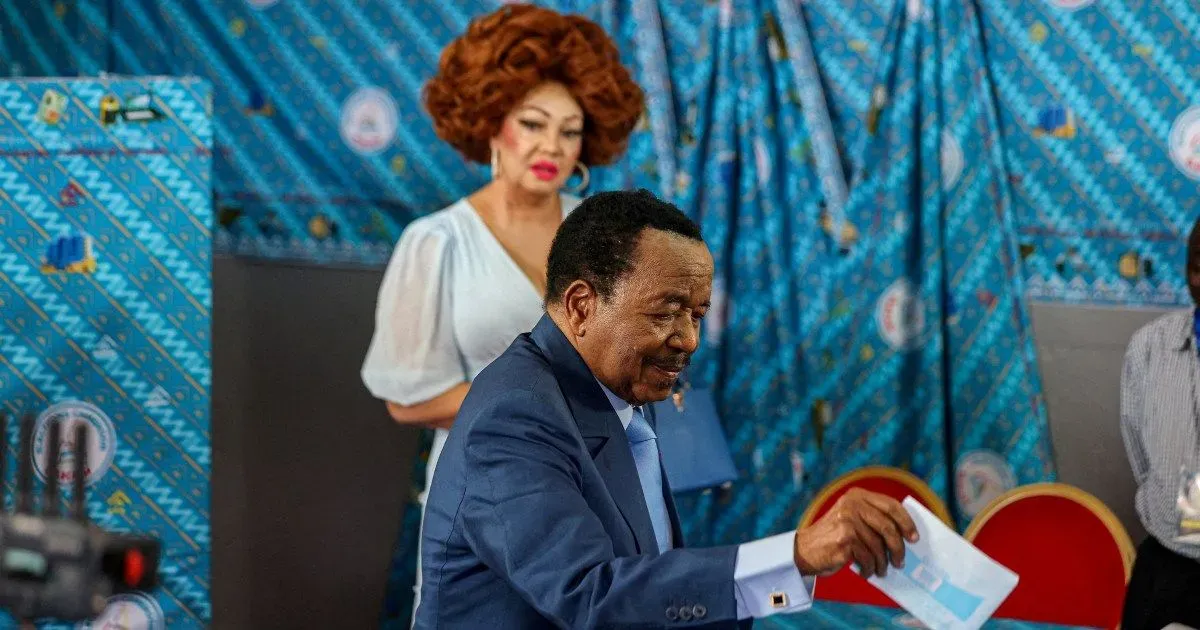
Cameroonian President Paul Biya has returned to his country after a prolonged absence, sparking renewed speculation about his health and ability to rule.
Biya's long stays abroad have become a common occurrence, leading some to question whether he is still fit to govern the Central African nation. The president's latest "vacation lasted over two months, fueling rumors that he had been hospitalized or even died.
Despite his return in late August, not everyone is satisfied with Biya's leadership. His prolonged absence has created uncertainty about his health and ability to make decisions, leaving many wondering if he can continue to rule effectively.
Biya's long tenure as president has raised concerns about the country's future leadership. He has been in power since 1982 under the Cameroon People's Democratic Party (RDPC), a period that significantly predates the birth of most Cameroonian citizens.
The president was re-elected for an eighth term last year, but his government has yet to be reshuffled, leaving many waiting with bated breath for announcements about a new cabinet and possibly even a vice president.
The president's prolonged absence from Cameroon has raised questions about his ability to effectively govern the country.
Critics argue that Biya's reliance on his cabinet means he is often out of touch with the nation's pressing issues and struggles.
While the economy struggles despite being fueled by oil wealth, security threats persist in various parts of the country, including attacks by Boko Haram in the north and separatist activities in the west.
Biya's frequent private visits abroad have been well-documented, with some analysts suggesting that he spends extensive periods at the InterContinental Hotel in Switzerland.
Tchiroma Bakary, a former government spokesperson, has spoken out about Biya's absence and accused him of running Cameroon on autopilot.
President Biya's 74-day absence from Cameroon has come to an end, as he returned to the country on August 20. This marks one of his longest absences from office, with a similar period of 42 days reported in 2024.
The president had been in Geneva since June 7, where he was accompanied by family members and some of his closest aides, according to local media reports. Officially, the trip was described as a short private stay", but concerns about Biya's health had been growing during his time away.
Denials from officials that Biya had been hospitalized in Geneva did little to alleviate these concerns, which were further fueled by limited video footage of the president upon his return. When he and his wife arrived back in Cameroon, they were met with a large crowd of party supporters, but many were left wanting more information about the president's health.
The lack of transparency surrounding Biya's absence has been particularly frustrating for some people, who are still waiting to see what changes might be implemented following his re-election. Despite this, the presidency has continued to issue decrees in the interim, including a recent promotion of five colonels and a reorganization of military transfers.
However, the pace of activity appears to have slowed significantly since Biya's return, with some Cameroonians joking online that he is simply on a visit and will soon be heading back to his residence in Switzerland.
Cameroon's President Paul Biya has returned from a prolonged stay abroad, sparking renewed speculation about his intentions and the future of the country.
The president's absence had sparked concerns among voters, but his ruling party dismissed these worries, insisting that there was no constitutional or political vacuum.
According to analysts, one possible explanation for the delay in ministerial appointments is Biya's strategic move to maintain control over any potential changes.
The prolonged political stagnation has taken a toll on investor confidence in Cameroon, with experts warning of significant economic implications.
As the country waits with bated breath to see who will take over if Biya is unable to continue, all eyes are now on the vice presidency.
The law passed by President Paul Biya has been met with skepticism by opposition parties, who view it as an attempt to handpick a successor rather than allow democratic elections. Critics argue that the legislation essentially blocks the possibility of free and fair polls.
With no vice president in place, Senate President Aboubakary Abdoulaye would be next in line to assume leadership until elections could be held. However, analysts believe that Secretary-General Ferdinand Ngoh-Ngoh may actually be Biya's preferred candidate for the role, given his influential position behind the scenes.
Facts based on reporting originally published by Al Jazeera.
You may republish this story, in full or in part, if you credit Noti Group and link to it (licence CC BY 4.0). Photos are not included.