





Sudanese Paramilitary Group Accused of Targeting Healthcare System in Darfur
A BBC investigation into the siege of el-Fasher has uncovered evidence that Sudanese paramilitary fighters deliberately targeted the city's healthcare system.
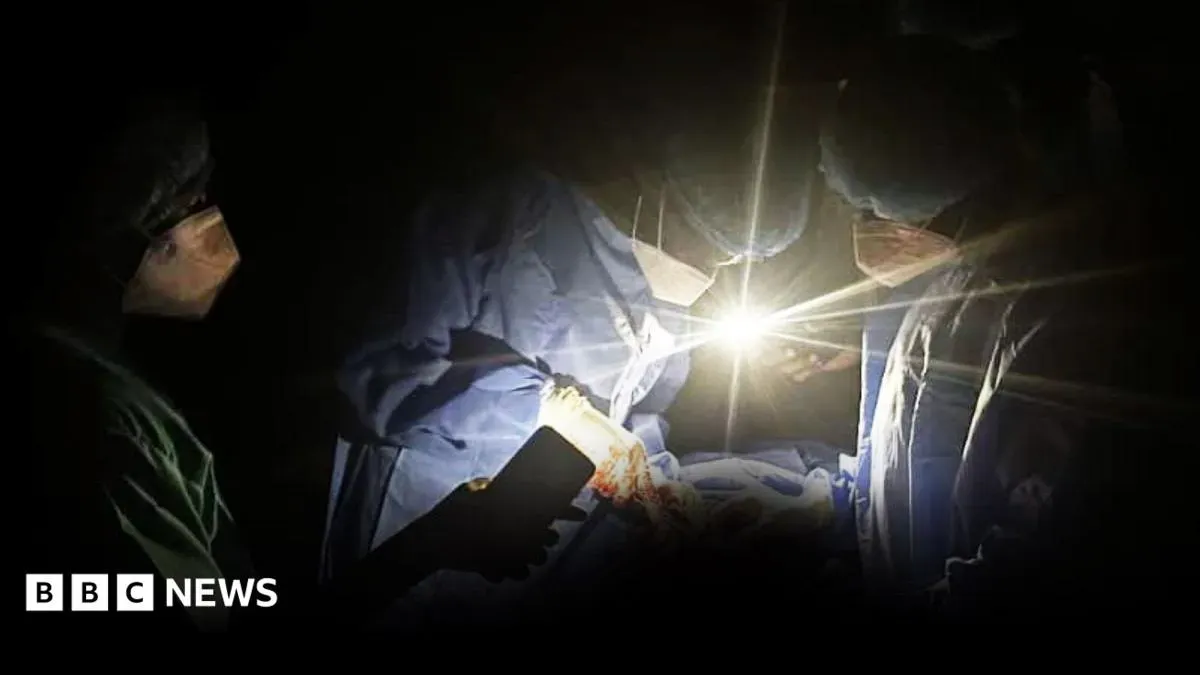
A BBC investigation into the siege of el-Fasher in Darfur has uncovered evidence that Sudanese paramilitary fighters deliberately targeted the city's healthcare system.
The Rapid Support Forces (RSF), a powerful paramilitary group, were accused by UN human rights chief Volker Türk of serious violations of international humanitarian law and possible war crimes due to their repeated attacks on civilian infrastructure, including health facilities.
According to RSF spokespersons, these allegations are nothing but propaganda created by the national army and its allies to tarnish the reputation of the paramilitary group.
Our investigation used sources from el-Fasher to gather information about 43 separate attacks on hospitals and healthcare sites between May 2024 and October 2025. In some cases, these facilities were targeted multiple times during this period.
The destruction of health infrastructure is a serious breach of international law that prohibits the targeting of medical facilities or personnel during conflict.
Data collected by our team shows that from April 2023 to October 2025, at least 120 medical workers in el-Fasher suffered injuries, with 55 losing their lives and another 10 being forcibly "disappeared or abducted.
According to Dr Muhamed Suliman, a surgeon who worked in el-Fasher during the siege, the RSF's actions were not random but part of a deliberate strategy to weaken the city's defenses by targeting its healthcare system.
The siege of el-Fasher has left deep scars on the city's healthcare system. According to the World Health Organization, the events in el-Fasher are one of the clearest and most severe examples of the wider impact of the conflict on health care in Sudan.
Historical ethnic animosities have fueled the fighting in el-Fasher, with Arab militias targeting non-Arab groups. This has led UN investigators to report that the fighting bears the hallmarks of genocide. The city's population is predominantly made up of non-Arab groups who have been subjected to brutal attacks by RSF forces.
The siege of el-Fasher began with a series of coordinated attacks on medical facilities. One of the main hospitals, the Teaching Hospital, was forced to close due to the conflict. Its operations were relocated to the South Hospital, which continued to provide medical services despite facing significant challenges.
Power cuts and dwindling supplies hindered the hospital's ability to function effectively. However, it remained one of the few working hospitals in the city, providing vital surgical services to injured patients.
The situation took a dramatic turn when the RSF launched its siege of el-Fasher. In late May and early June 2024, the South Hospital was shelled several times as paramilitary fighters pushed forward from their positions in the east of the city.
Medical staff were caught off guard by the first bombing, which occurred on one of the busiest days at the hospital. On that day alone, 16 injured patients underwent surgery, says Dr Suliman. The area around the hospital was very crowded due to its status as the only working hospital in the city.
The attacks culminated in a brutal RSF raid on June 8, which caught hospital staff by surprise. Many of them escaped over the back wall as the paramilitaries entered the building, says Dr Mustafa Ahmed. However, the director general of the hospital was not so fortunate, encountering a group of RSF fighters outside his office.
The RSF fighters' brutal treatment of Dr Asow is a stark reminder of the dangers faced by healthcare workers in Sudan's conflict zones.
Dr Asow recounted how he was beaten and left for dead after being mistaken for someone else. He managed to save himself by pretending to be unconscious, but his ordeal highlights the risks of being caught up in the fighting.
The RSF fighters' actions were not an isolated incident, as they had previously targeted healthcare facilities in Sudan.
The hospital where Dr Asow worked was eventually overrun by the RSF after the army retreated. The staff and equipment were forced to relocate to a new facility, but this did not seem to prevent further attacks.
In an attempt to justify their actions, some officials have claimed that hospitals can lose their protection under international law if they are used as military bases.
However, there is no evidence to support these claims, and the government of the Darfur region has categorically rejected them. The official position appears to be that healthcare facilities were deliberately targeted by the RSF.
The Saudi Maternity Hospital became a new target for the RSF after the South Hospital was overrun. Despite being located near army bases, this facility continued to function as a hospital and was not incorporated into the military base.
Dr Alaa Eldin Nugud, the health minister, has shown maps of landmines allegedly planted around the Teaching Hospital, which is adjacent to Sudanese military headquarters. However, his claims have been met with skepticism by international observers.
The targeting of hospitals in Sudan's conflict has raised concerns about the tactics employed by the Rapid Support Forces (RSF). While the RSF claims that hospitals are not being intentionally targeted, evidence suggests otherwise.
In conversations with six doctors, a pattern of systematic targeting emerged. They shared accounts of repeated attacks on Saudi Hospital, which was hit up to 25 times in some days by shelling and drones.
The use of intelligent rockets with precision-guided attacks has been particularly concerning. These drones have allowed the RSF to strike with greater accuracy, putting medical facilities at even greater risk.
Smaller healthcare centers were also under attack, contributing to a steady decline in medical services. The BBC's timeline highlights the closure of private hospitals and neighborhood clinics, leaving patients without access to essential care.
When some of these facilities relocated to avoid attacks, they still faced bombardment. This was the case for the Specialised Children's Hospital, which moved twice but was forced to close due to shelling.
The main dialysis center also suffered a similar fate, being struck and then attacked again after it relocated. By October 2025, Saudi Hospital was the only functioning health facility left in the city.
Medical staff at Saudi Hospital went to great lengths to keep providing care despite the deteriorating conditions. They set up sandbags for protection and built underground bunkers using steel containers.
The makeshift surgery at Saudi Hospital came under attack five times in 2025, with one doctor describing a harrowing incident where he was operating on a patient's neck when an explosion shook the building.
The makeshift medical facilities at Saudi Hospital in el-Fasher were not just under attack from bombs and shells but also from drones, which tracked the movement of patients, according to Dr Asow, a doctor who worked there.
On March 15, 2025, people carrying injured patients from an attack site to a temporary ward were followed by a hunting drone as they approached the gate of the building. The drone struck and killed nine people in this incident alone.
In another disturbing episode on August 17, 2025, a donkey cart transporting patients to an alternative operating theatre was hit by a drone, resulting in the deaths of two patients, their driver, and the donkey itself.
The RSF health minister dismissed these accounts as a continuation of lies by the military (SAF) and their allies, the Joint Forces. However, doctors who worked at the hospital believe that RSF fighters deliberately targeted medical facilities because army or allied fighters were among their patients.
These allegations are supported by eyewitness accounts from doctors and medics who treated patients at the hospital during the conflict. They claim that the RSF intentionally attacked medical facilities to harm civilians and disrupt healthcare services.
The scale of the destruction was catastrophic, with satellite imagery showing clusters of bodies on the blood-soaked grounds of the hospital after the October 25, 2025 attack. The WHO condemned the reported killings, which it said were part of a larger pattern of violence against civilians in el-Fasher.
The RSF has denied any wrongdoing and claims that its forces did not intentionally target medical facilities. However, the UN human rights chief has expressed concern over the findings of the investigation, describing them as deeply disturbing" and consistent with his office's analysis.
The investigation has uncovered evidence that hospitals in Sudan's Darfur region were deliberately targeted by fighters from the Rapid Support Forces (RSF), a paramilitary group loyal to the government.
Medical workers who were captured and held captive during the conflict have spoken out about their experiences, revealing the trauma and fear they endured. Dr Al-Haj Mohamed Ahmed, one of the doctors interviewed, stated that he was forced to stay in the city against his will, with threats made against him if he spoke out of line.
The RSF's actions are part of a broader pattern of attacks on healthcare facilities and personnel in Sudan's civil war. Despite the fall of el-Fasher, the conflict continues, with humanitarian needs remaining critical.
Several medical workers were captured while trying to escape the city and sent back to work at Saudi Hospital. Dr Mustafa Ahmed described the conditions under which they worked, including a cholera outbreak that they managed to bring under control in a temporary prison.
The trauma of this period is still evident, with many people struggling to come to terms with what happened. The conflict has also had a devastating impact on healthcare services, which continue to be targeted as part of the wider humanitarian crisis.
As the situation remains unresolved, there are concerns about the ongoing safety and security of medical workers in Sudan's Darfur region, where attacks on healthcare facilities persist.
Facts based on reporting originally published by BBC News World.
You may republish this story, in full or in part, if you credit Noti Group and link to it (licence CC BY 4.0). Photos are not included.