








Immigration Authorities Set to Deport Severely Ill Detainees to Unknown Countries in Africa
Relatives of detainees at the Krome North processing center in Miami and the Broward transitional center in Pompano Beach have been warning about impending deportations to unknown countries in Africa.
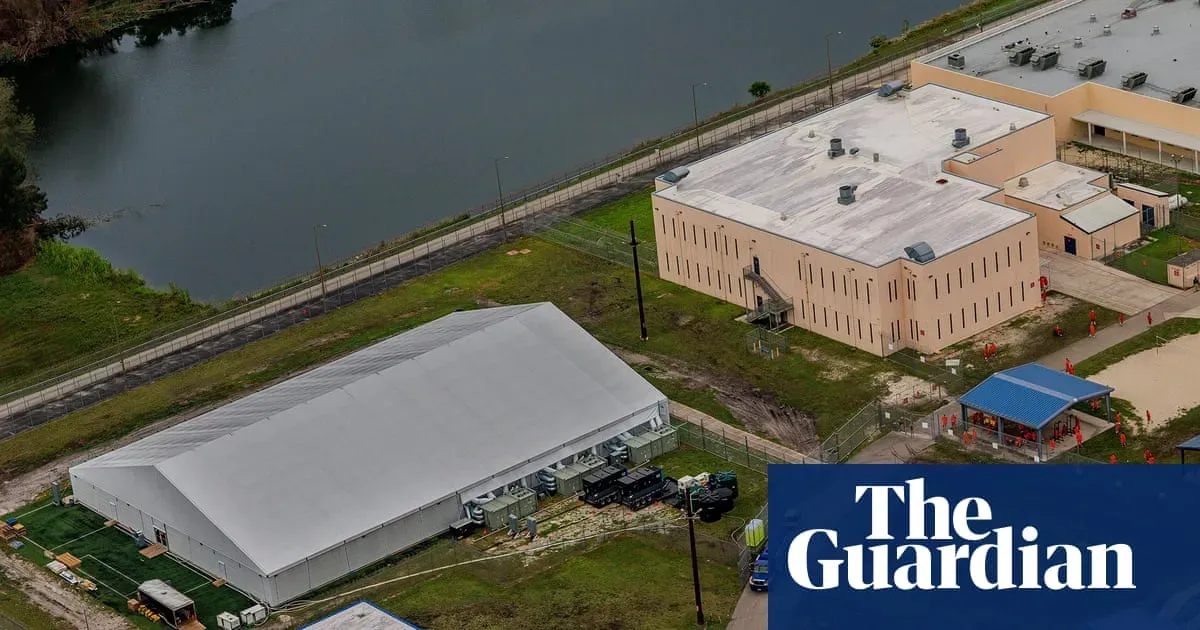
Immigration authorities are set to deport severely ill detainees from two Florida immigration jails to unknown countries in Africa as early as this week, according to relatives and an advocacy group.
The families of the detainees at the Krome North processing center in Miami and the Broward transitional center in Pompano Beach have been warning about the impending deportations for several days.
Multiple sick detainees with a range of medical conditions are reportedly being targeted for immediate deportation, despite their fragile health.
A spokesperson for the Workers Circle advocacy group said that relatives had informed them that some detainees were being told by deportation agents that Mexico would no longer accept them due to their medical conditions.
Detainees are often denied access to adequate medical care in detention, and once deported they may struggle to obtain essential medication or receive proper treatment.
Anisley Cortés' husband, Noslén Sendra, a 41-year-old Cuban national, has been incarcerated since last November, first at the now closed "Alligator Alcatraz immigration jail and then transferred to Krome in April.
Cortés claims her husband's poor health has been exacerbated by inadequate medical care while in detention. He suffers from uncontrolled diabetes and acute pancreatitis, which required a lengthy hospital stay earlier this year. Cortés' account paints a dire picture of the conditions at Krome, where she alleges that her husband was denied essential medication and adequate food.
The situation is compounded by the fact that neither Cuba nor Mexico will accept Sendra as a deportee due to his medical needs. As a result, immigration officials have informed him that he will be deported to an African country instead. Cortés expressed deep concern about the lack of transparency surrounding her husband's deportation plans and the uncertainty that lies ahead.
According to Shalyn Fluharty, an immigration rights attorney, information from detainees suggests that deportation flights are imminent. Specifically, she mentioned two upcoming flights scheduled for Thursday and Friday, which will likely depart for Africa, with destinations including the Central African Republic and Burundi.
Fluharty's statement underscores the urgency of the situation, as advocates scramble to understand the implications of these planned deportations and ensure that detainees receive adequate care before being sent abroad.
Advocates for detained immigrants are sounding the alarm over reports that severely ill individuals will be deported to unknown African states as early as this week.
The concerns stem from past practices where deportees were shackled during lengthy flights, with some being placed in full-body restraints despite medical needs. These measures raise serious questions about the treatment of vulnerable detainees.
For those with pre-existing conditions, such as heart problems or diabetes, travel can be particularly perilous. A prolonged journey of up to 24 hours can exacerbate their health issues and even become life-threatening.
The Department of Homeland Security has been asked for comment on this issue but has instead requested the personal details of affected detainees. When provided with specific information, the department failed to respond further.
Families are hesitant to speak out due to fear of retaliation against their relatives, making it difficult for advocates to gauge the full extent of the situation and provide adequate support.
The inadequate living conditions in ICE detention centers have been a long-standing concern for advocates, who point out that operational toilets, sinks, and showers are often in short supply. This has led to disturbing situations where female detainees are forced to use facilities in full view of male inmates, compromising their dignity and safety. Additionally, arriving detainees have been held in buses in the parking lot for over 24 hours due to overcrowding.
The situation is further exacerbated by Donald Trump's immigration crackdown, which has resulted in a surge in detention center populations nationwide. In an effort to alleviate this issue, the Department of Homeland Security (DHS) has increased deportation flights to third countries," a practice that was recently approved by the US supreme court. This move has seen hundreds of detainees deported to at least a dozen African nations where they have no connections or support systems.
The consequences of these deportations are dire, according to a recent Human Rights Watch report. Detainees have been subjected to persecution, arbitrary incarceration, and even torture upon arrival in their new countries. The lack of transparency and oversight surrounding these deportations makes it difficult for advocates to provide adequate support to those affected, leaving many families hesitant to speak out due to fear of retaliation against their relatives.
Facts based on reporting originally published by The Guardian World.
You may republish this story, in full or in part, if you credit Noti Group and link to it (licence CC BY 4.0). Photos are not included.