







Intel Granted Waiver to Use Foreign-Made Robots in US Chip Fabrication Facilities
The US government has granted Intel a waiver allowing the company to continue using foreign-made robotic vehicles in its chip fabrication facilities.
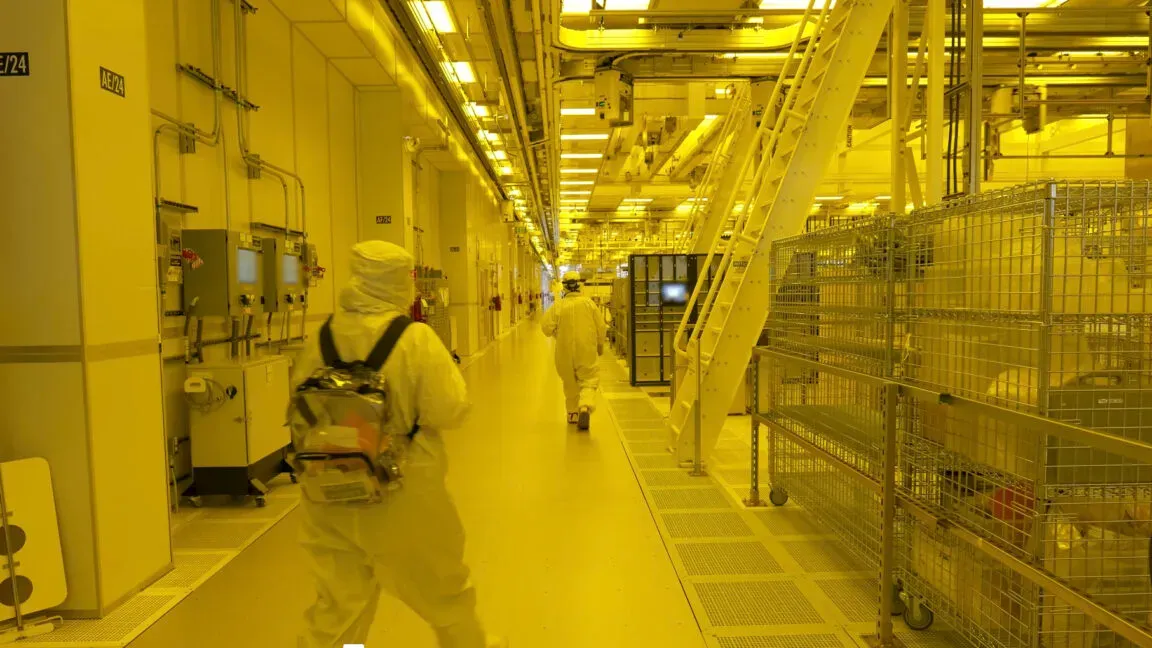
Intel has been granted a waiver by the US government after expressing concerns over the impact of a recent ban on foreign-made robots on its operations. The tech giant requested the exemption out of caution, wanting to ensure that it could continue using certain robotic vehicles in its US chip fabrication facilities.
The uncertainty surrounding the Federal Communications Commission's (FCC) ban on certain foreign-made robots was highlighted when the agency approved Intel's waiver request earlier this month. On October 22, the FCC published an order granting Intel permission to use the foreign-made robots in US semiconductor manufacturing facilities for a period of one year.
Intel's robotic vehicles are automated guided vehicles that operate on set tracks or predefined paths and often require operator oversight. These machines help transport materials and items within warehouses and factory floors, supporting the company's manufacturing processes.
The types of robotic vehicles used by Intel were only revealed in a confidential appendix accompanying its waiver request. According to Bloomberg News, similar robots are typically manufactured by Japanese companies like Murata Machinery and Daifuku Co., indicating that Intel may be using imported equipment.
Intel's waiver request highlighted the uncertainty surrounding its robotic vehicles and whether they fall under the FCC's ban on new models of mobile robots. The company sought relief to ensure it could continue operating its robotic fleet without interruption.
The tech giant requested permission to make hardware, software, and firmware changes that would enable the continued maintenance and operation of its robotic vehicles. This modification was deemed necessary to prevent any disruptions to chip production.
Intel emphasized that its robotic vehicles are crucial to its domestic semiconductor manufacturing operations, and argued that there is no US-made alternative that meets its requirements. The company's reliance on these robots underscores the complexities involved in reshoring chip production.
The FCC approved Intel's waiver request just one week after it was filed on October 16. This swift approval may be attributed to Intel's significance in the Trump administration's plans for reviving domestic semiconductor manufacturing, as well as the US government's substantial investment in the company.
The ban on foreign-made robots has left the US robotics industry in a state of uncertainty, particularly since China is the world's leading supplier of robots and robotic components. This reality raises concerns about the impact on domestic businesses that rely heavily on imports from China.
Industry analysts have cautioned that the government's attempt to boost domestic production through restrictions may ultimately harm the US economy. A recent study by International Data Corporation estimates a significant decline in revenue for humanoid robot deployments, predicting a 58 percent reduction compared to pre-restriction expectations by 2030.
The situation highlights the complexities of implementing protectionist policies aimed at promoting domestic manufacturing. The swift approval of Intel's waiver underscores the government's priorities, but it remains to be seen whether this approach will ultimately yield the desired results in boosting US production and competitiveness.
Facts based on reporting originally published by Ars Technica.
You may republish this story, in full or in part, if you credit Noti Group and link to it (licence CC BY 4.0). Photos are not included.