






Paul Thomas Anderson directs Cameron Winter at Carnegie Hall
This documentary chronicles a solo concert by Geese frontman Cameron Winter at New York City's Carnegie Hall in December 2025.
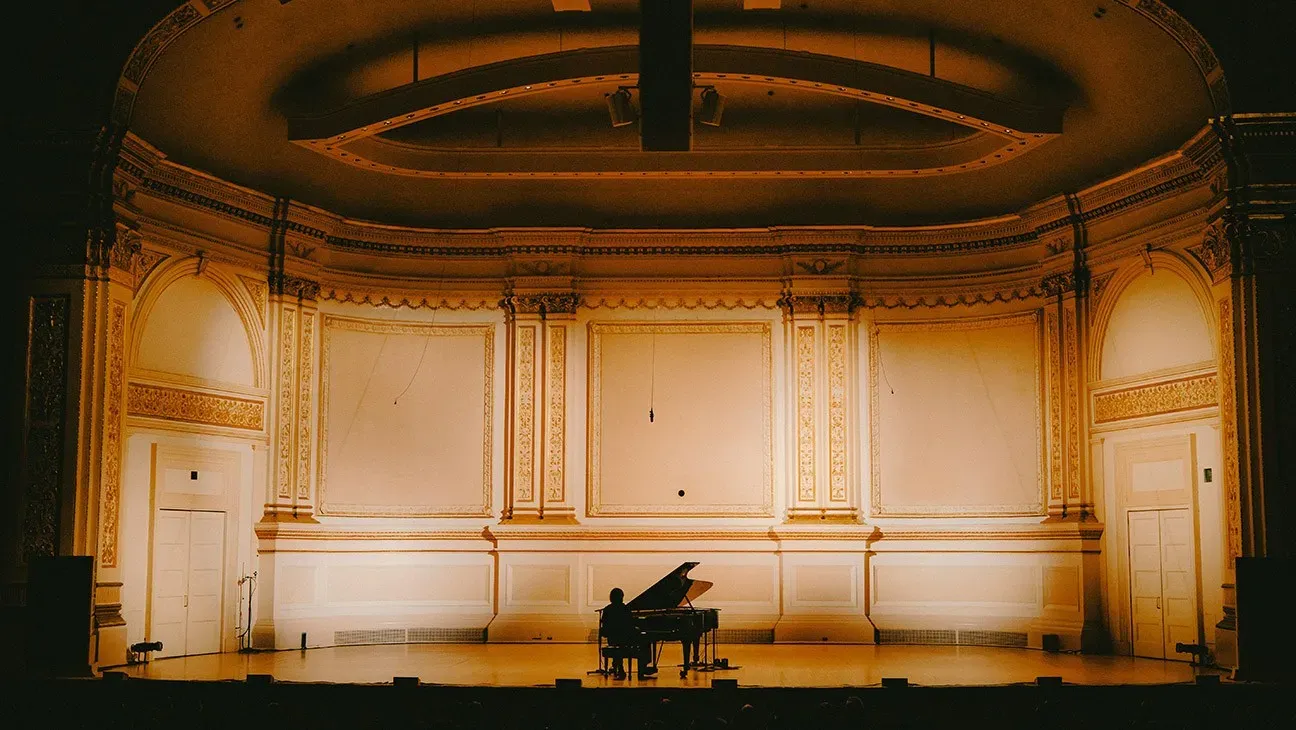
Paul Thomas Anderson's latest project, Cameron Winter at Carnegie Hall, is an unassuming concert film that offers a stark and intimate portrayal of a solo performance by Geese frontman Cameron Winter.
The 72-minute documentary chronicles Winter's December 2025 concert at New York City's iconic Carnegie Hall, where he delivered a stripped-down set of songs from his acclaimed debut solo album Heavy Metal. At just 23 years old at the time of filming, Winter embodies the enigmatic spirit of legendary performers like Miles Davis.
The film is notable for its austere approach to storytelling, with minimal stage patter and an emphasis on capturing the raw emotion of Winter's performance. He accompanies himself on a Steinway grand piano in near-darkness, with his back mostly turned to the audience as he pours his heart out through music.
As he navigates the Carnegie Hall stage, Winter's understated presence is striking, and one of the few moments of levity comes when he momentarily disappears from view, prompting a brief laugh from the audience.
The concert's somber atmosphere begins to dissipate as Winter's performance takes on a meditative quality, his baritone voice weaving a haunting melody that captivates the audience.
His song titles are as dark as they are intriguing, referencing figures such as the Devil and Jesus, alongside nods to rock legend Brian Jones of The Rolling Stones. The lyrics add to the sense of foreboding, but it's Winter's delivery that truly sets the tone for his music.
Winter's style is reminiscent of Nick Cave, with an incantatory quality that makes his songs blend together in a way that can be monotonous at times, despite their haunting beauty.
The documentary's minimalist approach to storytelling mirrors Cameron Winter's reserved nature on stage.
Anderson eschews elaborate camera work in favor of a straightforward presentation of the concert, allowing the audience to immerse themselves in the performance without distraction.
As the film unfolds, Anderson captures intimate moments between Winter and his instrument, showcasing the singer's intense focus as he navigates complex melodies with ease.
The cinematography is not limited to the stage, however; occasional shots from various angles around the auditorium provide a sense of depth and atmosphere that complements the music.
The cinematography is not limited to capturing the stage performance of pianist Cameron Winter at Carnegie Hall, as it also incorporates various angles and perspectives that add depth and atmosphere to the music. A notable example is a shot from the point of view of someone walking down the aisle towards the stage, with the camera's movement mirroring the person's footsteps.
The film's use of unconventional camera techniques is not limited to this instance; there are also jarring cuts, such as when the perspective suddenly shifts to that of a camera entering the stage area through opened doors. Additionally, we see Cameron Winter's shadow on one of the venue's walls during a number, creating a sense of presence and intimacy.
Facts based on reporting originally published by The Hollywood Reporter.
You may republish this story, in full or in part, if you credit Noti Group and link to it (licence CC BY 4.0). Photos are not included.