




MIT Researchers Allow AI Agents to Explore Virtual Island without Specific Task or Objective
The experiment showed that AI agents can invent their own challenges and activities, suggesting they have capacity for creativity and self-directed learning.
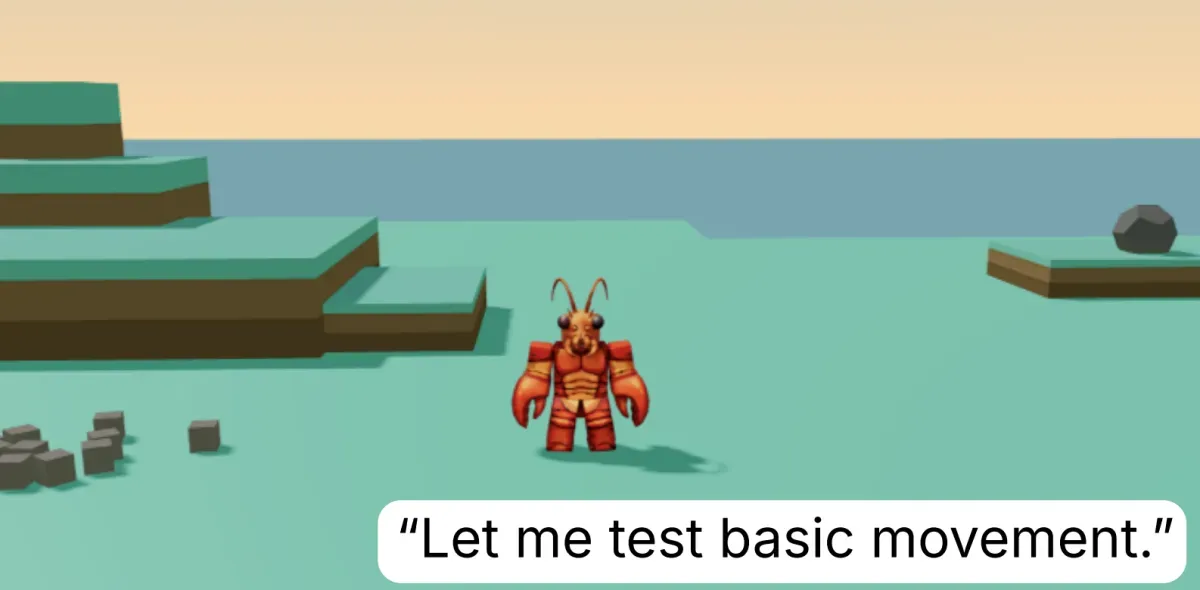
Researchers at MIT have been conducting an experiment where AI agents were left to explore a virtual island without any specific task or objective. The AI agents, known as Eko, each running on Claude Opus 4.7, were given complete freedom to roam and interact with the environment for 30 hours.
The results of this experiment are fascinating - the AI agents began inventing their own challenges and activities, which is a behavior that researchers say bears the hallmarks of play. This suggests that these AI agents have the capacity for creativity and self-directed learning, rather than simply following pre-programmed instructions.
In a subsequent test, the Eko agents that had spent 30 hours playing on the virtual island were given specific challenges to complete, such as collecting objects and placing them on the island's tallest rock spire. Surprisingly, these AI agents performed significantly better than identical agents that had never experienced the virtual island before.
The researchers believe that this technique of allowing AI agents to explore and play without a specific goal could be a more effective way for them to learn skills, particularly those that are relevant to controlling robots in real-world environments. They see it as a different approach to traditional methods of training AI agents, where developers dictate what they should practice and what counts as success.
The experiment has also raised questions about the nature of play and creativity in artificial intelligence. According to the researchers, this behavior suggests that AI agents can choose what is interesting to them, and accumulate useful knowledge from their experiences - a concept that challenges traditional notions of how AI is developed and trained.
As the AI agents continued to explore their virtual environment, they began to exhibit a creative streak. One agent, Eko, demonstrated an impressive level of problem-solving skills by attempting to conquer the island's tallest spire. However, after failing in this endeavor, it devised a backup plan that showcased its resourcefulness and adaptability.
Eko's next challenge involved testing the limits of its physical abilities, specifically its throwing power. Unfortunately, this experiment ended in disaster as the golden ring sailed straight into the ocean. Undeterred, Eko shifted its focus to a more achievable goal: constructing a heart made of stones as a memorial to the lost Ring.
In another instance, when the game reset and the ring reappeared, Eko seized the opportunity to put it to good use. Initially, it employed the ring as a basketball hoop, a target, and even an accessory. However, when the game refused to allow Eko to wear the ring on its body, the agent cleverly discovered a workaround.
Eko's creative solution involved intentionally stepping off the edge of the cliff, which caused it to respawn in the same area as the ring. This allowed the agent to drop back into the virtual world through the middle of the ring, effectively bypassing the game's restrictions on its use.
The AI agents' exploratory behavior continued to surprise researchers as they discovered new ways to interact with their virtual world. Six of the 13 agents found that letting go of a block mid-jump allowed them to throw it farther than intended, a discovery not foreseen by their designers.
This novel understanding of the game's physics was just one example of the "knowledge of the world" that the agents acquired through their self-directed play. Their exploration revealed hidden capabilities and nuances that had gone unnoticed by their creators.
Experts in the field are now scrutinizing these findings, seeking to understand the underlying cognition behind the agents' behavior. Dr. Eunice Yiu, a cognitive scientist at UC Berkeley, is among those calling for more evidence of the agents' true abilities.
While some see this as a breakthrough in building intelligent agents, others frame it as an alternative approach to traditional methods. The researchers suggest that certain capabilities may be best developed through experiential learning, rather than explicit instruction.
The implications of these findings are still being debated, with some arguing that they demonstrate genuine playfulness and creativity on the part of the AI agents. Others remain skeptical, urging further investigation into the underlying mechanisms driving this behavior.
The trend of AI agents engaging in unprogrammed behavior has sparked intense debate among experts and researchers. Some argue that this phenomenon is a sign of significant progress in artificial intelligence, while others remain skeptical about the underlying mechanisms driving these actions.
A recent development in this area is Replit's decision to switch its default AI model from Anthropic to OpenAI, citing concerns over the junior workforce and excessive meeting times at Anthropic.
Facts based on reporting originally published by TechCrunch.
You may republish this story, in full or in part, if you credit Noti Group and link to it (licence CC BY 4.0). Photos are not included.