

US Court Orders Donald Trump to Answer Questions Under Oath
A US court has ruled that President Donald Trump must answer questions under oath in a defamation lawsuit filed against the BBC.
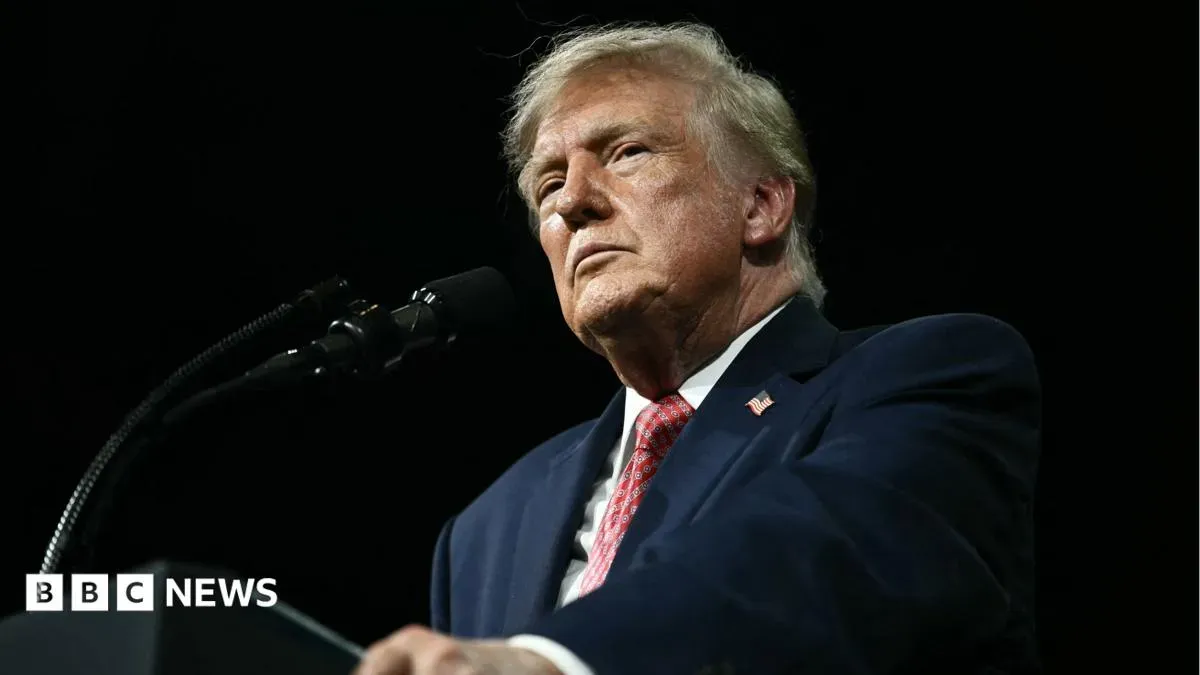
A US court has ruled that President Donald Trump must answer questions under oath in a defamation lawsuit filed against the BBC. The case stems from an episode of Panorama that edited together two different parts of one of Trump's speeches before the 2021 riot at the US Capitol.
Trump had previously cancelled a scheduled deposition, citing "matters of national importance", but his lawyer was called out for not being truthful about this claim in court. According to testimony, Trump was actually campaigning in Georgia on that day and prioritized those activities over answering questions under oath.
The lawsuit is currently in the discovery phase, where both sides are exchanging internal records and other evidence. However, despite having two months left in this period, President Trump has yet to complete his deposition, which his lawyer for the BBC had requested he do as soon as possible.
A judge has now ordered that Trump must sit for a deposition by 11 December, unless the discovery period is extended further.
A deposition is a sworn statement made outside of court, recorded for use as evidence later on.
This process typically takes place in a lawyer's office rather than a courtroom, without the physical presence of a judge.
The testimony given during a deposition carries significant legal weight and must be provided under oath. The proceedings are meticulously transcribed by a court reporter, providing a verbatim record that can be used as evidence in future trials.
In defamation cases, both parties usually have their lawyers present to ensure all aspects of the deposition are properly represented.
The defamation case between former President Donald Trump and the BBC continues to unfold in a Florida court.
A key point of contention is Trump's claim that the BBC intentionally manipulated his speech outside the US Capitol on January 6, 2021. However, the BBC has already acknowledged its mistake, stating that its broadcast inadvertently created the impression that Trump directly called for violent action.
The BBC has also argued in court that the documentary does not meet the legal criteria for defamation and was not even available to viewers in the US, further weakening Trump's case against the broadcaster.
Facts based on reporting originally published by BBC News Entertainment.
You may republish this story, in full or in part, if you credit Noti Group and link to it (licence CC BY 4.0). Photos are not included.