





Meta Ordered to Pay $25 Billion in Fines Over Consumer Protection Laws Violations
A New Mexico court has ordered Meta to pay $25 billion in fines after a jury found the company guilty of nearly 44 million violations of state consumer protection laws.
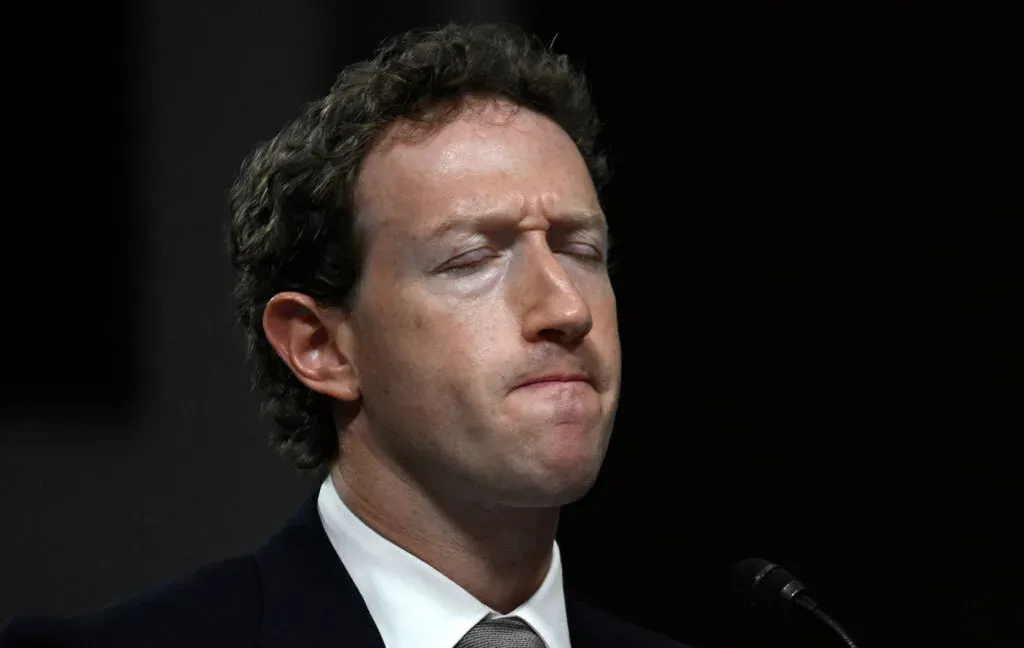
A New Mexico court has ordered Meta to pay $25 billion in fines after a jury found the company guilty of nearly 44 million violations of state consumer protection laws.
The hefty fine is the largest ever imposed on Meta, and it comes despite the tech giant's earlier settlement with attorneys general from nearly all states. New Mexico's Attorney General Raúl Torrez had declined to join this $18 billion settlement, opting instead for a trial that would allow his state to pursue its own case against Meta.
The court's decision was based on evidence presented during the trial, which showed that top Meta executives, including Mark Zuckerberg, were aware of the company's misleading public representations since 2010. The judge found that these misrepresentations involved data control, third-party data misuse, misinformation, hate speech, and unequal enforcement.
New Mexico had asked for even higher fines, up to $40 billion, arguing that the entire state was harmed by Meta's conduct. Attorney General Torrez claimed that a significant penalty was necessary to prompt meaningful changes within the company, as the fine would have a direct impact on Meta's stock price.
The court's decision has left Meta reeling after being slapped with a $25 billion fine by the state of New Mexico.
Mathew argued that the company's actions were not isolated incidents but rather a deliberate attempt to deceive users over an extended period. This was done to gain a competitive edge in the market, particularly against rival platforms like Twitter at the time.
The fine is significantly higher than what Meta had anticipated, with some estimates suggesting it would be around $3.4 billion. However, Attorney General Torrez maintained that this penalty was necessary to prompt meaningful changes within the company.
Mathew noted that previous settlements and agreements have not deterred Meta from engaging in deceptive trade practices. He suggested that a more substantial punishment is needed to prevent such behavior in the future.
The ruling has been hailed as a significant victory for consumers, with Attorney General Torrez celebrating it as "a historic day" that sets an important precedent for protecting users' rights.
New Mexico's consumer protection statute has been enforced in a way that holds powerful technology companies accountable for their actions. A recent court ruling against Meta has resulted in a significant fine, with the company facing nearly 44 million individual violations of state law.
Meta plans to appeal the penalty, citing constitutional concerns and arguing that the fine is excessive. The company's lawyers believe they have a good chance at reducing the fine on appeal. This move suggests that Meta is not ready to accept the consequences of its actions in New Mexico.
The size of the fine has been criticized by some as being too small compared to Meta's annual revenue. However, the company itself seems uncomfortable with the penalty, despite its significant financial resources. In fact, the multistate settlement cost Meta close to $10 billion, which would have added $22 billion to its income from operations if it had not incurred this expense.
The Attorney General's approach to enforcing consumer protection laws has been seen as a bold move against powerful corporations. By taking on one of the largest companies in the world, New Mexico is setting an important precedent for protecting users' rights and holding technology giants accountable for their actions.
Meta's concerns about doing business in New Mexico may be valid, given the state's willingness to enforce its consumer protection laws. However, this development also underscores the importance of states taking a more active role in regulating the activities of powerful corporations that operate across national borders.
Meta's recent struggles in rebooting its AI strategy have taken a significant hit as the company faces an unprecedented $25 billion fine after New Mexico refused to join a multistate settlement.
The penalties imposed on Meta underscore the severity of the consequences it may face if it fails to appeal the ruling. In response, Meta has signaled that it may seek support from Donald Trump's administration in its appeal by highlighting its AI wing in its statement opposing the ruling.
Critics argue that Meta is using the same tactics it was accused of exploiting to manipulate users into sharing their personal information publicly. According to a watchdog nonprofit, Meta users want more enforcers willing to take the company to trial rather than settle matters in ways that don't hold the company accountable for its actions.
The jury's findings have raised serious concerns about Meta's intentions and practices, with internal messages and investigation results showing that Mark Zuckerberg chose to deceive users rather than educate them on how to manage their personal information. In one message, Zuckerberg was found outlining a plan to give users the opportunity to change their privacy settings but not encouraging it.
The case has sparked debate over the role of powerful corporations operating across national borders and the need for states to take a more active role in regulating these companies' activities.
Meta's internal definition of data misuse was deliberately narrowed to reduce the number of users who would receive notifications about apps exploiting their data. This decision was made to avoid the operational burden of notifying a large number of people, according to Mathew.
Internal research by Meta uncovered substantial amounts of misleading and false content on the platform, including pages promoting hate speech and misinformation. The company's own documentation revealed that top-performing advertising content contained more false information than top-performing Facebook content.
Meta buried its internal research findings rather than sharing them with users or regulators. At the same time, the company deceived users in numerous ways, such as misrepresenting that all users receive equal treatment regardless of their status as celebrities or influencers.
In reality, certain classes of users were given preferential treatment and received warnings to remove violating content before strikes were applied. These users also frequently had their content decisions overturned when most others would not have been so fortunate.
Meta's aggressive push into user data collection is being met with growing resistance from regulators and lawmakers, who are seeking to hold the company accountable for its practices.
The state of New Mexico has taken a particularly hard stance against Meta, refusing to join a multistate settlement that would have allowed the company to avoid a significant fine. Instead, the state took the case to trial, where it secured a verdict establishing millions of violations of state law. This outcome sends a strong message about the importance of enforcing consumer protection laws.
The ruling has implications beyond Meta's own practices, as regulators and lawmakers look for ways to rein in tech giants' misuse of user data. New Mexico Attorney General Hector Balderas has vowed to continue using the blueprint from this case to enforce consumer protection laws and prevent companies from misleading consumers about what happens to their personal information.
Facts based on reporting originally published by Ars Technica.
You may republish this story, in full or in part, if you credit Noti Group and link to it (licence CC BY 4.0). Photos are not included.