


Cristiano Ronaldo's International Career Comes to an End After 23 Years of Service
The 41-year-old was at odds with coach Jorge Jesus over his role in the team and left the training camp without permission, leading to a tumultuous farewell.
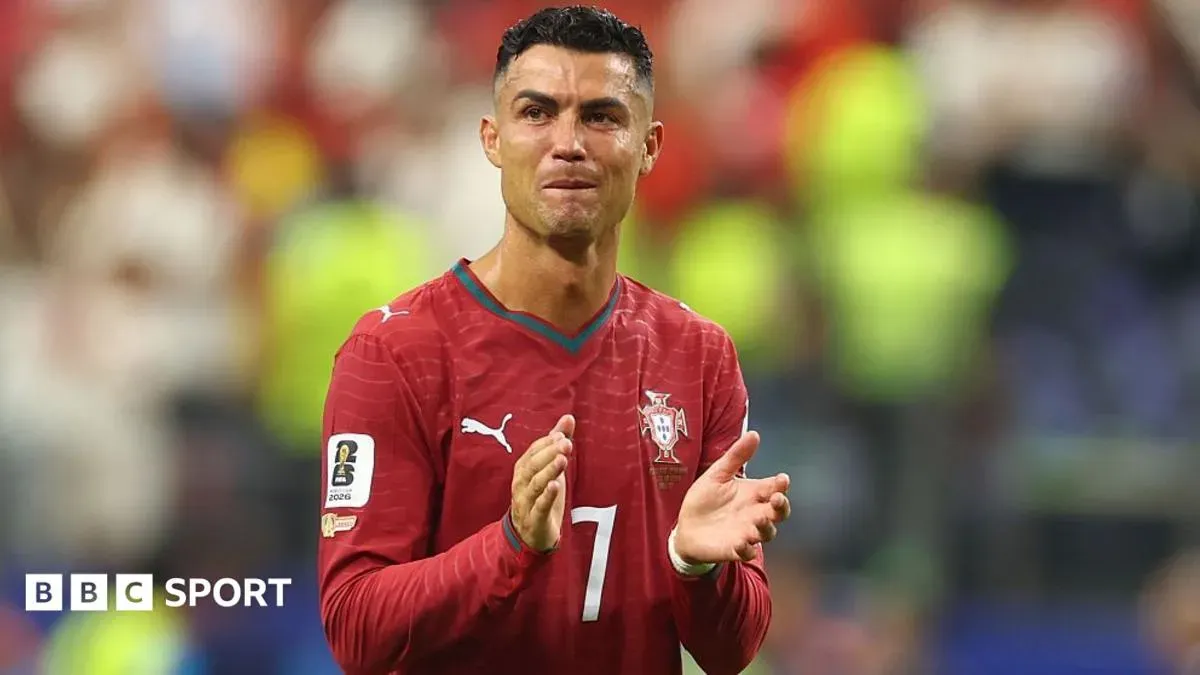
Cristiano Ronaldo's international career has come to an end after 23 years of service, marked by a tumultuous farewell that leaves many questioning his motives.
The 41-year-old was at odds with coach Jorge Jesus, who imposed a sanction of 30 days and a fine of 255 euros for leaving the team's training camp without permission. This move was seen as a clear message from Jesus that Ronaldo was no longer an automatic starter in the team. The punishment had already been served before Ronaldo decided to take drastic action.
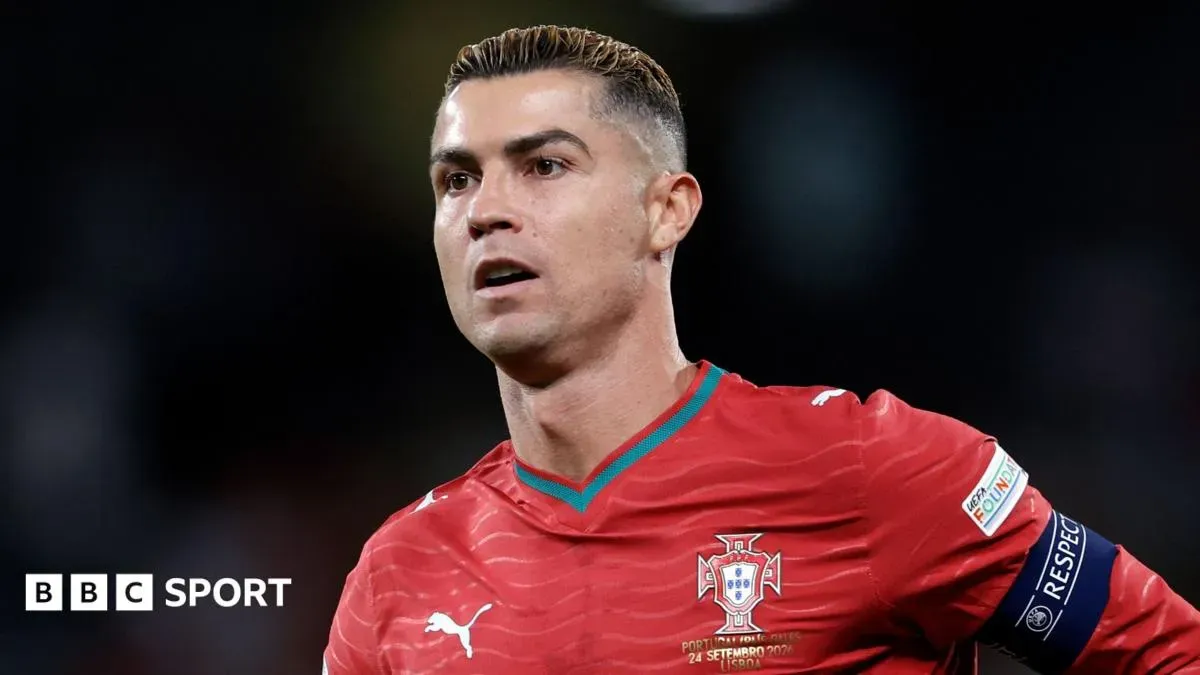
Ronaldo's last appearance on the international stage came on September 24, when Portugal faced Wales. His impressive record of 146 goals in 234 games will undoubtedly be remembered as a testament to his dedication and skill. Despite the accolades, however, the circumstances surrounding his departure have left a sour taste for many fans.
The relationship between Ronaldo and Jesus had been strained for some time, with the coach seemingly hesitant to start him in key matches. This decision likely contributed to Ronaldo's frustration and ultimately led to his departure from the team's training camp without permission. While it is unclear whether this was simply another "hissy fit" from the veteran striker, there are those who argue that he had adapted to the changing dynamics of the team over the years.
The fallout has left fans in Portugal with mixed emotions, with some hailing Ronaldo as a global ambassador and inspiration to millions, while others question his decision-making. As the situation continues to unfold, one thing is certain: Cristiano Ronaldo will be remembered for his remarkable achievements on the international stage.
The Portuguese national team has a history of young players bursting onto the scene, but few have made as profound an impact as Cristiano Ronaldo.
Ronaldo's early days in the squad were marked by clashes between his irreverent personality and the more traditional values of the team.
He was known to arrive at training sessions with a distinctive look: baseball cap on backwards, oversized sunglasses, and headphones blasting out music that could be heard from a distance. This flamboyant style often put him at odds with veteran players like Luis Figo and Rui Costa.
Despite his initial difficulties, Ronaldo's talent soon won over the respect of the team, particularly manager Luiz Felipe Scolari. Scolari saw potential in the young player and took him aside to offer words of wisdom: if he could change his attitude, he would one day lead Portugal on the pitch.
Ronaldo's first major disappointment came at a young age - 19 - when Portugal was defeated by Greece in the final of Euro 2004. The match, held at the Estadio da Luz in Lisbon, was expected to be a victory for the home team but instead saw an underdog Greece emerge triumphant with a single headed goal from Angelos Charisteas.
Ronaldo's journey in the Portuguese national team was marked by personal struggles that he tackled head-on on the field.
Following Cristiano Ronaldo's move to Portugal, Luís Figo had already claimed the number 7 jersey, forcing Ronaldo to don the number 17 shirt instead. It was a deliberate decision made by Figo, who seemed intent on making things difficult for his new teammate from the start.
A poignant moment in Ronaldo's time with the team came when he received news of his father's passing before a match against Russia in September 2005. Luís Scolari and Figo visited him in his room to share the devastating news, but instead of sending him home as an option was suggested, Ronaldo chose to play on.
His decision was not just about fulfilling his responsibilities as a player; it also reflected his coping mechanism for dealing with the immense personal pain he was experiencing. In the dressing room, he found solace in doing ball tricks while his teammates went through their usual pre-match routine.
Ronaldo's influence within the team grew significantly over time, eventually altering routines and habits that had been established by the coach. This shift in dynamics led to tension between Ronaldo and Carlos Queiroz after Portugal's disappointing exit from the 2010 World Cup at the hands of Spain.
As Portugal struggled through years of economic hardship and a crisis of confidence, its football team became an important symbol of national pride.
However, Cristiano Ronaldo's individualism and ego sometimes created contradictory feelings among the Portuguese public, who were torn between admiration for his skills and reservations about his persona.
Some fans preferred to idolize more humble figures like Figo, Eusebio, Paulo Futre or Rui Costa, but Portugal was ultimately proud to have Ronaldo on its team, especially as he delivered results with his titles.
Under the guidance of coach Fernando Santos in 2016, Ronaldo underwent a significant transformation. He began to accept and even thrive in new roles, such as playing as a centre forward alongside Nani.
Ronaldo's willingness to adapt and take instructions from Santos marked a turning point in his leadership, and he soon emerged as a true captain of the team, earning the respect of his teammates and fans alike.
Ronaldo's leadership continued even in his final moments on the pitch, as he handed over the armband to Nani at some point during the game. Despite being injured and struggling to move freely, Ronaldo showed remarkable composure by rallying his teammates with words of encouragement at halftime.
However, his old instincts soon began to resurface. Even while on the sidelines, Ronaldo found it difficult to resist giving orders and instructions to his team, much to the chagrin of the fourth official, who eventually intervened and sent him back to the bench. This behavior was deemed excessive by other coaches consulted for their opinions.
Ronaldo's drive to influence every outcome is a double-edged sword that has both propelled and hindered his career. While it has undoubtedly contributed to Portugal's success on the pitch, it also makes it challenging for him to accept limits and constraints.
Portugal's fortunes have undergone a significant transformation since Ronaldo made his debut in 2003. The team was still searching for its first major title at that time, but under Ronaldo's guidance, they eventually achieved their breakthrough with the European Championship win in July 2016.
Ronaldo's influence extends far beyond his playing career, as he has helped shape a generation of players who have come through the Portugal ranks. Under his leadership, the team has evolved from being just talented to becoming one that consistently competes at the highest level.
The dynamics surrounding Cristiano Ronaldo's role in Portugal's team have undergone significant changes since 2016. The focus has shifted from questioning his selfishness to concerns about whether the team relies too heavily on him.
A prime example of this shift was seen during the World Cup in 2018, when Ronaldo scored three goals against Spain, including a long-awaited free-kick after 45 attempts in major tournaments. However, despite his efforts, Portugal still suffered an exit at the hands of Uruguay.
The recent decision to retire from international duty has sparked a mix of emotions among fans who have grown up with Ronaldo's leadership and success. A tribute is being planned by the federation to acknowledge his immense contribution to the team, underscoring the void he leaves behind.
Facts based on reporting originally published by BBC Sport.
You may republish this story, in full or in part, if you credit Noti Group and link to it (licence CC BY 4.0). Photos are not included.