



Childhood Experiences Leave Lasting Impact on Self-Perception
The author's struggles with physical fitness and feelings of inadequacy began in childhood due to spinal conditions and continued into adulthood.
For years, a deep-seated sense of inadequacy had haunted me, stemming from childhood experiences that left an indelible mark on my self-perception. Growing up with spinal conditions made me feel like I didn't quite fit in.
As I navigated adulthood, this feeling only intensified, and by the time I reached my late 30s, burnout had become a constant companion. It seemed like no matter how hard I tried to push through, exhaustion was always lurking just beneath the surface.
My struggles with physical fitness were well-documented, particularly in gym class where I was often the last one picked. To be honest, even as an adult, I wouldn't have chosen myself for any physically demanding task, my body had become a source of shame and self-loathing.
When I was 10 years old, my life took a significant turn with the diagnosis of scoliosis, which was accompanied by two other conditions: severe lordosis and spondylolisthesis. The X-rays that revealed the twisted angles and unnatural curves of my spine left an indelible mark on me, it was as if I had been given a visual representation of my own inadequacies.
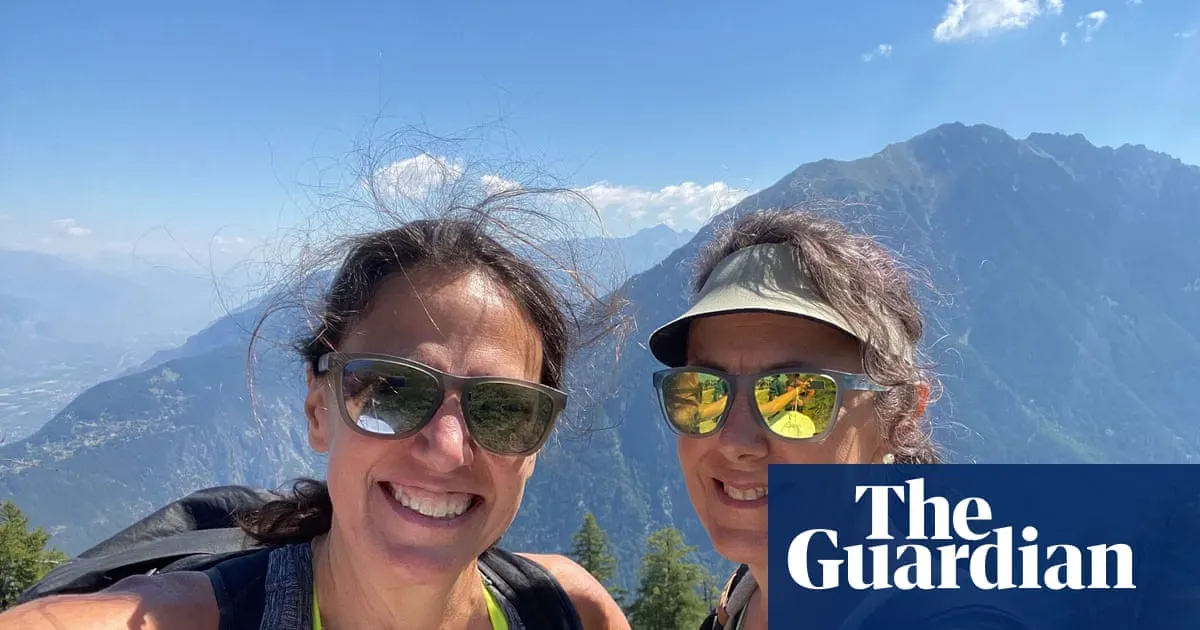
The cumulative effect of these experiences had been to make me feel like I didn't have what it took to tackle even the most basic physical challenges. It's little wonder, then, that when an invitation came up for a trek in the Alps, I was both excited and terrified, the prospect of pushing my body to its limits was daunting, to say the least.
The orthopaedic surgeon's words still lingered vividly in my mind as I recalled the diagnosis and proposed treatment. A displaced vertebra in my lower back posed a significant risk of paralysis if it slipped forward after any fall or bump.
Everyday activities that were once routine became daunting challenges, filled with potential dangers. Bumps on the sidewalk, stairs in buildings, and crowded hallways all seemed like obstacles waiting to happen. The world had transformed into an unrelenting obstacle course where I felt vulnerable.
A second opinion from another orthopaedic surgeon brought some reassurance. He revealed that many people live with this condition without suffering paralysis, and suggested a more conservative approach. We opted not to proceed with the operation, instead choosing to monitor my spine closely.
This decision was made, but it didn't alleviate the underlying fear I harbored about my body's fragility. For decades, I carried this low-level terror inside me, becoming increasingly timid about engaging in physical activities.
As I entered my 30s, my career demands continued to escalate, with long hours and frequent travel taking a toll on my physical well-being. Standing for extended periods left me wracked with pain, and the fear of my body betraying me was always present.
The change in scenery had brought more than just fresh air to my new home town. A colleague's invitation to explore on two wheels led me to discover a hidden talent - one that would challenge long-held self-doubts and leave me questioning everything I thought I knew about myself.
The initial 20-mile bike ride through the countryside was a revelation, especially considering my complete lack of physical activity up until then. But what surprised me even more was how quickly I adapted to longer distances, going from 30 minutes to hours on the saddle with ease. The next challenge was just around the corner - a 50-mile ride that pushed my limits and forced me to confront my own capabilities.
As the rides got longer and more grueling, so did the rewards. I found myself gaining energy at work, no longer feeling burnt out after long hours in front of a computer screen. The confidence boost was palpable, especially when I took on a one-hour keynote presentation without needing to worry about collapsing afterwards. It was as if my body had finally caught up with my ambitions.
A turning point came when I turned 40 and decided to get a safety assessment from a doctor. He compared my current X-rays with those taken at age 16, revealing that there had been no significant movement or degeneration in the vertebrae. The news was liberating - it meant I could pursue fitness without too many limitations, a thought that felt revolutionary after years of self-doubt.
The discovery sparked a new chapter in my life, one where I started working out with a trainer and began to see my body in a different light. For the first time, I stopped thinking about how it looked or what was wrong with it, and instead focused on its capabilities - a shift that would change me forever.
As I reflect on that pivotal moment, it's clear that confronting my physical limitations was a crucial step towards self-acceptance. Having previously viewed my body as an unreliable adversary, I began to question the root of this mindset.
My experiences in the Rockies and Alps had already shown me that I was capable of pushing beyond perceived boundaries, but it wasn't until I confronted those fears head-on that real change occurred. The sudden shift from self-doubt to confidence marked a turning point in my journey towards embracing my physical abilities.
Since then, I've continued to challenge myself with increasingly demanding activities, and the results have been transformative. Not only has my physical strength improved, but it's also led to a profound impact on my mental state, one of empowerment rather than self-doubt.
Ultimately, this newfound confidence has enabled me to redefine my potential in every area of life, no longer held back by limiting beliefs about what I'm capable of achieving.
Facts based on reporting originally published by The Guardian Life and Style.
You may republish this story, in full or in part, if you credit Noti Group and link to it (licence CC BY 4.0). Photos are not included.