







Bambu Lab Introduces New Home Printing Device at Lower Price Point
The new printer boasts several features that were previously available on the more expensive H3C model, including real-time switching between materials and mixing of soft and hard materials.
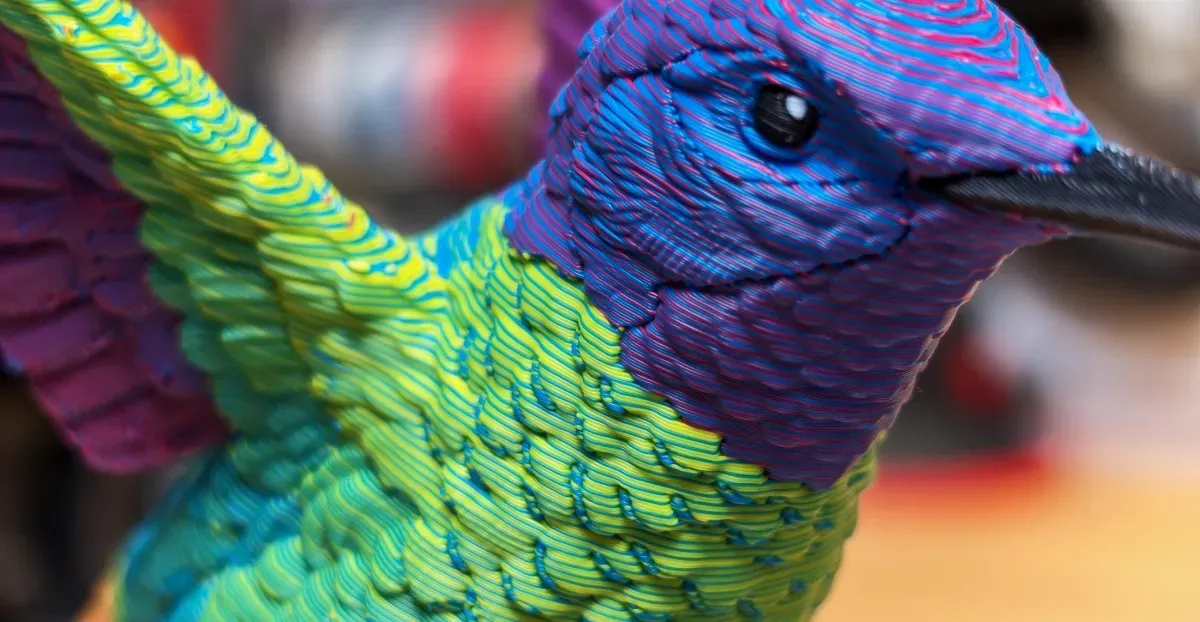
Bambu Lab has introduced a new home printing device, priced at $1,149 / £999 / €1,149, which is significantly cheaper than its previous model. The new printer boasts several features that were previously available on the more expensive H3C model.
The P3C can switch between materials in real-time, allowing for the creation of complex prints with varying textures and colors. It can also mix different colors to produce a wide range of hues, making it suitable for artistic projects. Furthermore, the printer supports the mixing of soft and hard materials, enabling users to create prints with unique properties.
However, Bambu's decision to cut costs has resulted in some compromises on the P3C's design. One notable change is its reduced print area, which measures 256 x 256 x 260mm compared to the H3C's larger dimensions. The printer also supports seven automatically swapping tools instead of nine.
The new printer appears to be positioned as a tinkerer's device, rather than one geared towards beginners or professionals. This may limit its appeal to those who require more advanced features and capabilities from their 3D printer.
The P3C's automated material system (AMS) is notable for its lack of motors to automatically load filament, unlike previous models from Bambu.
By default, the printer comes equipped with four-millimeter print nozzles, though users can upgrade to seven if needed; however, these additional nozzles require manual loading.
In comparison to other Bambu models, such as the P2S Combo, which retails for $800, the P3C's AMS is a step back in terms of automation and convenience.
While it does allow users to load five colors of filament at once, one more than the P2S, installing additional printheads, which can cost up to $100 each, is still a viable option; however, loading these nozzles is a labor-intensive process that requires manual effort.
The P3C's design allows it to load five colors of filament at once, which eliminates the need for frequent color switching and subsequent purging of filament residues.
While this may seem like an advantage over the P2S, users still have the option to install additional printheads, which can cost up to $100 each. This is a viable alternative for those who require more complex printing tasks.
The five-nozzle setup enables users to load all five rolls of Bambu's PLA Palette filaments, including cyan, magenta, yellow, black, and white. This allows for color mixing and produces creations like the hummingbird test print, which turned out almost flawlessly on the first try.
However, achieving certain colors through color mixing can be tricky, as evident from the brown tree branch in the hummingbird's perch. Bambu suggests trying the "mixed color sublayer" feature or using a normal motorized AMS to improve results.
The Bambu P3C's manual reloading process can take around five minutes to complete, a timeframe that may seem lengthy given the printer's capabilities.
In an effort to streamline this process, the company plans to release a software update that will significantly reduce hands-on time for loading spools to under one minute.
Facts based on reporting originally published by The Verge.
You may republish this story, in full or in part, if you credit Noti Group and link to it (licence CC BY 4.0). Photos are not included.