







Chick-fil-A Expands Globally Despite Industry Challenges
Despite facing elevated inflation and increased competition, Chick-fil-A continues to attract customers with its family-owned business model.
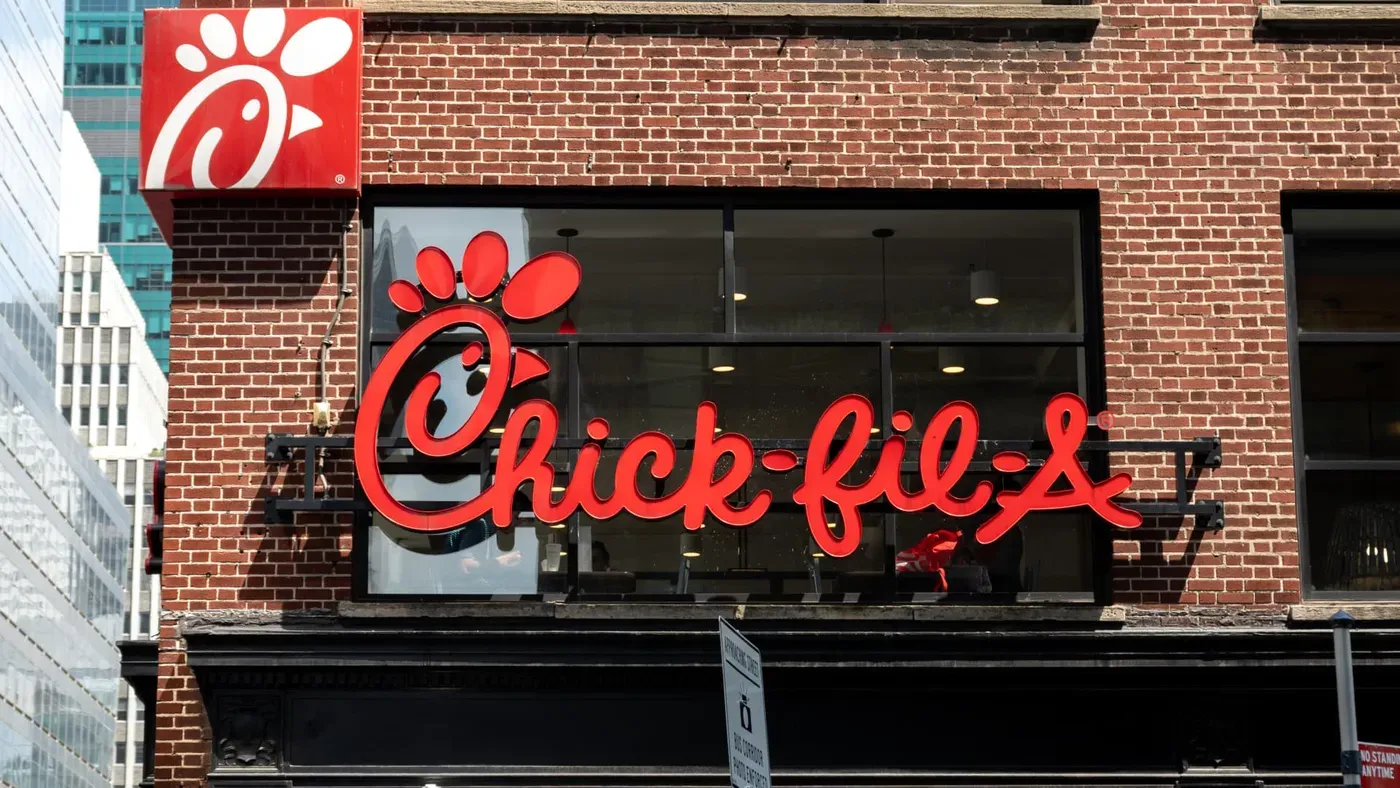
Chick-fil-A has been expanding its reach globally, with restaurants now located as far afield as Singapore. Despite this growth, the company remains committed to maintaining its family-owned business model.
This commitment is reflected in the leadership of CEO Andrew Cathy, who took over from his father Dan nearly five years ago. The decision to succeed his father was made amidst significant challenges for the restaurant industry, including elevated inflation and increased competition from new chicken-based rivals.
The tough conditions facing the industry have had a negative impact on many major players, with McDonald's, Popeyes, and KFC all reporting disappointing results. However, Chick-fil-A has managed to buck this trend, with its restaurants continuing to attract customers.
In fact, CEO Andrew Cathy is so confident in his company's performance that he described the current year as "good. He attributed this success to the hard work of the chain's operators, who have been able to balance the fundamentals of running a restaurant with providing top-notch hospitality.
Chick-fil-A's expansion plans are a testament to the company's calculated approach to growth. The chain has been steadily increasing its presence in new markets, including Canada, Singapore, and the United Kingdom, while maintaining a strong focus on quality customer service.
The company's success is reflected in its recent opening of 179 restaurants last year, a significant increase that demonstrates Chick-fil-A's ability to adapt to changing consumer preferences. This growth has not gone unnoticed, with investors taking note of the chain's impressive expansion efforts.
Restaurant stocks have struggled this year, with shares of Jersey Mike's plummeting nearly 28% since its initial public offering in July. Inspire Brands, owner of Dunkin', is reportedly unlikely to go public unless the sector's performance improves. This trend suggests that staying private may be a wise decision for Chick-fil-A.
The company's ability to plan for the long-term, rather than focusing on short-term gains, has allowed it to maintain its independence and avoid the pressures of Wall Street. According to CEO Andrew Cathy, this approach enables the company to plan for the quarter century without being constrained by quarterly expectations.
Chick-fil-A's venture arm has been instrumental in driving innovation within the company. The launch of Daybright, a new beverage-focused restaurant concept, is one example of the chain's willingness to experiment and adapt to changing consumer tastes.
The company's commitment to its core values, such as providing exceptional customer service and maintaining a strong sense of community, remains unwavering. As Chick-fil-A continues to evolve and grow, it will be interesting to see how these values are balanced with new strategies for expansion.
Chick-fil-A takes a thoughtful approach to incorporating technology into its restaurants, considering how people will want to receive food in the future. This forward-thinking mindset allows the company to explore innovative possibilities for enhancing customer experiences.
When pondering the integration of emerging technologies like drone delivery and artificial intelligence, Cathy emphasized that Chick-fil-A's focus is on creating a better experience for its guests. The company remains enthusiastic about the potential benefits these technologies could bring, but also acknowledges the importance of balancing innovation with human interaction.
In contrast to some industry rivals, such as McDonald's, which plans to test AI voice ordering in drive-thru lanes, Chick-fil-A has decided against adopting this technology. Instead, Cathy emphasized the value of maintaining a human-to-human approach to hospitality, where employees can provide personalized service and create a warm atmosphere for customers.
The company's commitment to human interaction is evident in its decision not to substitute technology for face-to-face communication with customers. By prioritizing hospitality over automation, Chick-fil-A seeks to establish a loyal customer base that appreciates the extra effort from employees.
Other restaurants are also recognizing the importance of refocusing on hospitality and personal service. Starbucks has implemented a creative way to add a human touch by equipping baristas with Sharpie markers to write friendly messages on customers' coffee cups. Meanwhile, Burger King has redefined its restaurant manager role into a Your Way Champion, who greets diners and addresses any issues that may arise.
As part of its efforts to enhance hospitality, McDonald's will introduce the Make It Golden" training program for franchisees and employees starting this Monday. This program focuses on not only food quality but also customer service, highlighting the growing recognition within the industry of the value of human interaction in creating a positive dining experience.
Chick-fil-A's customer satisfaction ratings have been a consistent benchmark for the fast-food industry, with the chain leading the American Customer Satisfaction Index for over a decade. This reputation is built on its focus on exceptional service, which sets it apart from competitors and appeals to consumers who are increasingly discerning about their dining choices.
The simplicity of Chick-fil-A's menu has been another key factor in its success. However, the chain has not been afraid to experiment with new offerings, often introducing seasonal limited-time items that can help keep the menu fresh and exciting for customers.
One example of this approach is the introduction of unique flavors and profiles through seasonal items, which allows Chick-fil-A to bring something new to the table while remaining true to its brand. This strategy has been successful in driving customer engagement and loyalty.
The success of Chick-fil-A's approach has not gone unnoticed by other fast-food chains, with several competitors attempting to replicate its formula for success. The release of Popeyes' chicken sandwich in 2019 is one notable example, as it helped the chain gain significant market share and push Chick-fil-A's dominance.
Despite this challenge, Chick-fil-A remains the leading chicken chain in the US, with a market share of around 43% as of 2024. This reflects its enduring appeal to customers who value high-quality food and exceptional service.
The introduction of seasonal items has also allowed Chick-fil-A to gauge customer reaction and preferences, providing valuable insights that can inform future menu decisions. By striking the right balance between innovation and consistency, the chain is able to stay ahead of the competition and maintain its position as a leader in the fast-food industry.
The fast-food industry is witnessing increased competition as major players like McDonald's are gearing up to launch new products. Among these, hand-breaded chicken strips and sandwiches are set to be tested by the global giant, a move that could potentially reignite the battle in the market.
Dan Cathy, CEO of Chick-fil-A, expressed his gratitude for the competition, stating it drives innovation within their own business. He emphasized that healthy rivalry pushes companies to excel and improve customer experience. This perspective underscores the company's commitment to staying ahead of the curve by continuously seeking ways to enhance its offerings.
In addition to innovating in-house, Chick-fil-A has also ventured into external projects through its subsidiary Red Wagon Ventures. Established in 2017, this arm is dedicated to exploring new ideas and concepts that can aid the growth of the company. According to Andrew Cathy, a key member of the team, their primary focus remains on perfecting the core business but they do allocate resources for these experimental ventures.
Red Wagon Ventures has been involved in various projects within the restaurant industry. One such initiative is the Little Blue Menu concept, which combined traditional Chick-fil-A items with other menu options like burgers and pizza. Although this experiment will be discontinued next year as it converts to a standard Chick-fil-A location, the venture's willingness to take risks demonstrates the company's commitment to growth.
The subsidiary has also explored non-traditional ventures that are far removed from the fast-food industry. Acrew Home Professionals is one such example, launched last year as a home repair and maintenance business with a unique approach to customer service. This foray into home services may seem unrelated to Chick-fil-A's core offerings but it underscores the company's willingness to diversify.
The experimental coffee shop, Daybright, serves as another example of Red Wagon Ventures' efforts to innovate outside traditional fast food. The establishment offers a range of beverages and baked goods but does not feature any of Chick-fil-A's signature chicken items on its menu. This blend of old and new concepts reflects the company's ongoing quest for innovation and customer satisfaction.
Chick-fil-A's pursuit of innovation is not limited to its core business model. Dan Cathy, the company's CEO, has emphasized the importance of expanding into new areas while staying true to the family business values that have defined the brand for generations.
To achieve this balance, Cathy has been studying successful family businesses that have endured for over a century. He notes that these long-lived companies must continually adapt and innovate in order to remain relevant. This mindset is crucial as Chick-fil-A navigates its own growth trajectory.
As an example of his grandfather's entrepreneurial spirit, Cathy points out that Truett Cathy opened a new restaurant concept at the age of 92, just before handing over the reins of the family business to his son. This legacy of innovation and risk-taking will likely influence the decisions made by Red Wagon Ventures.
The venture arm will not only explore launching its own brands but also consider acquiring companies that lack a clear succession plan or are seeking an exit.
Facts based on reporting originally published by CNBC.
You may republish this story, in full or in part, if you credit Noti Group and link to it (licence CC BY 4.0). Photos are not included.