






Russian Forces Target Major Bridges in Kyiv for Fourth Consecutive Day
Kyiv's Mayor reported that the latest attack damaged a key heating main, resulting in a temporary shortage of hot water for residents.
Major bridges in Kyiv have come under sustained attack by Russian forces for a fourth consecutive day, as Moscow intensifies its assault on critical infrastructure in the capital.
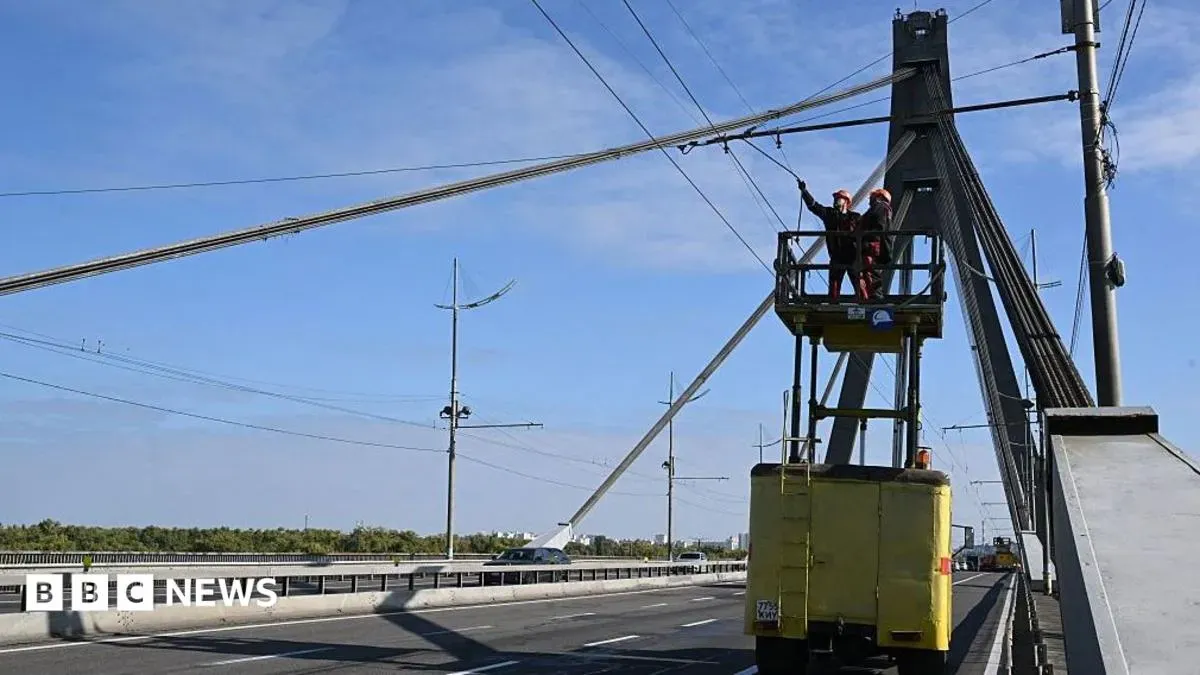
The Pivnichnyi Bridge was hit again early on Sunday morning, just a day after it had been damaged in an earlier strike that caused significant traffic disruptions. The road surface was severely impacted, and emergency services were deployed to the scene.
Kyiv's Mayor, Vitali Klitschko, reported that the latest attack had also damaged a key heating main, resulting in a temporary shortage of hot water for residents in the north-eastern Desnyanskyi district.
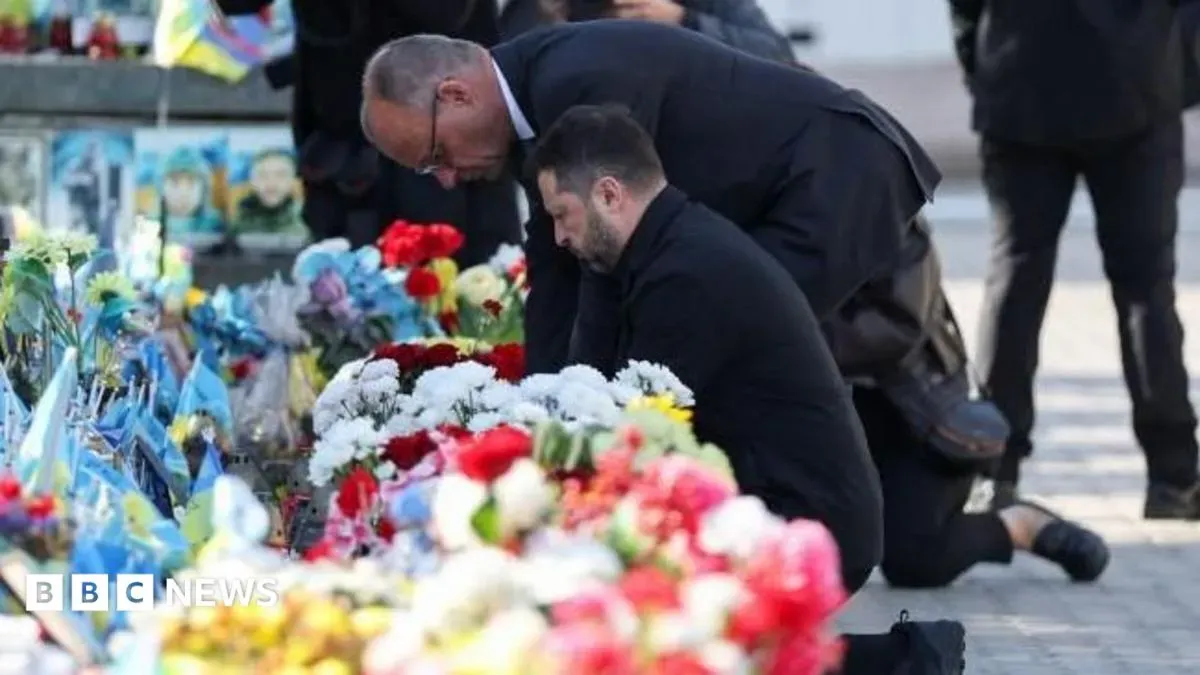
The surprise visit by German Chancellor Friedrich Merz to Kyiv on Sunday coincided with this latest escalation, as he met with Ukrainian President Volodymyr Zelenskyy in the city.
German Chancellor Friedrich Merz's visit to Kyiv on Sunday coincided with a significant escalation in Russian drone attacks against Ukraine's infrastructure. The latest assault targeted a major bridge in the capital city, causing damage and injuring two people.
The Pivnichnyi Bridge was hit by a Russian strike on Saturday, marking a new strategy from Moscow in its ongoing campaign of aggression. This attack follows another incident just days prior, when the Pivdennyi (Southern) Bridge was repeatedly targeted by Russian drones.
Germany has emerged as Ukraine's largest donor since Chancellor Merz took office in May 2025, with a significant increase in support for the embattled nation. The German government has made it clear that its security interests are closely tied to the outcome of the war in Ukraine, and that providing assistance is not only a matter of solidarity but also of self-interest.
As Ukrainian President Volodymyr Zelenskyy continues to appeal for more military aid from Western allies, including advanced interceptors capable of countering new Russian drone technology, Germany's commitment to supporting Ukraine remains unwavering.
The latest wave of drone attacks by Russia has targeted two bridges in Kyiv, with Russian officials claiming they were used to transport Ukrainian troops and military supplies.
In response to these warnings, EU Ambassador Katarína Mathernová took a firm stance on Twitter, stating that the EU Delegation would not be intimidated into leaving Kyiv. Her statement was echoed by German Ambassador Boris Ruge, who added his support with a simple "Amen" - we're staying".
This latest escalation comes after earlier attacks on the Pivdennyi Bridge prompted a crisis meeting of Kyiv's defense council on Friday. The city is now facing a dire situation, according to Mayor Vitali Klitschko, as Moscow continues to target critical infrastructure, logistics, housing, and other key facilities.
The repeated drone strikes are unlikely to bring down the bridges themselves, but they will force their closure and risk weakening their structure over time, making them unusable.
Facts based on reporting originally published by BBC News World.
You may republish this story, in full or in part, if you credit Noti Group and link to it (licence CC BY 4.0). Photos are not included.