





Laika's Latest Release, Wildwood, Marks Studio's Commitment to Innovation and Technical Advancement
Laika's latest stop-motion film, Wildwood, follows a young girl named Prue as she navigates a fantastical realm in search of her missing brother.
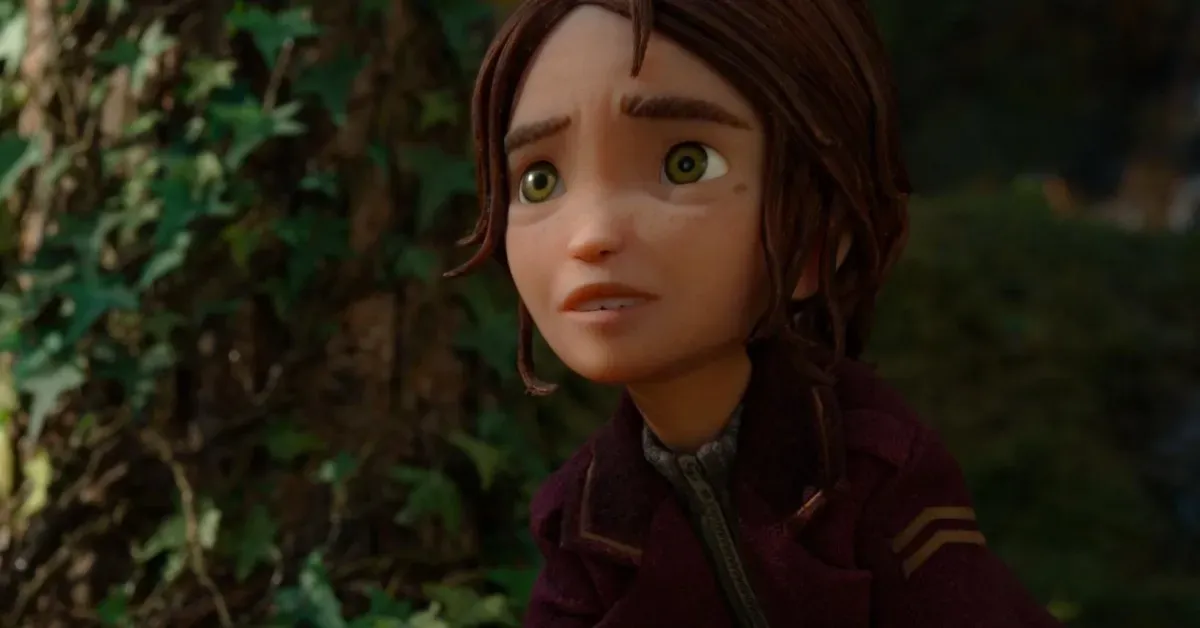
Laika has been building up to its latest release, Wildwood, for nearly two decades. The studio's CEO, Travis Knight, optioned the rights to Colin Meloy's book of the same name in 2011. However, production on the film didn't begin until a decade later.
Knight, who also directed Wildwood, had been working on the project in some form or another for 16 years. According to him, his personal connection to the story was a major factor in keeping it alive despite the long development time. He says that the story meant something special to him and he felt compelled to see it through to completion.
Caleb Deschanel, cinematographer on Wildwood, brought his extensive experience from working on live-action films like The Passion of the Christ and Titanic to the stop-motion project. Despite his background, he was still surprised by the amount of work that went into creating a stop-motion movie. He found it to be a much more complex process than he had initially anticipated.
Deschanel's comments suggest that stop-motion is a unique and demanding medium, one that requires a great deal of time, effort, and expertise. As Wildwood marks Laika's latest foray into the world of stop-motion, it will be interesting to see how audiences respond to this labor of love.
Laika's latest production, Wildwood, is a monumental undertaking that showcases the studio's commitment to innovation and technical advancement. The film's narrative follows Prue, a young girl who embarks on a perilous journey into the wilderness surrounding Portland to find her missing baby brother.
As she ventures deeper into the forest, Prue discovers a fantastical realm teeming with magical creatures, talking animals, and warring factions. This immersive world is brought to life by an impressive team of nearly 50 animators working in tandem with over 200 intricately crafted puppets. The film's scope is evident in its ambitious sequences, including a 12-minute battle scene featuring dozens of soldiers.
The production process for Wildwood has been marked by significant technical advancements, building on the innovations introduced in Laika's previous films. For example, the studio has developed and refined techniques such as animating puppets with diaphragms that enable subtle breathing movements. These incremental improvements have become standard features in Laika's productions, demonstrating the company's dedication to pushing the boundaries of animation.
Wildwood's elaborate sequences, including a chaotic chase scene through Portland's bustling streets, showcase the studio's ability to balance technical complexity with narrative engagement. The film's intricate world-building and character development will be put to the test when it premieres, offering audiences a unique viewing experience that blends fantasy and adventure.
The costume design team at Laika had a treasure trove of techniques to draw from when working on Wildwood, thanks to two decades of experimentation and innovation.
According to Deb Cook, there wasn't one standout innovation, but rather the accumulation of many tools that allowed them to create something truly unique. This was particularly evident in the film's costume department, which had to balance modern clothing with more fantastical attire for the city and forest sequences respectively.
The team's advancements in materials played a crucial role in bringing their vision to life. They opted for more flexible fabrics, allowing for greater range of motion, and developed a new process for creating silicone that is both lighter and more durable than previous methods.
The use of these new materials has also led to a significant reduction in the studio's reliance on foam latex, which can be smelly, prone to shrinkage, and eventually crumbles over time.
The use of advanced materials in Laika's production has led to significant improvements in bringing characters to life on screen. The studio's ability to create realistic textures and fabric flows is particularly noteworthy, adding depth to its puppet-based storytelling.
Small details such as breathing impressions or the rustle of clothing are crucial in creating an immersive experience for viewers. These subtleties require a high degree of technical skill, but they also allow the audience to connect with the characters on a more human level.
Laika's emphasis on nuanced performances is evident in scenes that rely heavily on dialogue and subtle emotional expression. In these moments, the puppets' lack of life is actually an asset, as it allows the actors behind them to shine through their craft.
The result is a more intimate and emotionally resonant viewing experience, where the audience can focus on the characters' inner struggles without distraction. This approach requires a delicate balance between technical wizardry and artistic subtlety.
Laika's 20-year journey has been marked by steady innovation and improvement in its craft. The studio has consistently pushed itself to new heights with each film, refining its techniques and expanding its creative boundaries.
This approach requires a delicate balance between technical wizardry and artistic subtlety. Knight's team was able to bring this vision to life thanks to the knowledge and expertise gained from previous films like ParaNorman and Kubo and the Two Strings.
The project also provided opportunities for Laika veterans to collaborate with newcomers, including young animators who were working on their first feature film project.
Facts based on reporting originally published by The Verge.
You may republish this story, in full or in part, if you credit Noti Group and link to it (licence CC BY 4.0). Photos are not included.