





Axiom Math Seeks to Verify Mathematical Proofs Using Formal Methods
Axiom Math is working on verifying mathematical proofs using formal methods as part of its efforts to create a solid foundation for AI agents in software and scientific research.
In recent years, artificial intelligence has been making rapid progress in solving complex mathematical problems, but concerns have been raised about the reliability of these solutions due to potential errors in AI processing.
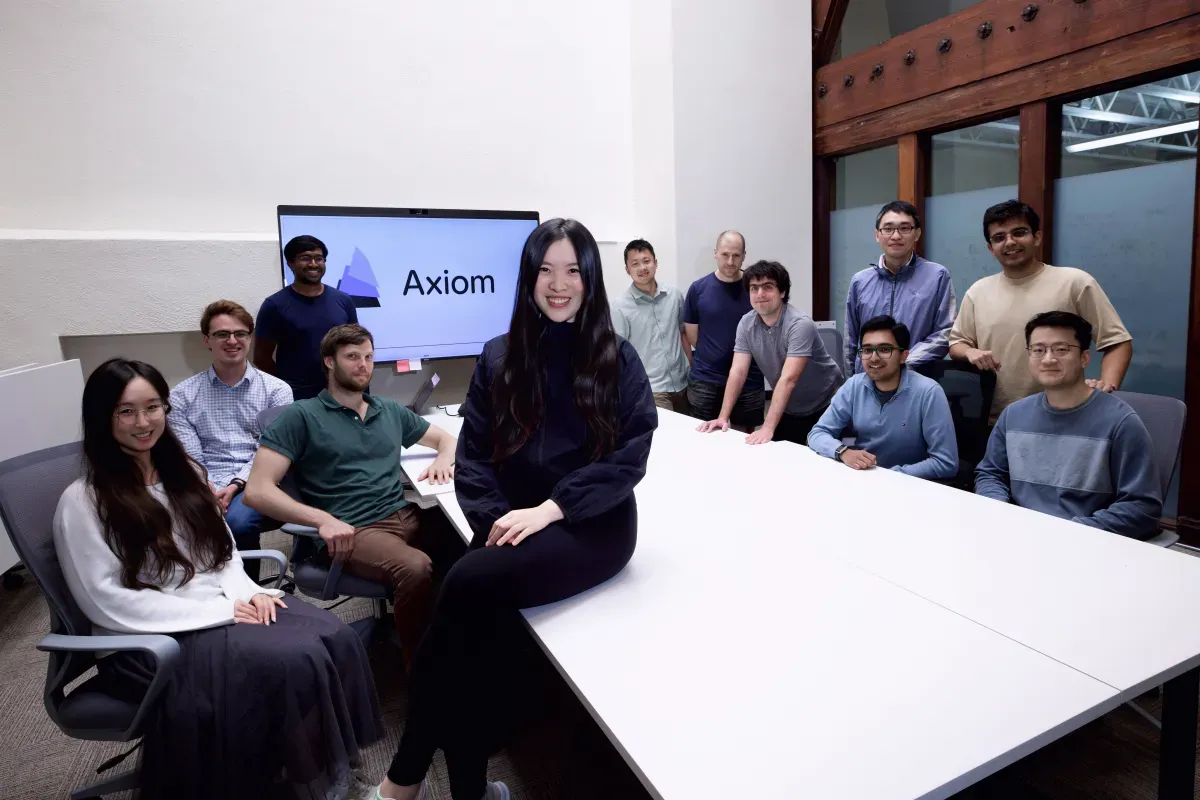
Axiom Math, a $1.6 billion startup, aims to address this issue by creating a solid foundation for AI agents to build upon when writing software and conducting scientific research. To achieve this goal, the company is working on verifying mathematical proofs using formal methods.
The Stacks Project, one of the largest collections of human-written mathematics, has been formally verified by Axiom Math. This project, started in 2005 by mathematician Johan de Jong, contains a vast repository of results across algebra, geometry, and number theory that have been contributed to by numerous mathematicians over the years.
The Stacks Project consists of approximately 7,654 pages of mathematical knowledge, which are being translated into computer-checked code by Axiom Math's AI agents. This process involves converting the human-written proofs into a programming language called Lean, where they can be checked line by line using a proof assistant program.
This formalization of mathematics is crucial in ensuring that the underlying structure of mathematical theories is sound and reliable. By rewriting proofs as code and checking them against strict logical standards, mathematicians can trust that their findings are accurate and trustworthy.
Axiom Math's efforts to verify the Stacks Project mark an important step towards establishing a robust foundation for AI-assisted mathematics, which could have significant implications for various fields of research and development.
The Stacks Project's vast library of mathematical results presents unique challenges when it comes to formal verification. With over 16 million lines of Lean code, each theorem is not just a standalone result, but also part of an intricate web of interconnected definitions and proofs.
This complex interdependence made Axiom Math initially hesitant about taking on the project. However, with careful consideration, the team devised a strategy to preserve the relationships between these mathematical results while applying formal verification techniques.
The company's CEO, Carina Hong, explained that maintaining consistency across such a vast collection of interconnected theorems is crucial. You want [theorems] to be consistent and not paradoxical, she emphasized. "You want the definitions to not fight with each other."
Axiom Math has come a long way since its inception in March 2025, when Hong dropped out of Stanford's math Ph.D. program to pursue her vision. The company recently secured a significant investment of $200 million in Series A funding from Menlo Ventures.
The team's approach to verifying the Stacks Project involved giving their agents a loose structure and allowing them to work in parallel. According to Ashvin Swaminathan, a member of Axiom's technical staff, this allowed the agents to identify tasks for themselves and work on them independently.
Hong highlighted the importance of preserving the beauty of the original project during the verification process. "We were not sure if vibe coding would be able to preserve the beauty of Stacks," she said, acknowledging the challenges involved in adapting formal verification techniques to a project of this scale.
Axiom Math's approach to training its models has been distinct from that of other verification startups. The team began by relying on an in-house expert in Lean to teach its agents a human sense of taste. However, over time, the agents have developed their own ability to pick up on taste.
This development has filled a significant gap in formalized math. Algebraic geometry had been one of the largest areas left unverified until now. Researchers who wanted to check new work in this field using Lean previously had limited resources to build upon.
The creation of verified results in algebraic geometry is expected to have far-reaching implications. It will provide a foundation for future proofs, allowing researchers to build on existing checked math rather than starting from scratch. This approach has been endorsed by mathematicians who recognize the value of formalized proofs.
Verified results can serve as building blocks for more complex proofs. As Terence Tao noted, "The more formalized proofs you have, the more formalized proofs you can make." This principle is likely to apply beyond mathematics, with potential implications for software development and code verification.
Axiom Math's approach to formalizing mathematics is not just about creating a solid foundation for mathematical proofs, but also about laying the groundwork for AI agents to build upon.
The company's Lean formalization has become a substrate that these agents can use to create new infrastructure and tools, according to Swaminathan. This has significant implications for how AI will be used in the future, with Hong arguing that AI agents will need a well-built, reusable body of knowledge to avoid producing "slop".
Hong envisions a scenario where AI agents work in parallel, picking their own tasks and building on top of existing knowledge. She believes that this approach is not only more efficient but also leads to better results, as it allows for the growth of a reusable library of knowledge.
Axiom Math's confidence in its approach has led Hong to issue a challenge to other coding companies: work on formalization at this scale and see the benefits for yourself. With Axiom Math leading the way, it will be interesting to see how other companies respond to this challenge.
The potential implications of Axiom Math's work extend far beyond mathematics, with the possibility of applying these principles to software development and code verification.
Axiom Math's innovative approach to mathematics aims to prevent AI-generated errors from creeping into mathematical proofs.
The potential implications of this work extend far beyond mathematics, as it could also be applied to software development and code verification, potentially leading to more reliable and trustworthy computational systems. With the increasing reliance on artificial intelligence and machine learning in various industries, Axiom Math's breakthrough has significant potential for real-world applications and improvements. This development is poised to have a profound impact on the field of mathematics and beyond.
Facts based on reporting originally published by TechCrunch.
You may republish this story, in full or in part, if you credit Noti Group and link to it (licence CC BY 4.0). Photos are not included.