



Workers paid as little as £1 an hour in Cambodian factories making official football shirts
An investigation into the global supply chain of replica kits found workers at two factories in Cambodia being underpaid and facing poor working conditions.
Workers who produce official football shirts for top clubs are being paid as little as £1 an hour, according to our investigation into the global supply chain of replica kits.
Conditions at two factories in Cambodia, where we traced authentic shirts made for prominent clubs including Arsenal and Real Madrid, were described by workers as "grim. The factories, Bowker Garment Factory and Trax Apparel, are part of a complex network that produces millions of replicas each year.
Fans have been turning to cheaper counterfeit versions due to rising prices, leading to frustration among supporters who want authentic merchandise but cannot afford it.
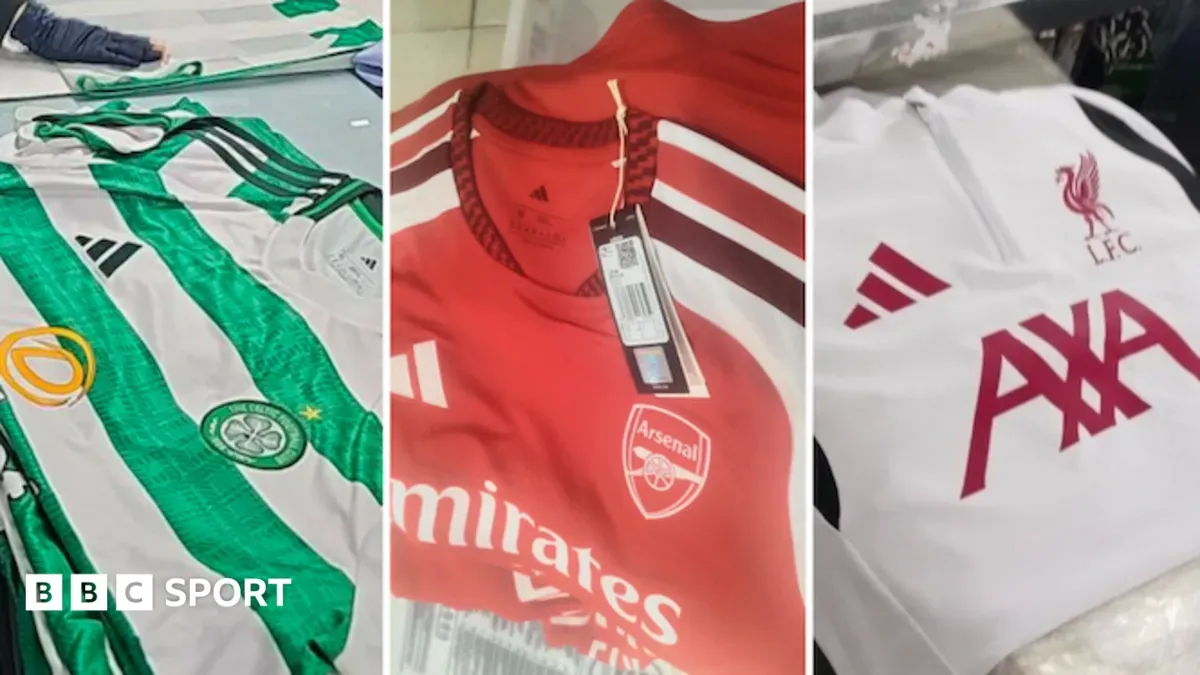
Images obtained from inside the factories show production lines making kits for several high-profile clubs, including Liverpool and Celtic. Workers in these facilities revealed they struggled to make ends meet on their meager wages.
Employees at the factories told us about working on up to 700 items per day as part of a production line, highlighting the intense pace of work. In rare interviews, workers also expressed concerns over safety issues related to electrical equipment used in the manufacturing process.
The Clean Clothes Campaign, an international network advocating for garment workers' rights, has commented on our findings. According to Emma Vogt, a spokesperson for the organization, these are issues that many garment workers around the world face every day".
The manufacturing process for official football shirts has undergone significant changes over the past decade, resulting in increased prices for consumers. Industry experts point to advances in technology and expensive kit deals with top-tier clubs as key contributors to this trend.
Adidas, a leading sportswear brand, does not own either of the factories visited by BBC Sport, but they are primary suppliers that adhere to the company's workplace standards. As one of the largest sportswear companies globally, Adidas supplies kits for eight out of 20 Premier League teams.
The company has implemented measures to ensure fair and safe working conditions across its supply chain, including regular factory audits and collaborations with suppliers to address issues. This commitment to monitoring and improvement is part of Adidas' efforts to uphold workplace standards that have been in place for over 25 years.
In the factories visited by BBC Sport, thousands of workers are employed on the outskirts of Phnom Penh, Cambodia. At Bowker Garment Factory, which has a workforce of approximately 3,400 people - mostly women - and its sister factory Trax Apparel with around 3,200 staff members, employees typically work six eight-hour shifts per week.
According to payslips obtained by the BBC, workers receive basic monthly salaries ranging from $210 to $220, equivalent to £158-£166.
The salaries paid to workers at these factories comply with local minimum-wage laws, ensuring that employees receive fair compensation according to Cambodian regulations.
Workers who spoke out about their conditions expressed frustration with their meager earnings, pointing out that after deducting essential expenses like rent and utilities, they are left with little money for other necessities.
One worker noted that a single official football shirt can cost more than two weeks' salary for an employee, highlighting the stark contrast between what customers pay for these shirts and what workers earn from making them.
Trax factory officials reported average monthly earnings of $305-$342 (£230-£258) this year, although it's unclear how many employees fall within this range.
Adidas stated that its Cambodian suppliers' average net wages are 34% above the Anker Research Institute's living-wage benchmark, suggesting that some workers may be receiving higher pay than others.
Workers at Bowker and Trax factories in Cambodia have shared disturbing accounts of verbal abuse when production targets are not met.
A third worker at Bowker reported being yelled at and told to quit their job when they failed to meet quotas, adding to the growing list of concerns about working conditions in these facilities.
This worker also alleged receiving two electric shocks from an exposed wire, claiming that management only took action after the second incident.
Adidas has responded to these allegations, stating that both factories have measures in place to manage heat and that its standards prohibit any form of harassment or electrical-related accidents.
However, a recent International Labour Organization report highlights widespread issues across Cambodia's garment industry, with 69% of factories experiencing problems with heat management and 84% struggling with worker protection.
The steep cost of official football teamwear has become a major concern for fans worldwide. For those who purchase season tickets, the additional expense of three kits can add up quickly, reaching around £300 or more per year.
This financial burden is not limited to adult enthusiasts; families with young children are also affected by the high prices of official teamwear. The global market for official football teamwear is estimated to be worth several billion pounds, making it one of the most lucrative brand markets in existence.
Industry experts point out that a significant portion of the profit margin from shirt sales comes from retailers rather than manufacturers. This is because retailers rely heavily on the success of the teams they supply kits to, making them vulnerable to fluctuations in team performance and popularity.
The complexity of kit deal economics means that brands must balance the cost of supplying elite clubs with the need to recover their investment through sales. This delicate balancing act has led some manufacturers to explore new production locations, including countries like Thailand and Vietnam, where labor costs are lower.
The surge in demand for replica football shirts has created a lucrative market for counterfeiters, who sell fake versions of popular teams' kits at a fraction of the cost.
Many of these counterfeit shirts originate from China, where labor costs are low and regulations can be lax. This has led to concerns about the safety standards and working conditions in factories that produce these counterfeit goods.
The Premier League's emphasis on due diligence among its member clubs is an effort to prevent such issues from arising in the first place. However, some manufacturers have been forced to explore new production locations as a result of increasing costs.
As a result, some companies are now considering relocating their manufacturing operations to countries with lower labor costs, potentially exacerbating existing problems related to worker exploitation and safety standards.
Facts based on reporting originally published by BBC Sport.
You may republish this story, in full or in part, if you credit Noti Group and link to it (licence CC BY 4.0). Photos are not included.