






Tyson Fury vs Anthony Joshua Scheduled for Big Match
The eagerly anticipated fight between Tyson Fury and Anthony Joshua has finally been scheduled to take place.
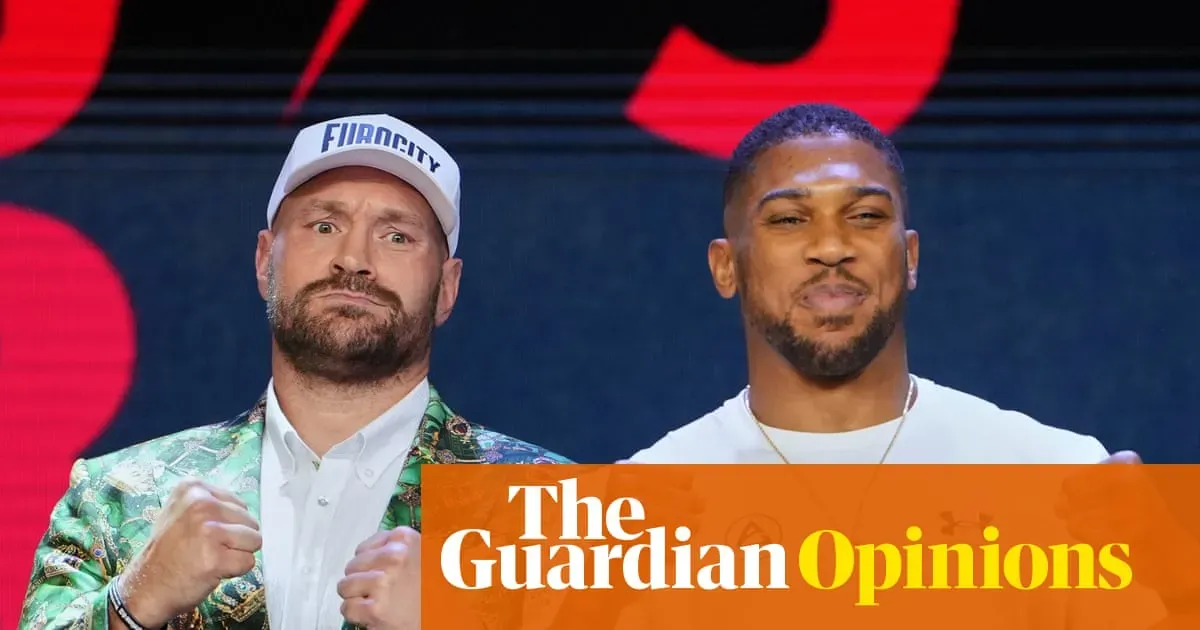
The eagerly anticipated fight between Tyson Fury and Anthony Joshua has finally been scheduled to take place, with both fighters seemingly in perfect condition ahead of the big match.
This scenario is a textbook example of how commercial considerations can drive sporting decisions, particularly when it appears that one fighter holds a significant advantage over the other. In such cases, it's not uncommon for promoters to prioritize potential revenue streams over genuine sporting merit.
The concept of "meritocratic sporting excellence" has long been debated among sports enthusiasts and commentators, with some arguing that athletes should be judged solely on their ability and performance. However, in reality, external factors often come into play when determining the outcome of high-profile matches.
Historically, there have been numerous instances where athletes have been given a second chance to compete after initially failing to perform at their best. One notable example is Shizo Kanakuri, a Japanese runner who dropped out of the 1912 Olympic marathon due to exhaustion and disorientation.
Kanakuri's decision to abandon the race sparked widespread media attention, with many wondering what had become of him. For over five decades, his name remained on Sweden's missing persons list, fueling speculation about his whereabouts and well-being.
Eventually, a determined journalist tracked down Kanakuri to Japan in the 1960s, leading to a remarkable reunion between the athlete and the Swedish officials who had been searching for him.
The heavyweight division's top contenders are Tyson Fury and Anthony Joshua, two fighters who have been linked in a potential showdown for years. However, their bout is not happening at an ideal time from a competitive standpoint, but rather when commercial considerations align with a lack of genuine risk to either fighter's title reign.
Fury and Joshua are both seasoned boxers, with 38 and 36 years old respectively, which means they have likely passed the peak of their fighting careers. Their recent performances have not been against top-tier opponents, leading some to question whether this fight is still relevant in terms of showcasing true sporting excellence.
Despite concerns about the competitiveness of the bout, promoters are eager to stage it now rather than at a later date when both fighters may be considered past their prime. This approach maximizes revenue potential while minimizing the risk of either fighter losing their title and reputation.
The fact that this fight is happening when it does is largely driven by financial considerations rather than any genuine competitive imperative. The value of a Fury-Joshua bout has increased significantly over time, with estimates suggesting a potential £150m purse for promoters if they can secure the right timing.
Promoters have been careful to schedule the fight at an optimal moment, balancing commercial appeal with the need to maintain some semblance of competitiveness between the two fighters.
The boxing world is grappling with an anomaly - its inability to match top contenders against each other in a meaningful way. This peculiarity stands in stark contrast to most sports, which prioritize competitive excellence and pit the best against one another.
While some may view this as a minor issue, it has significant implications for the sport's relevance and legitimacy. The lack of high-stakes matchups is contributing to boxing's decline into mainstream irrelevance, making it difficult for fans to take the sport seriously.
Tyson Fury has been deflecting blame onto Anthony Joshua, claiming he has been ready and waiting for a fight. However, this narrative glosses over Fury's own absences from the ring, including his time spent dealing with doping charges, substance abuse, and mental health issues.
Fury's subsequent two-and-a-half-year battle with Deontay Wilder was intense but also distracting, as it diverted attention away from other potential matchups. This rivalry, while thrilling in its own right, came at a cost - the delay of more meaningful fights between top contenders.
The careers of some top boxers have been marked by frequent retirements, raising questions about their commitment to the sport. Fury has announced his retirement at least five times since 2013, citing a desire to leave the ring for good each time.
These repeated retirements may damage his reputation as a serious contender in the eyes of fans and potential partners. If someone wants to be seen as a reliable business partner or a top athlete, it's not ideal to keep stepping away from the sport every few years.
While no one can blame Fury for choosing to leave the ring when he feels he's had enough, his frequent retirements do make him look like someone who is easily swayed by external factors. This could be seen as inconsistent and may undermine his credibility in the boxing world.
The upcoming fight between Fury and Joshua has been heavily hyped, but it's hard to see what will actually be settled or resolved when they step into the ring. What does this bout tell us about the current state of British boxing, and what does it say about the fighters themselves?
Boxing is a unique sport that can balance two seemingly contradictory elements: the idea of raw athletic competition and the spectacle of entertainment. It's this blend of athleticism and showmanship that has made prizefighting so enduringly popular.
The fact that Fury and Joshua will be facing each other in a relatively low-stakes bout raises questions about what is actually at stake for these fighters, and whether they are truly putting everything on the line when they step into the ring.
The world of boxing has always been at its best when two elements are in perfect harmony: the athletic prowess and the showmanship. However, in recent years, these aspects have been drifting apart, creating a sport that is increasingly divided between those who value meritocratic sporting excellence and those who prioritize algorithmic celebrity power.
One example of the former can be seen in the all-British world title clash between Daniel Dubois and Fabio Wardley, a fight that has garnered significant attention from boxing enthusiasts but remains largely unknown to the wider public. In contrast, fighters like Jake Paul have become household names due to their bankable status, rather than their actual skills or achievements.
The line between these two worlds is increasingly blurred, with even top-level fighters being drawn into the orbit of celebrity-driven promotions. For instance, Oleksandr Usyk, widely regarded as one of the greatest heavyweights of his generation, has been matched against a kickboxer in recent times. Meanwhile, Floyd Mayweather Jr is reportedly considering a comeback to face Mike Tyson.
The presence of these high-profile fighters and their managers in the sport raises questions about what truly drives them: a desire for athletic excellence or a need for constant validation through social media attention. The fact that some fighters are willing to compromise on their opponents and match-ups in order to secure lucrative deals and maintain their celebrity status is a worrying trend.
The contrast between these two approaches to boxing is stark, with the likes of Dubois and Wardley representing a more traditional, meritocratic approach to the sport, while others like Paul and Usyk embody the algorithmic celebrity power that seems to be driving much of modern boxing.
The boxing world is abuzz with the upcoming showdown between Fury and Joshua, but beneath the surface lies a more complex debate about what truly defines success in the sport. At one end of the spectrum are fighters who have earned their reputation through years of dedication and hard work.
This approach to boxing prioritizes skill and perseverance over flashy marketing and social media savvy. However, as the popularity of fighters like Paul and Usyk continues to grow, it's clear that a new paradigm is emerging in which algorithmic celebrity power holds increasing sway.
Facts based on reporting originally published by The Guardian Sport.
You may republish this story, in full or in part, if you credit Noti Group and link to it (licence CC BY 4.0). Photos are not included.