




UK Economic Forecast Predicts Prolonged Period of Hardship
The UK is bracing itself for a prolonged period of economic hardship as forecasts indicate that living standards are set to plateau.
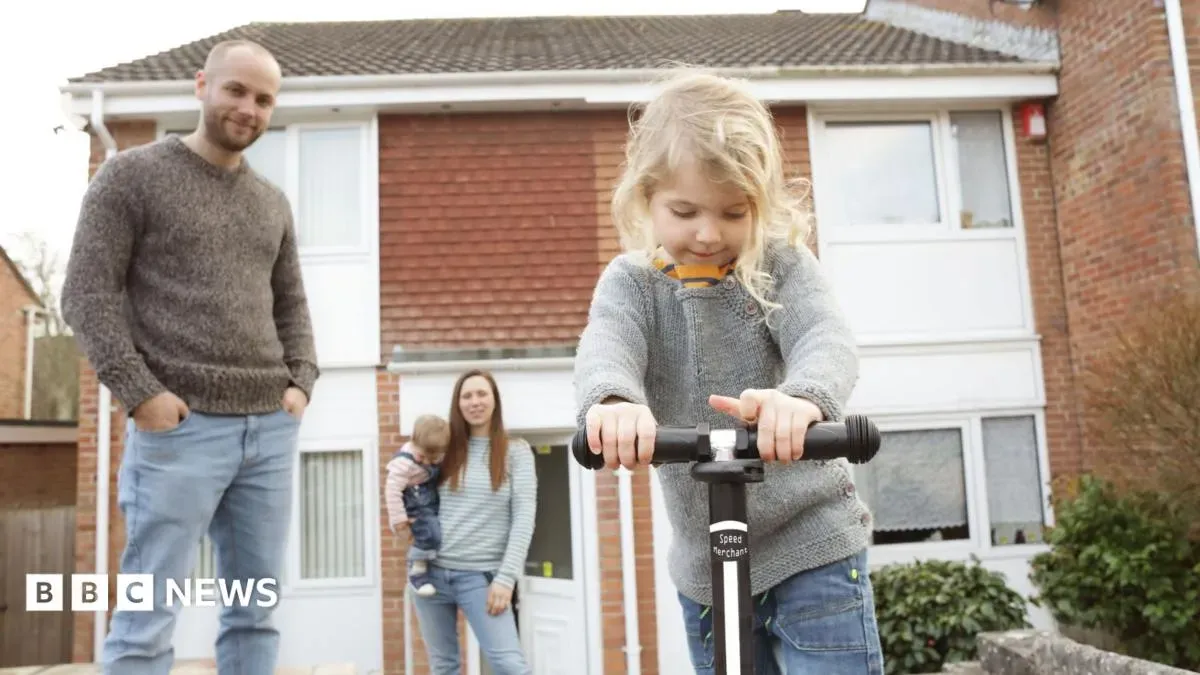
The UK is bracing itself for a prolonged period of economic hardship as forecasts indicate that living standards are set to plateau, leaving many households struggling to make ends meet.
According to a recent analysis by the Resolution Foundation, typical working-age families can expect their disposable income to decline by £1,050 or 3% between now and 2029. Meanwhile, the Institute for Fiscal Studies (IFS) has warned that this decade will be the worst on record for household income growth.
The Office for Budget Responsibility (OBR) has attributed the country's financial woes to higher borrowing costs and inflation caused by the US-Iran conflict. This development has been described as a "pretty grim picture by the UK's official forecaster.
Chancellor John Healey has acknowledged the difficulties facing households, stating that his recent Budget offered only temporary relief from cost of living pressures. He emphasized that the government cannot completely eliminate these issues.
Measures introduced by Healey to address rising energy prices include a £100 support payment aimed at alleviating pressure on household finances. However, experts warn that this initiative will not be sufficient to offset the impact of higher energy bills.
As the UK government navigates its way through a challenging economic landscape, experts are warning of tough going ahead for households struggling to make ends meet.
The Resolution Foundation has analyzed the impact of the latest Budget on living standards and found that non-pensioner households will see their incomes rise by a mere £600 over the course of this parliament. This modest gain is unlikely to provide sufficient relief from the economic pressures facing many families, particularly in the face of rising energy costs.
The government's support measures are seen as inadequate by some experts, with the Resolution Foundation arguing that they should have been more targeted towards the poorest households. Even with these additional funds, households will still be left paying higher energy bills than during the last energy crisis in 2022.
Meanwhile, the Office for Budget Responsibility (OBR) has released its economic forecast, which paints a gloomy picture of GDP growth prospects. The slowdown from 1.2% in 2026 to 1% in 2027 is sharper than previously predicted, and next year's forecast is significantly lower than the March assessment.
The Office for Budget Responsibility (OBR) has revised its inflation forecast for 2027 upwards from 2% to 3.4%. This increase is part of a broader trend in which living standards are expected to decline.
Frozen tax thresholds are also reducing people's take-home pay, adding to the financial pressures faced by households. The OBR's analysis takes into account short-term fluctuations by using a 10-year rolling average growth rate.
The OBR's forecast for all households, including pensioners, shows that living standards will barely grow over the next decade, at an annual rate of less than 0.1%. This is in stark contrast to previous periods where household incomes have typically grown more quickly.
The Institute for Fiscal Studies (IFS) has echoed the OBR's concerns, describing this decade as set to be the worst on record for growth in household incomes. According to the IFS, no amount of temporary cost-of-living support will address the underlying issue.
The IFS director Helen Miller notes that there will also be increasing pressure on government spending plans over the coming parliament, with current proposals appearing overly tight and potentially unsustainable.
The UK government is facing a challenging economic situation, according to think tanks, which warn of painful years ahead for households as living standards are set to fall.
Finance Minister Jeremy Healey acknowledged that global events such as the Iran war and Russia's invasion of Ukraine are affecting countries worldwide, including the UK. The government is seeking to help where it can, he said on the BBC's Today Programme. However, his comments suggest that there may be an expectation that economic conditions will improve in the future.
A £100 energy payment is set to benefit around 20 million households based on their council tax band. This payment aims to provide breathing space" for most households, according to Healey. Critics argue that this measure falls short of addressing the broader economic challenges facing the country.
Conservative and Liberal Democrat leaders have criticized the government's Budget, with some arguing that it has left the public finances more fragile by reducing the buffer between revenues and spending. Despite some positive aspects, such as the energy payment, many are concerned about the long-term sustainability of current proposals. The UK is heading into a difficult period for household living standards.
Facts based on reporting originally published by BBC News Business.
You may republish this story, in full or in part, if you credit Noti Group and link to it (licence CC BY 4.0). Photos are not included.