





UK Government Set to Approve North Sea Gasfield Project
The UK government is set to approve a major gasfield project in the North Sea, despite opposition from climate campaigners who argue it undermines Labour's green credentials.
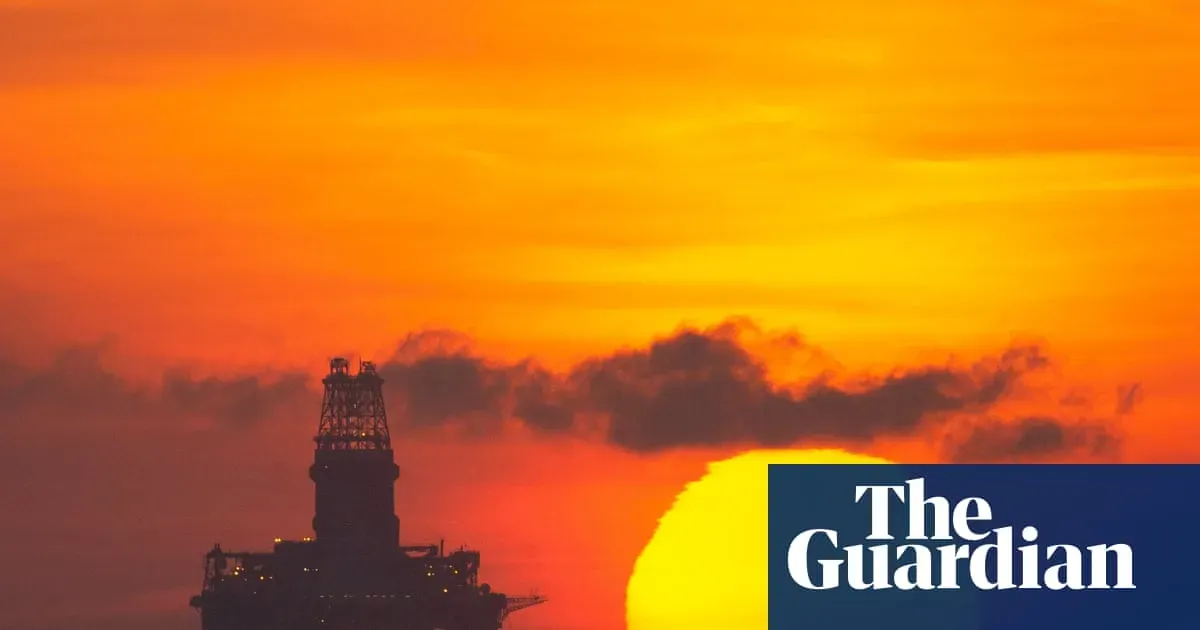
The UK government is set to approve a major gasfield project in the North Sea, despite opposition from climate campaigners who argue it undermines Labour's green credentials.
The Jackdaw gasfield, operated by Shell and Equinor, will receive the go-ahead on Wednesday morning, according to sources close to the government. Energy secretary Miatta Fahnbulleh and chancellor John Healey are expected to make the announcement in Aberdeen, marking a significant boost for the UK's oil and gas industry.
The approval comes after over a year of deliberations over whether the project would violate the UK's climate commitments. The Jackdaw field is one of the largest undeveloped fields in the North Sea basin, which has been declining in recent years.
Climate campaigners have long opposed the project, arguing that it will exacerbate the climate crisis and undermine Labour's commitment to reducing carbon emissions.
The Jackdaw North Sea gasfield is set to receive approval despite opposition from climate campaigners who argue it will exacerbate the climate crisis and undermine Labour's commitment to reducing carbon emissions. The project has been a contentious issue, with the field expected to account for 6% of North Sea gas production once fully operational.
Its status has become closely tied to the government's commitment to the oil and gas industry, which is facing significant job losses as reserves decline and platforms become increasingly automated. This trend is evident in other projects, including the Rosebank oilfield, whose fate has also hung in the balance.
The field was initially approved by the Conservative government in 2022, with ministers citing its potential to shield the UK from energy market volatility caused by Russia's invasion of Ukraine. Labour's subsequent election victory on a promise not to grant new licences in the North Sea has added complexity to the situation.
The project's future had been uncertain following a landmark court ruling last year that environmental approval for both Jackdaw and Rosebank was incorrectly granted due to inadequate consideration of carbon emissions generated by burning their oil and gas.
The UK government's decision on the Jackdaw North Sea gasfield has been closely watched by climate campaigners and industry stakeholders alike.
Following months of deliberation, Fahnbulleh has reportedly decided not to use her ministerial power to block Shell and Equinor's resubmitted application for environmental consent. This development suggests that the project will proceed despite ongoing concerns about its impact on the environment.
The prime minister's stance on the matter has been a subject of interest, particularly given his earlier promise to take a "pragmatic approach" to the decision. In July, he stated that there is a resource in the North Sea that cannot be ignored, especially when people are struggling.
Fahnbulleh's decision not to intervene is expected to pave the way for the North Sea Transition Authority (NSTA) to grant environmental approval based on financial and logistical considerations. The NSTA regulates the industry and will play a crucial role in determining the project's future.
The announcement regarding the Jackdaw field is set to be made by Fahnbulleh alongside Healey and Stuart Payne, the chief executive of the NSTA, on Wednesday.
The decision on the larger Rosebank field is still pending, but officials are exploring ways to direct tax proceeds from the project towards green initiatives if it receives approval.
Granting permits for the Jackdaw field could have a positive impact on Labour's standing in Scotland's north-east region, where the industry plays a significant role and unions have been actively lobbying for approvals.
However, this decision may also create tension among some Labour MPs, particularly those facing challenges from the Green party in their constituencies.
A recent poll conducted by Savanta for E3G reveals that nearly a third of voters would be less likely to support Labour if the party gives the green light for more North Sea oil drilling.
The decision to give the green light for more North Sea oil drilling is expected to face opposition from Labour party members who want to prioritize renewable energy sources instead of fossil fuels.
According to officials, the Rosebank gasfield is likely to be a more contentious issue due to its significantly higher carbon emissions and the fact that most of the extracted oil will be exported. Labour's shadow chancellor, Rachel Reeves, has already spoken out against the decision, calling for a focus on renewable energy sources like solar and heat pumps to drive growth and reduce pollution.
Facts based on reporting originally published by The Guardian Business.
You may republish this story, in full or in part, if you credit Noti Group and link to it (licence CC BY 4.0). Photos are not included.