





Pancreatic Cancer Detection Model Shows Promise in Early Identification
A revolutionary artificial intelligence model called REDMOD has been developed to identify early signs of pancreatic cancer years before a diagnosis is made.
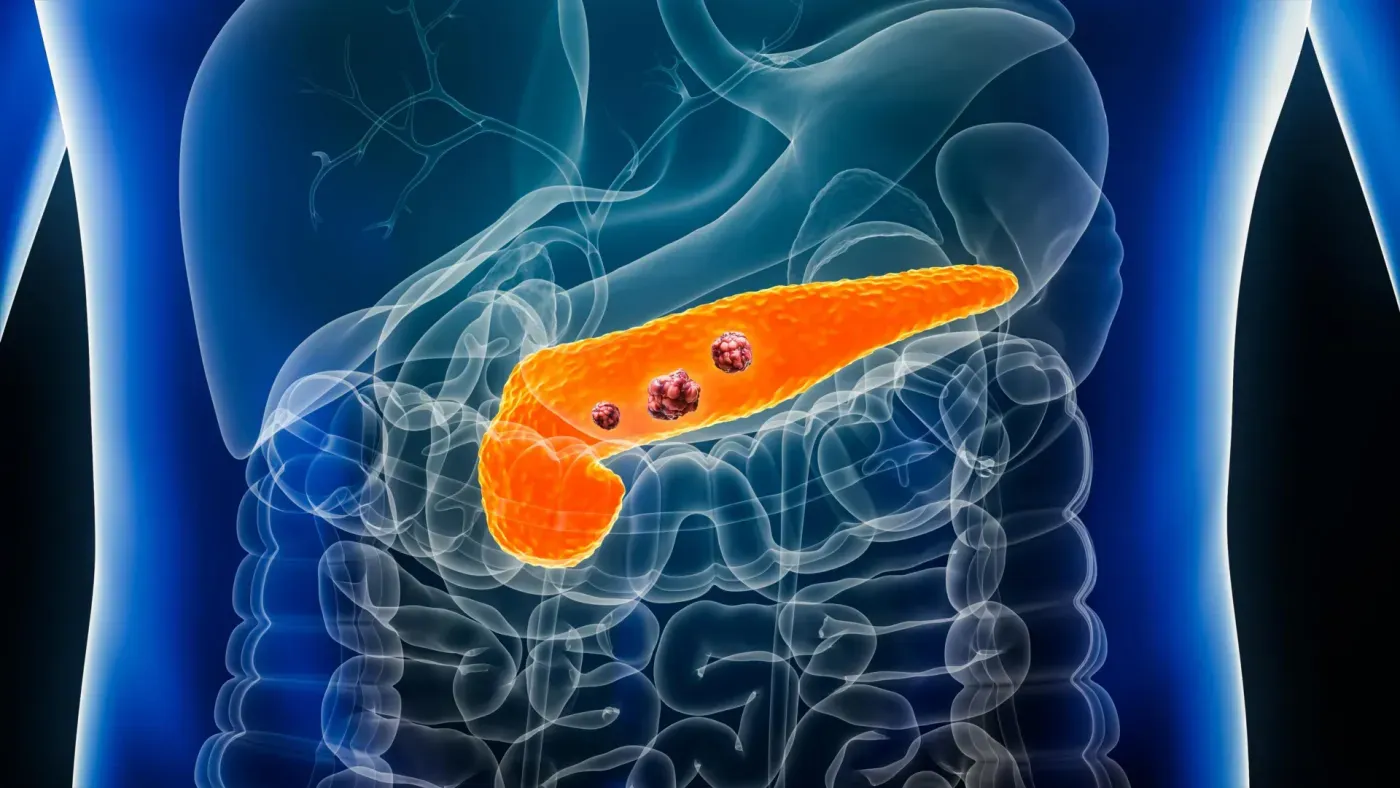
A revolutionary artificial intelligence model called REDMOD has been developed to identify early signs of pancreatic cancer years before a diagnosis is made. This cutting-edge technology uses subtle changes in pancreatic tissue to detect cancer at an incredibly early stage.
The system's capabilities have been demonstrated in research published online, where it was shown to accurately identify early signs of pancreatic ductal adenocarcinoma, the most common type of pancreatic cancer. The study suggests that REDMOD can outperform even experienced radiologists in detecting these early changes.
Researchers believe that this technology could be a game-changer in the fight against pancreatic cancer, which is notoriously difficult to detect and treat effectively. By identifying cancer at an earlier stage (stage 0), patients may have a much greater chance of successful treatment.
Pancreatic ductal adenocarcinoma has one of the lowest survival rates among all cancers, largely due to its tendency to be discovered only after it has advanced significantly. Early pancreatic cancer often produces few noticeable symptoms and can cause subtle changes in pancreatic tissue that standard medical imaging struggles to detect.
The rapid progression of pancreatic cancer makes timely diagnosis essential, which is why scientists are eager to test REDMOD in patients at high risk of developing the disease, including those experiencing unexplained weight loss or newly diagnosed diabetes.
The creation of REDMOD aimed to tackle the challenges associated with diagnosing pancreatic cancer through computed tomography (CT) scans. This artificial intelligence framework analyzes tiny patterns in the texture of pancreatic tissue known as radiomics that are not visible on standard CT images.
REDMOD also automatically identifies and separates the pancreas from surrounding organs, eliminating the need for manual tracing by specialists. This process reduces inconsistencies that can arise when different individuals perform this task, making the results more reliable.
Researchers tested REDMOD using abdominal CT scans from 219 patients who were later diagnosed with pancreatic cancer. At the time of scanning, experienced radiologists had found no evidence of the disease in these patients.
The scans were taken at varying intervals before diagnosis, ranging from a few months to over three years earlier. Of the patients examined, 87 (40%) had been scanned between 3 and 12 months prior to diagnosis, while 76 (35%) had undergone imaging between 12 and 24 months beforehand.
To validate REDMOD's performance, researchers compared these images with CT scans from a larger group of 1243 individuals who remained cancer-free for up to three years. This comparison group was matched according to age, sex, and the dates of their scans.
The study found that patients who eventually developed pancreatic cancer had an average age of 69, with ages ranging from 34 to 88. In contrast, those in the comparison group were slightly younger on average, at 64 years old.
REDMOD, a sophisticated AI system, was able to identify subtle imaging signatures associated with pancreatic cancer significantly earlier than human radiologists. On average, REDMOD detected these warning signs about 475 days before patients received their clinical diagnoses.
This early detection is crucial, as the researchers pointed out, because it can greatly improve treatment outcomes and survival rates. In fact, modelling studies suggest that increasing the proportion of localized pancreatic cancers from 10% to 50% would more than double survival rates.
REDMOD also proved to be a more effective diagnostic tool than experienced radiologists in recognizing early cancer signals. According to the study, REDMOD achieved a sensitivity of 73%, compared with just 39% for radiologists. Sensitivity measures how well a diagnostic method can identify people who actually have the disease.
When examining scans taken more than two years before diagnosis, the difference between REDMOD and radiologists became even more pronounced. In these cases, REDMOD detected early cancer signals at a rate of 68%, nearly three times that of radiologists, who achieved a detection rate of just 23%.
The researchers also evaluated the performance of REDMOD on scans from individuals without pancreatic cancer. In an independent group of 539 patients from various hospitals, the system correctly classified over 81% of scans as cancer-free. This accuracy was even higher in a smaller dataset from the US National Institutes of Health, where REDMOD identified 87.5% of scans as free of pancreatic cancer.
Further analysis revealed that the early warning signs detected by REDMOD remained consistent over time. When researchers compared scans taken from the same patients several months apart, they found that the system produced matching results in 90 to 92% of cases. This consistency reinforced the notion that the AI was identifying meaningful changes associated with pancreatic cancer.
The ability of REDMOD to accurately identify cancer-free scans and consistently detect early warning signs has significant implications for the potential use of AI in clinical practice. By enabling doctors to identify pancreatic cancer at an earlier stage, the technology could potentially lead to improved survival rates for patients who would otherwise receive a late diagnosis.
Despite these promising findings, several questions remain unanswered about the system's performance. The study population was not sufficiently diverse, which could affect how well REDMOD performs across different ethnic backgrounds. This limitation highlights the need for further research and testing in more representative populations.
The researchers emphasize that prospective testing is necessary to determine whether REDMOD will be effective in everyday clinical practice. Specifically, they recommend evaluating the system among people at increased risk of pancreatic cancer. While these limitations must be addressed, the findings suggest that AI could play a crucial role in transforming early pancreatic cancer detection and potentially improving patient outcomes.
The study's findings suggest that AI can identify the early signs of pancreatic cancer, even when it is still at an undetectable stage. This breakthrough could potentially allow for earlier intervention and improved patient outcomes.
In particular, the researchers found that their AI framework, called REDMOD, was able to detect the presence of pancreatic ductal adenocarcinoma in normal pancreas samples with a high degree of accuracy. Moreover, this detection occurred years before a diagnosis would typically be made through conventional means.
The implications of these findings are significant, as they could pave the way for more proactive approaches to pancreatic cancer treatment and potentially save countless lives.
Facts based on reporting originally published by ScienceDaily Health.
You may republish this story, in full or in part, if you credit Noti Group and link to it (licence CC BY 4.0). Photos are not included.