






Keytruda and mRNA technology show promise in skin cancer treatment trial
A new clinical trial has found that combining Keytruda with a personalized cancer vaccine can significantly reduce the risk of melanoma recurrence and mortality, cutting the risk by 38% over two years compared to using Keytruda alone.
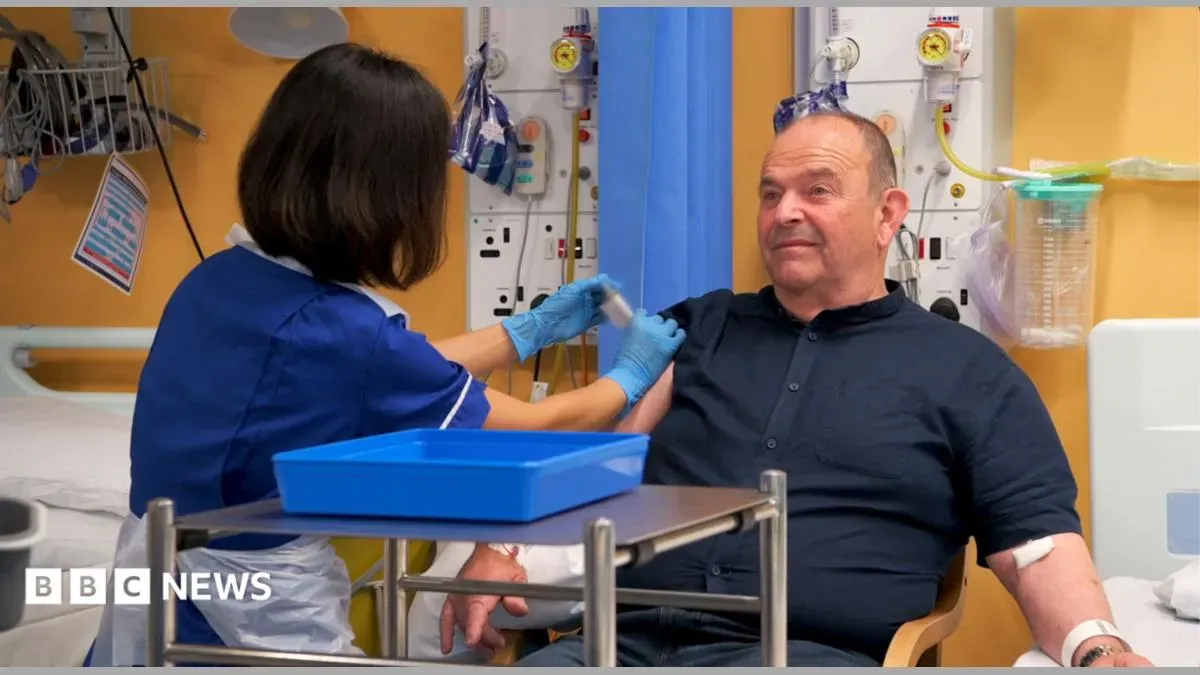
A major clinical trial has yielded promising results for patients with skin cancer, showing that a new personalised cancer vaccine can significantly reduce the risk of disease recurrence and mortality.
The trial involved administering the vaccine in combination with Keytruda, an established immunotherapy drug, to 1,137 adults whose tumours had already been surgically removed. This approach was found to be effective in cutting the risk of melanoma spreading by 38% over two years compared to using Keytruda alone.
Researchers are hailing this breakthrough as a potential game-changer in cancer treatment, bringing personalised medicine one step closer to reality. The same drug combination is already being tested against other types of tumours, including kidney, bladder and lung cancer.
Independent experts have described the results as impressive but cautioned that longer-term studies are necessary to determine whether this treatment truly leads to improved survival rates for most patients.
The trial's use of mRNA technology has been hailed as a significant advancement in cancer treatment, leveraging the same approach that has proven effective in Covid vaccines to develop a personalized cancer vaccine.
Each patient's tumour is used to create a unique vaccine, allowing their immune system to be trained to recognize and target cancer cells if they return. This targeted approach aims to minimize side effects while maximizing the vaccine's effectiveness.
The results of the trial show that patients who received the jab had a significantly lower risk of melanoma recurrence or spread two years after starting treatment compared to those who did not receive the vaccine.
Prof Pippa Corrie, a consultant medical oncologist involved in the study, describes personalization as the next step up in cancer treatment and expresses excitement about its potential.
The trial participants are still being monitored to see if the cancer returns over time and to assess whether the drug ultimately helps them live longer.
The cost of widespread NHS use will be a significant factor, as each individual patient will need to have their tumour genetically analysed and a personalised vaccine made for them. This process is likely to increase costs significantly, making it a major consideration for healthcare providers.
Despite some volatility in stock prices, both MSD and Moderna are preparing to file for approval from medicine regulators as soon as next year. The companies have announced that they are engaging with authorities to progress the regulatory process.
Investors' initial enthusiasm for the vaccine's success was tempered by financial analysts who noted that the results were not quite as strong as those seen in an earlier, much smaller trial.
The results of a major clinical trial have shown that a personalised cancer vaccine has been successful in reducing the risk of skin cancer returning after treatment.
This breakthrough is considered an important proof of principle for the field of cancer immunotherapy, but experts caution against drawing conclusions about its broader applications just yet.
The full trial data will be presented at the European Society of Medical Oncology conference in Madrid on Saturday and have not yet been published in a peer-reviewed medical journal, where they can be scrutinised by independent experts.
Facts based on reporting originally published by BBC News Health.
You may republish this story, in full or in part, if you credit Noti Group and link to it (licence CC BY 4.0). Photos are not included.