




Houthi Forces Cut Off Main Road to Government-Held Territory in Taiz
Taiz is once again under siege by Houthi forces who have cut off its main road to government-held territory, following their capture of territory south of the city.
Taiz, Yemen's third-largest city, is once again under siege by Houthi forces who have cut off its main road to government-held territory. This development follows their capture of territory south of the city in recent weeks.
The current situation bears a striking resemblance to the devastating siege that Taiz endured between 2015 and 2016, when the Houthis attempted to capture the city from local pro-government forces. The Houthi-controlled access points into the city have continued to impose a partial blockade on Taiz since then.
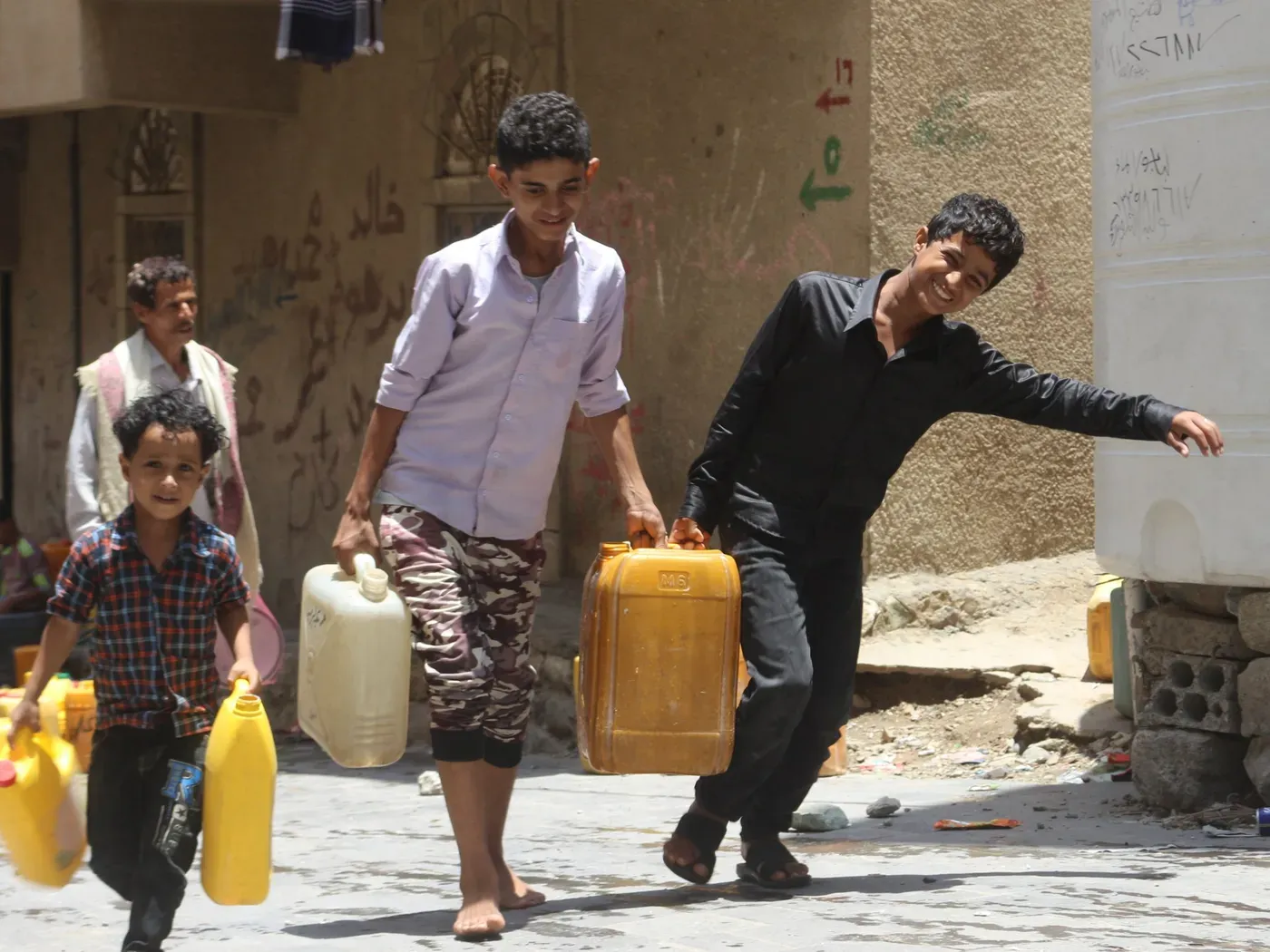
Residents of Taiz are now facing rising food and fuel prices due to the renewed siege, adding to their already dire living conditions. For those who experienced the previous siege, the memories of its horrors remain fresh.
The Houthi forces launched an offensive in early September along the Red Sea coast of Taiz governorate, resulting in their control over key locations such as Mocha and Dhubab.
The Houthi forces continued their military push beyond the Red Sea coast, expanding their control over key locations in Taiz governorate despite government efforts to regain lost ground.
In early October, as pro-government forces backed by Saudi Arabia launched a counteroffensive, the Houthis pressed forward in the surrounding countryside, capturing new territory and further isolating Taiz city from other government-held areas.
The Houthi advance culminated in their capture of the town of al-Turbah on October 4, cutting off the last major road connecting Taiz city to other parts of the country under government control.
Residents of Taiz are increasingly concerned that the city is about to face a prolonged siege, reminiscent of the dire conditions experienced during the height of the conflict in 2015 and 2016. The memories of that time remain vivid for many, including Abdullah, who recalls the struggle to access even basic necessities like food, water, and medicine.
Abdullah's account highlights the extreme difficulties faced by Taiz residents during the siege, with supplies often arriving through arduous smuggling routes over rugged terrain, carried on the backs of people and animals.
The recent resumption of fighting in Taiz has led to the closure of a vital crossing point, severing a crucial route for food supplies and exacerbating the city's already dire situation.
Much of Taiz's food had been entering through this crossing, making its closure particularly devastating for residents who rely on these deliveries. The effects of the siege are being felt throughout the city, with many areas now cut off from essential supplies.
According to Nabil Jamil, director-general of the planning and development office in Taiz governorate, the current siege is more comprehensive and severe than one that occurred in 2015. This time around, secondary roads connecting rural districts have also been affected.
As a result, approximately 2.8 million people living in government-held areas of Taiz governorate, along with an additional 200,000 displaced individuals, are facing humanitarian hardship and deteriorating living conditions due to the siege.
The fuel shortage is also taking its toll on daily life in Taiz, with streets almost deserted due to a lack of petrol. The black market price for a 20-litre container of petrol has skyrocketed from 30,000 Yemeni riyals to 90,000 Yemeni riyals.
The ongoing conflict in Taiz has led to a surge in demand at local markets and grocery shops as residents scramble to stock up on food supplies before they disappear from shelves due to the siege.
Residents have accused traders of hoarding essential goods in the absence of effective market oversight, exacerbating the crisis. The lack of regulation has enabled some traders to exploit the situation by raising prices for basic commodities such as wheat and flour. Vegetables and fruits have also seen their prices double.
According to Wafiq Saleh, a journalist specialising in economic affairs, food markets in Taiz have witnessed a significant increase in prices due to the siege's impact on supply chains. He notes that traders possess sufficient stockpiles of food to last several months but are still raising prices as soon as fighting intensifies.
Fighting continues in the Taiz countryside, with hopes among locals that government forces will retake lost areas or break the siege from the west. However, for now, the Houthis appear to be gaining ground in areas south of Taiz city.
The ongoing siege of Taiz city has sparked concerns among observers about its humanitarian impact on civilians. According to Salman al-Maqrami, a journalist specializing in Houthi affairs, the primary objective of the siege is to weaken the opposition forces in the city.
This strategy appears aimed at inflicting maximum damage on the anti-Houthi coalition, which has historically been hostile towards the group. Al-Maqrami believes that by targeting Taiz, the Houthis are seeking revenge against a population that has consistently opposed them.
The fall of Taiz would also have significant symbolic value for the Houthis, allowing them to demonstrate their ability to threaten areas under government control even in the face of strong opposition from local populations. This could be seen as a major propaganda coup for the group.
As the situation on the ground continues to deteriorate, concerns are growing about the humanitarian implications of the siege. Nabil Sharyan, head of the Justice for Rights and Development Organization (JRDO), has warned that civilians will bear the brunt of any prolonged conflict in Taiz.
The humanitarian crisis in Taiz, Yemen is escalating as the city faces another siege, exacerbating the already dire situation.
Local authorities have reached out to the United Nations for assistance in addressing the crisis and its consequences, sending a letter detailing their priorities. These include establishing safe routes for civilians, particularly those requiring medical treatment, as well as ensuring that essential supplies like food and medicine reach Taiz.
Despite the urgency of the situation, local officials are still waiting for a response or intervention from the international community.
Facts based on reporting originally published by Al Jazeera.
You may republish this story, in full or in part, if you credit Noti Group and link to it (licence CC BY 4.0). Photos are not included.