




Groundbreaking Discovery About Immune System Protection Made by Canadian Researchers
Scientists have discovered that tissue-resident memory T cells can detect physical changes in their surroundings and adjust their behavior accordingly, challenging existing assumptions about immune cell operation.
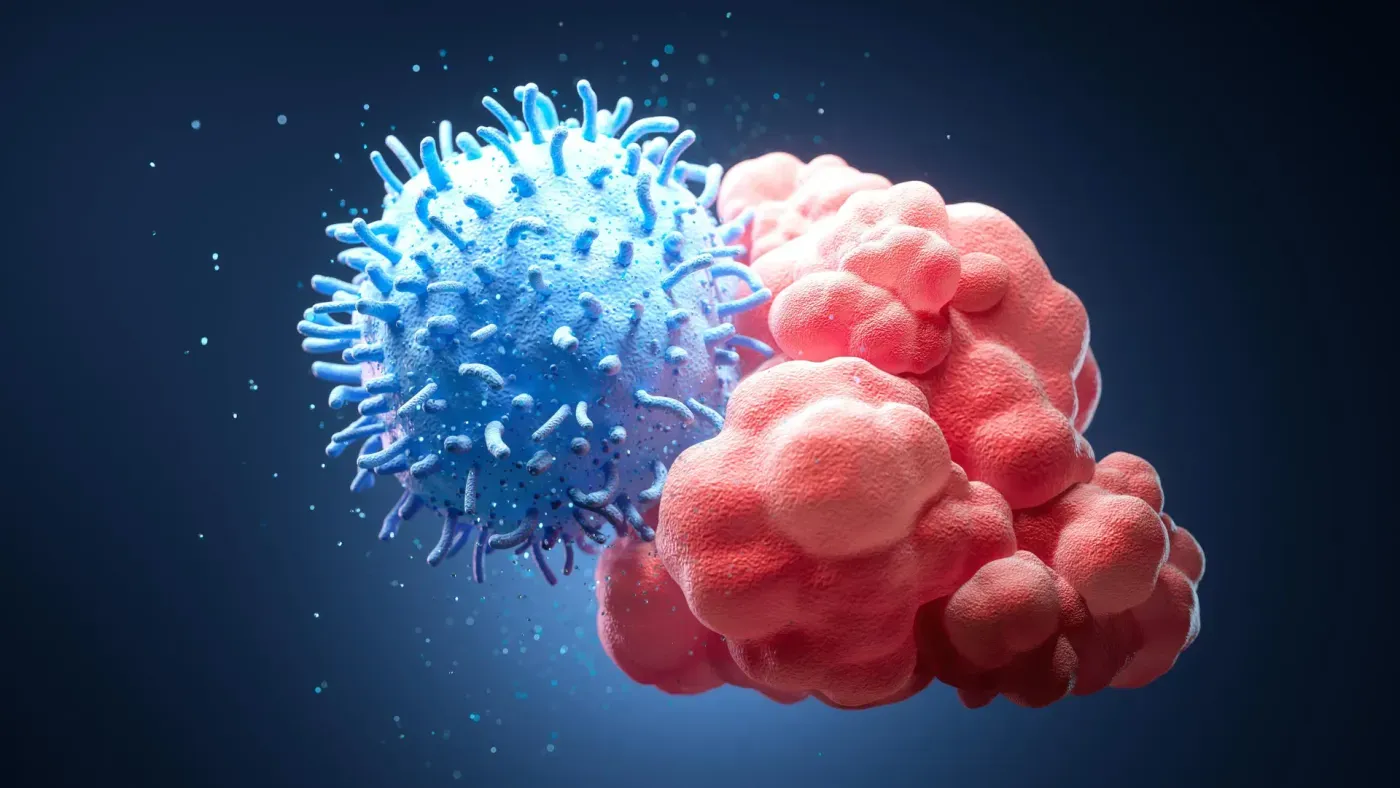
Scientists at a Canadian university have made a groundbreaking discovery about how the body's immune system protects itself against infections. Researchers had long believed that certain types of immune cells, known as tissue-resident memory T cells, relied mainly on chemical signals to guide their actions.
However, a recent study has revealed that these specialized immune cells can detect physical changes in their surroundings and use this information to influence their behavior. Specifically, the cells are sensitive to how stiff or flexible their surrounding tissues are, which can impact whether they develop into long-lasting memory cells.
According to experts, adjusting to stronger mechanical forces within tissues may be crucial for these protective cells to survive over time. This finding has significant implications for our understanding of how the immune system works and could lead to new approaches in developing treatments against infections.
The research team, led by a professor at McGill University's Department of Physiology, brought together experts from various fields, including bioengineering and pain research. Their collaboration with institutions in Canada, the Netherlands, and the United States helped shed light on this previously unknown aspect of immune cell behavior.
This fundamental discovery challenges existing assumptions about how immune cells operate and highlights the importance of physical factors in shaping their behavior. The study's findings suggest that the body's tissues play a more active role than previously thought in influencing the actions of these specialized immune cells.
The discovery of T cells' hidden sense of touch has significant implications for cancer research and treatment. In diseases where the immune system mistakenly targets healthy tissue, such as autoimmune disorders, allergies, and transplant rejection complications, understanding how T cells respond to physical conditions could lead to new treatments. This knowledge may also help improve immunotherapies designed to fight tumors by enabling researchers to better navigate dense tumor environments.
The study's findings suggest that T cells adapt to their surroundings in response to varying levels of stiffness in tissues. The researchers used collagen gels with different stiffness levels to mimic the physical properties of various tissues, and observed how T cells behaved within these environments. By studying immune cells from humans and mice, they discovered a clear correlation between tissue stiffness and T cell characteristics.
As the gels became stiffer, T cells were more likely to acquire traits associated with long-term immune protection provided by tissue-resident memory cells. This indicates that physical properties of surrounding tissues play a crucial role in shaping how immune cells develop. The study's results add an important dimension to scientists' understanding of immune memory, revealing the intricate relationship between physical conditions and T cell behavior.
These insights could have far-reaching implications for cancer research, particularly in designing treatments that harness the immune system's ability to fight tumors. Researchers may be able to develop more effective immunotherapies by taking into account the physical properties of tumor environments and how they affect T cells' ability to penetrate and attack cancerous tissue.
The researchers' next step is to pinpoint the specific molecular sensor that enables T cells to perceive their physical surroundings.
To achieve this goal, they will need to understand how this sensor translates mechanical forces into changes in cell behavior, which could provide valuable insights into how the immune system establishes lasting protection against pathogens.
This research has been made possible through funding from several prestigious organizations, including the Human Frontier Science Program and the U.S. National Institutes of Health, among others.
Facts based on reporting originally published by ScienceDaily Health.
You may republish this story, in full or in part, if you credit Noti Group and link to it (licence CC BY 4.0). Photos are not included.