





Mathematician claims AI-based proof for Riemann Hypothesis
Levent Alpoge has made an assertion that he has discovered a proof of the Riemann Hypothesis using artificial intelligence, in collaboration with Claude.
A mathematician from tech giant Anthropic claims to have cracked the world's most famous maths problem using artificial intelligence. Levent Alpoge made this assertion on his website last Friday, stating that he has "discovered a proof of the Riemann Hypothesis" in collaboration with Claude.
If verified, Alpoge's alleged proof would put an end to a 167-year-old puzzle that has stumped mathematicians worldwide. Experts are currently reviewing his work, but so far no human has been able to read through the entire argument. The claim is being scrutinized by independent experts who will determine its validity.
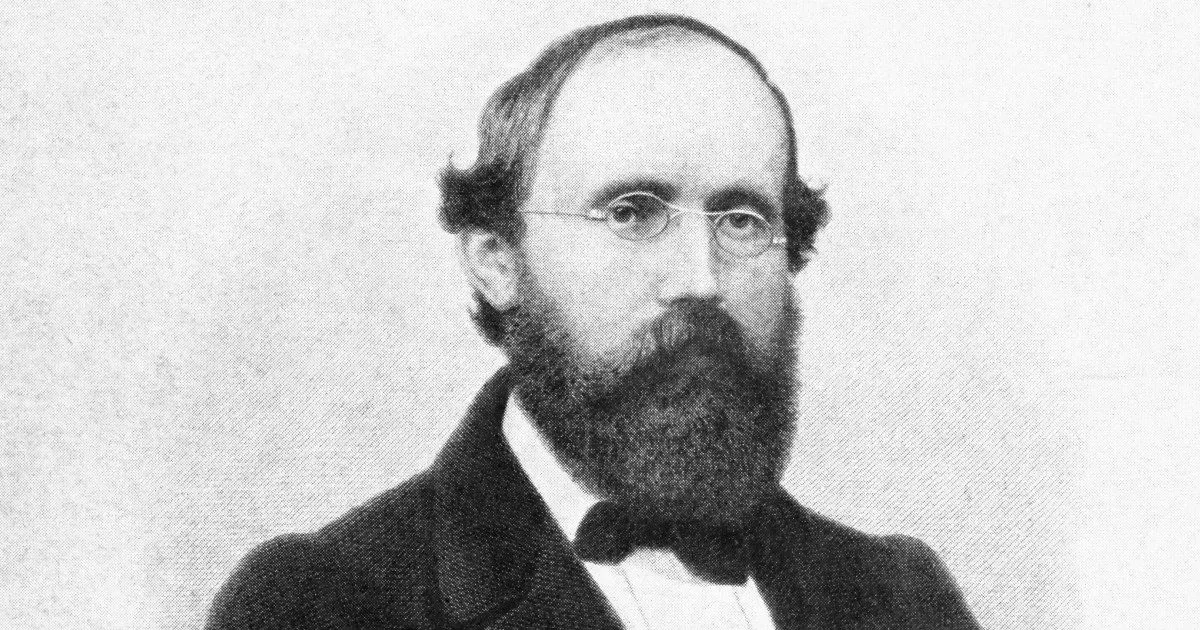
The Riemann Hypothesis was first proposed in 1859 by German mathematician Bernhard Riemann and revolves around the distribution of prime numbers. Prime numbers are whole numbers divisible only by one and themselves, such as 2, 3, 5, and 7.
These numbers appear to be scattered randomly along the number line with no discernible pattern, yet the hypothesis suggests that their overall distribution follows a deep, underlying order. The problem lies in identifying this hidden pattern, which is encoded in the Riemann zeta function introduced by Bernhard Riemann himself in 1859.
The Riemann Hypothesis has been dubbed "the most famous and important unsolved problem in mathematics" by Abhishek Saha, a professor of mathematics at Queen Mary University of London. This assertion echoes the significance attached to the problem by mathematicians worldwide.
The solution to this enigma would carry a $1m award as part of the Clay Mathematics Institute's Millennium Prize Problems, which include seven of the most pressing unsolved maths problems in the world.
The announcement was made by Alpoge, a member of the company's technical staff, in a four-page explanation posted on his website on Friday. He revealed that the proof he has found extends to the generalised Riemann hypothesis, which broadens the original conjecture to cover a wider range of mathematical functions.
Alpoge chose not to publish a traditional research paper, instead releasing his argument in Lean, a programming language and proof assistant designed to verify reasoning step by step. This approach allows for rigorous checking of the underlying logic, but also presents challenges for understanding the broader implications.
Experts are still trying to grasp the significance of Alpoge's work, with many struggling to comprehend the sheer scale of the proof. According to Kevin Buzzard, professor of pure mathematics at Imperial College London, it is estimated that the 17 million lines of Lean code correspond to tens of thousands of pages of mathematical notation.
Buzzard expressed his own confusion about what exactly Alpoge's proof shows. "We don't even know why the theorem is true," he said in an interview with Al Jazeera. The sheer volume of mathematical detail contained within the code has left many experts scrambling to make sense of it all.
As researchers attempt to translate and understand the Lean code, Buzzard noted that experience suggests a relatively short timeframe for gaining clarity. Within a week or two, humans will have a much better understanding of what's actually going on in this code, he said, drawing from past instances where similar situations were resolved with remarkable speed.
Buzzard highlighted the far-reaching implications of the Riemann hypothesis, noting that hundreds of other mathematical results rely on its truth. A proof would be a major milestone, settling a question that has puzzled some of the greatest minds in mathematics for over 160 years.
The complexity and scale of Alpoge's work are undeniable, with many experts describing it as "millions of lines of gobbledygook" written in a programming language unfamiliar to most mathematicians.
The impact of Alpoge's achievement extends far beyond mathematics itself, influencing fields such as internet security where speed is crucial. In these cases, mathematicians have developed algorithms that seem to work quickly but lack a definitive proof of their accuracy. The generalized Riemann hypothesis offers reassurance on this front, guaranteeing the efficacy of certain algorithms.
Cryptography experts have long relied on the assumption that the Riemann hypothesis holds true, despite lacking concrete evidence. In practice, this assumption has proven viable due to the substantial body of research supporting its validity. As a result, mathematicians can rest easier knowing that their work is grounded in a fundamental truth.
Alpoge's breakthrough stands out among recent AI-driven advances in mathematics, with some problems yielding limited practical applications. For instance, solving the Navier-Stokes problem, another Millennium Prize challenge, has yet to yield tangible benefits. In contrast, the Riemann hypothesis has significant implications for neighboring fields of study.
The Riemann hypothesis is notable not only for its inherent difficulty but also for its position as a stepping stone towards more complex problems. Stronger versions of the hypothesis, including the extended and grand Riemann hypotheses, present even greater challenges to mathematicians. These variants share a common thread with the original problem, yet offer new avenues for exploration.
Mathematicians have developed an array of sophisticated theories in pursuit of solving the Riemann hypothesis, but none has been successful over the past 167 years. The direct methods employed thus far have fallen short, failing to provide a conclusive proof. This persistent elusiveness underscores the complexity and depth of the problem.
The Riemann hypothesis is often described as having reached a critical juncture in the journey towards solving it. Alpoge's achievement marks an important milestone on this path, setting the stage for further advances and potentially shedding new light on the underlying mathematics.
Mathematicians are still reeling from the claimed proof of the Riemann hypothesis, a problem that has puzzled experts for centuries. Until recently, most mathematicians believed that a solution would require significant new mathematical theories to be developed over several decades.
The sheer magnitude of this achievement is causing some to question their own understanding of the underlying mathematics. "My own intuition was that we were still several years away from a proof," said one expert, whose expectations have been shattered by the claimed breakthrough.
A key feature of this proof is its unconventional approach to solving the problem. Rather than building new infrastructure to tackle the challenge head-on, it takes an indirect route through existing theories and somehow creates a shortcut to the solution.
The implications of this proof are far-reaching and still unclear. It's possible that there were no fundamental gaps in human understanding, only a lack of insight into how to combine existing knowledge. On the other hand, it may reveal a wealth of new ideas and theories waiting to be discovered.
Despite the excitement surrounding this development, much remains to be understood about the proof itself. Until mathematicians can grasp its underlying logic, they will continue to be in the dark about what exactly has been achieved.
The emergence of artificial intelligence is transforming the field of mathematics, enabling researchers to tackle problems previously deemed insurmountable. This shift in capabilities has significant implications for how mathematicians approach their work, as they must adapt to a new landscape where AI-assisted research becomes increasingly prevalent.
According to experts, traditional notions of mathematical prowess will no longer be the primary factor in determining success. Instead, researchers will need to develop skills that complement AI's abilities, such as crafting effective research questions and directing AI systems towards productive applications.
A notable aspect of this development is the role of AI models and computing resources in facilitating breakthroughs like Alpoge's proof of the Riemann hypothesis. The fact that others with similar access were unable to replicate his achievement highlights the importance of human intuition and creativity in guiding AI research.
Mathematicians are now being forced to reevaluate their place within the field, as AI assumes a more prominent role in theorem-proving and problem-solving. This shift has sparked concerns about job redundancy, but experts argue that AI is merely augmenting human capabilities rather than replacing them entirely.
The Riemann hypothesis's proof serves as a testament to the potential of human-AI collaboration. By harnessing the power of AI, mathematicians can now tackle complex problems that were previously beyond their reach, opening up new avenues for research and discovery.
Buzzard emphasizes that mathematics is not becoming obsolete; rather, it is evolving to incorporate cutting-edge tools like AI. He likens this development to the introduction of the telescope in astronomy, which revolutionized our understanding of the universe by providing a new perspective on existing phenomena.
As mathematicians continue to adapt to the changing landscape, they will need to develop skills that complement AI's capabilities and enable them to effectively direct and orchestrate AI-assisted research. This requires a fundamental shift in how mathematics is approached, with an increased emphasis on human-AI collaboration.
The use of artificial intelligence in mathematics is transforming the field, allowing for breakthroughs that were previously unimaginable. According to Buzzard, AI's ability to process vast amounts of data has made it a valuable tool in solving complex mathematical problems.
However, not everyone is celebrating this new development. Some mathematicians are concerned about the impact of AI on their profession, citing a sense of loss and disorientation as traditional methods give way to new ones. The rapid pace of change is causing anxiety among some who fear they will no longer be needed in the same capacity.
The shift towards human-AI collaboration has also led to criticism that AI is taking over the role of mathematicians. Buzzard acknowledged this sentiment, suggesting that humans were previously seen as the sole owners of mathematical expertise and innovation.
Facts based on reporting originally published by Al Jazeera.
You may republish this story, in full or in part, if you credit Noti Group and link to it (licence CC BY 4.0). Photos are not included.