






General Motors Unveils Ambitious Tech Roadmap for Automotive Industry
The company aims to revolutionize the automotive industry through cutting-edge technology, including AI-driven vehicle development and autonomous driving capabilities.

At a high-profile event in New York City last week, General Motors unveiled its ambitious plans to revolutionize the automotive industry through cutting-edge technology. The company's tech roadmap focuses on AI-driven vehicle development, advanced battery technology, powerful car computers, and autonomous driving capabilities.
While some of these advancements were already known, the real purpose of the event was to showcase how these disparate elements would come together seamlessly. General Motors is betting big on artificial intelligence, centralized computing, and virtualized engineering to transform the way vehicles are designed and developed.
The company's new "intelligence-defined vehicle" paradigm aims to slash vehicle development timelines in half, condensing a typical four- to five-year process into just over two years. This high-tech overhaul comes at a critical juncture for the industry, marked by intense competition from hyperefficient Chinese EV makers and softening demand for electric vehicles in the US.
General Motors is facing significant headwinds as it attempts to balance its investments in next-generation battery plants with the ongoing costs of software development. The company's aggressive pivot towards a more technology-driven future raises questions about its ability to execute on this vision, particularly given the steep margins for error in the industry.
To put this gamble into perspective, General Motors is betting its future on unproven software architectures and autonomous technology. If these complex AI systems falter or development hits delays, the company risks burning through massive amounts of money while falling further behind agile rivals like Tesla.
I had the opportunity to speak with Sterling Anderson, GM's chief product officer, about the company's plans and the challenges it faces in this increasingly fast-paced world. Our conversation began with a question about the unifying theme behind General Motors' latest announcements.
A wide-ranging set of technologies is being brought together under one umbrella, but there appears to be a common thread, or at least that's how it seems. The car is getting smarter, according to Anderson. And when pressed for further clarification on what this means, he simply reiterates that the car is indeed becoming more intelligent.
The conversation with Anderson has only just begun, and there is much more to explore in terms of General Motors' plans and the challenges it faces as a century-old Detroit giant navigates an increasingly software-driven world.
As General Motors continues to push the boundaries of innovation in its vehicles, the company is making significant strides in artificial intelligence and machine learning. According to Sterling Anderson, a key figure in GM's development process, the goal is to create a trusted and intelligent companion that learns and adapts to drivers' needs.
Anderson's enthusiasm for the project is palpable as he describes the rapid progress being made in virtualizing tests and improving performance optimality. By spinning design decisions hundreds of times, previously unaffordable due to the costs associated with physical prototypes, GM is achieving unprecedented levels of safety and efficiency.
The use of AI models in this process relies heavily on data, which Anderson describes as "the currency driving innovation. The company is pulling from a range of sources, including its own customers' data, but also drawing from external products to inform its models.
Anderson acknowledges that there's a fine line between what data to source internally versus externally, and notes that the co-training of models with external data tends to make them more robust and effective. This approach allows GM to leverage existing knowledge and improve its AI systems in ways previously unimaginable.
The shift towards virtualized testing has been particularly transformative for Anderson and his team. By kickstarting thousands of tests in a virtual environment, they can gather feedback much quicker than would be possible with physical prototypes.
As a result, GM is achieving unprecedented levels of speed, safety, and understanding in its development process. The benefits are multifaceted, with improved performance optimality and reduced costs being just two key advantages.
Anderson's comments highlight the significant strides being made by General Motors in integrating AI and machine learning into its operations. As the company continues to push the boundaries of innovation, it will be interesting to see how these developments impact the automotive industry as a whole.
The integration of artificial intelligence into vehicles is a complex process that requires careful consideration of various factors, including latency and data processing.
To achieve this, the company has been working on embedding probabilistic AI models that learn from the structure of the world and from data into the vehicles. This approach allows for more efficient use of onboard resources and reduces reliance on cloud-based systems.
However, not all AI-powered functions are created equal, and some are considered safety-critical while others are not. For instance, OnStar AI interactions, which were showcased earlier, are not necessarily safety-critical but do require consideration of latency and user experience.
To address this, the company is exploring ways to distill down non-safety critical functions into onboard models that can handle latency issues more effectively. This would enable a smoother user experience without compromising core safety considerations.
The company's size and data capabilities give it an advantage in developing AI-powered vehicles, but they also present challenges related to inertia and complexity. As the automotive industry continues to evolve, GM is positioning itself for success with its digital brain" concept, which aims to create a more streamlined software development process.
A key enabler of this effort is the common electrical system, including centralized compute, that is being rolled out across the company's portfolio. This will allow software engineers to work more efficiently by reducing the complexity associated with supporting multiple vehicle configurations.
As GM continues to move forward with its ambitious plans, it remains to be seen how these developments will impact the broader automotive industry. With a unique portfolio of brands and distinct identities, GM is well-positioned to drive innovation in the sector, but challenges lie ahead.
Standardization and brand identity are delicate balances for General Motors (GM) as it navigates the complexities of vehicle design.
The company's approach to standardizing certain features across its various brands is multifaceted, taking into account both aesthetics and interaction models.
Aesthetics, in particular, can be easily standardized through design, encompassing digital interfaces and physical sheet metal, allowing for a consistent look and feel across different brands.
GM has already made significant strides in commonizing under-the-skin componentry, recognizing that certain aspects of vehicle design are universally preferred by consumers.
The company's T1-2 platform, used in its next-generation trucks, is a prime example of this approach, providing a shared foundation for multiple brands.
While engineering teams work together across brands, sales teams maintain dedicated channels to ensure that each brand's unique identity is preserved and respected.
GM's goal is to focus its engineering efforts on developing the best possible components, such as suspension systems or powertrains, which can then be scaled across the entire portfolio.
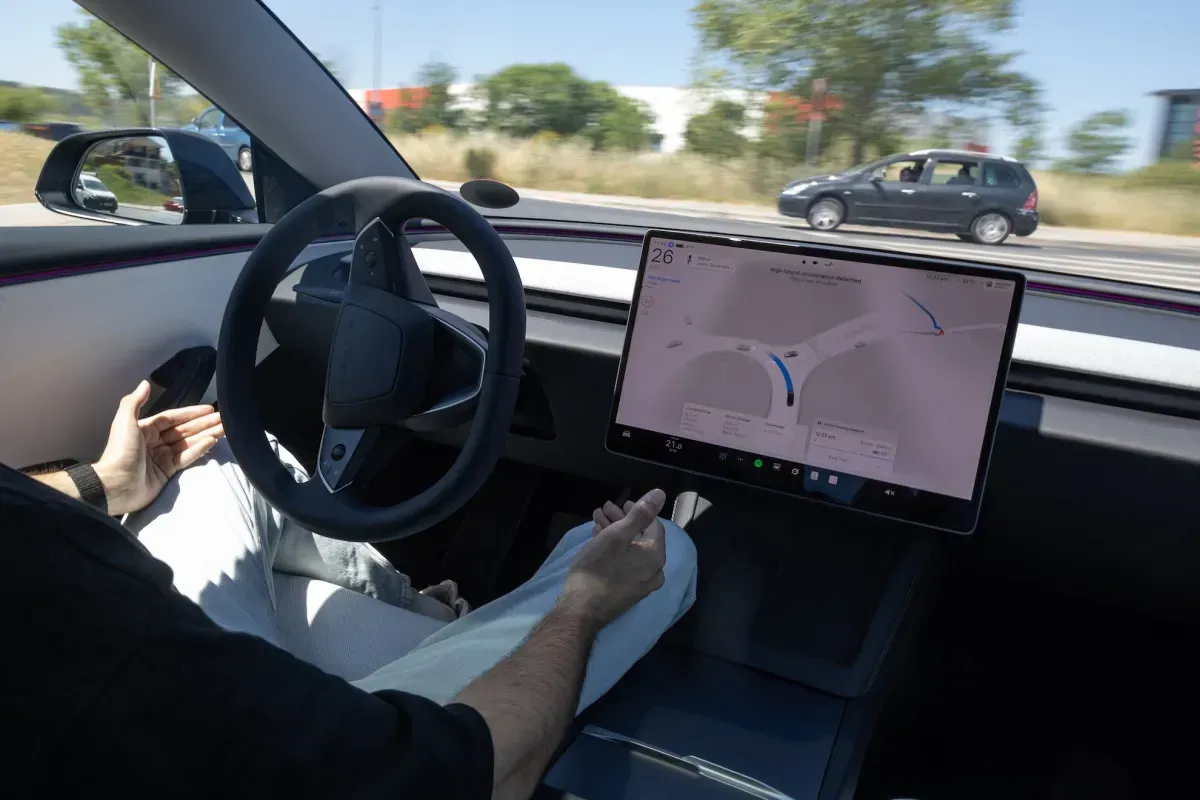
The development of autonomous vehicles requires a nuanced approach, one that balances the need for advanced technology with the potential risks associated with its use. Sterling Anderson, a key figure in GM's autonomous driving efforts, emphasizes the importance of designing systems that can adapt to various scenarios and environments.
To achieve this goal, GM is adopting a more incremental approach to autonomous vehicle development. Rather than pushing for fully autonomous vehicles in all situations, the company is focusing on specific settings and road types where its technology can be effective. This path acknowledges that personal ownership and robotaxis have different requirements and challenges.
One of the key concerns with current driver assistance systems is complacency among drivers. If a system is perceived as highly capable, users may become less attentive or even rely too heavily on it. Anderson notes that GM's philosophy emphasizes designing autonomous systems that can handle complex situations without relying on human intervention.
In contrast to region-specific settings, GM is exploring road-type specific settings for its autonomous vehicles. This approach allows the company to tailor its technology to different environments and conditions, rather than trying to apply a one-size-fits-all solution. The ultimate goal remains self-driving everywhere at all times, but the path to achieving this requires careful consideration of various factors.
The use of robotaxis has raised concerns about nuisance situations, such as blocking intersections or emergency vehicles. Anderson suggests that personal autonomy can help mitigate some of these issues by providing a fallback option for drivers in non-safety-critical situations. However, he emphasizes the importance of structuring this handoff to avoid driver complacency.
In situations where an autonomous vehicle is not functioning properly, GM's system will bring the vehicle to a safe state and alert the driver to take control. This approach ensures that drivers remain engaged and attentive, even when using advanced technology. Anderson notes that this is not equivalent to Level 3 autonomy, which would involve more dynamic handoffs between human and machine.
The development of autonomous vehicles requires careful consideration of potential misuse by bad actors. GM's system includes safeguards to prevent such abuse, including measures to detect and respond to attempts to exploit the technology for malicious purposes.
The use of driver-assist systems raises concerns about their potential misuse, particularly in situations where they are not designed to handle every scenario.
However, Anderson points out that he gets more anxious when misuse occurs within a system that was never intended for such complex tasks.
In contrast, he feels more at ease with the capabilities of GM's system, which includes safeguards to prevent exploitation and can respond to malicious attempts.
The integration of AI-powered features like OnStar raises questions about data privacy, particularly given past incidents where GM shared customer information without consent.
Anderson emphasizes that user trust is built by designing systems with end-to-end encryption and aggregate anonymization, allowing customers to control their data at an individual level.
Ultimately, rebuilding trust requires more than just statements of intent, it demands a fundamental rethinking of how companies approach data architecture and user permissions.
Facts based on reporting originally published by The Verge.
You may republish this story, in full or in part, if you credit Noti Group and link to it (licence CC BY 4.0). Photos are not included.