







Dental Implant Infection Root Cause Identified by Researchers
Researchers from Rutgers School of Dental Medicine claim to have identified the root cause of peri-implantitis, a serious infection that erodes the jawbone in dental implant patients.
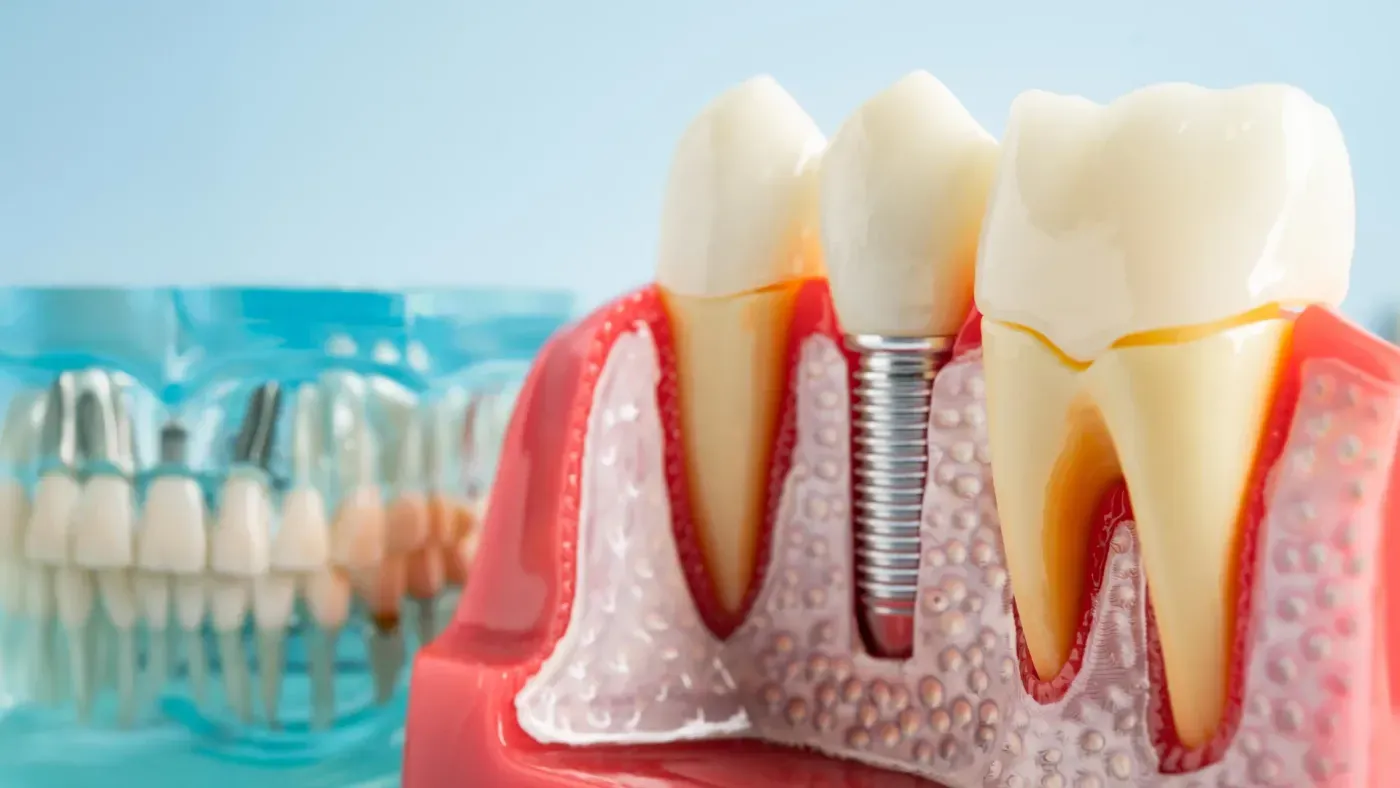
Millions of people worldwide have turned to dental implants as a reliable solution for replacing missing teeth. However, this procedure is not without its risks, and up to 20% of implant patients eventually develop peri-implantitis, a serious infection that erodes the jawbone.
Peri-implantitis has long been a puzzle for medical professionals, with antibiotics often failing to provide relief. Now, researchers from the Rutgers School of Dental Medicine claim to have identified the root cause of this condition.
According to their study, bacteria can gradually corrode dental implants, releasing tiny titanium particles into surrounding tissues. These particles disrupt the immune cells responsible for fighting infection, causing them to become trapped in a state of chronic inflammation that progressively damages the jawbone.
The researchers used a combination of laboratory experiments and tissue samples from human patients to reach this conclusion. They found that titanium particles activate a calcium channel in macrophages, the immune cells tasked with engulfing bacteria.
When this calcium channel is activated, it prevents macrophages from functioning properly, allowing the infection to spread unchecked. The researchers took their findings further by conducting experiments on genetically engineered mice, which showed that disabling the calcium channel prevented the development of peri-implantitis.
The discovery offers new hope for patients and healthcare systems worldwide, with an estimated one in five dental implant recipients affected by this condition. Annual costs exceed $1 billion, making it a significant burden on global healthcare budgets.
The similarity between peri-implantitis and periodontitis has long been a puzzle in dentistry. Both conditions start with similar types of bacteria in the mouth, yet they react differently to treatment. The fact that antibiotics combined with professional cleaning can resolve infections around natural teeth, but not as effectively for dental implants, is particularly puzzling.
For years, scientists have focused on the bacteria responsible for these infections, trying to understand why they don't respond to standard treatments. However, researchers in one laboratory decided to explore another possibility: could the implant material itself be contributing to the problem? This line of inquiry led them to investigate the role of titanium implants in peri-implantitis.
Their research revealed that bacteria accumulating on implant surfaces create acidic biofilms that gradually damage the titanium over time. As this corrosion occurs, it releases billions of tiny metal particles into the surrounding tissue, each one smaller than a red blood cell. This process can weaken the bone and lead to further complications.
These tiny metal fragments can also be dislodged during routine dental cleaning, posing an additional risk when instruments designed for natural teeth are used on implants. The damage caused by these instruments can scrape and harm the implant surface, making it more susceptible to infection.
Once released into the gums, the titanium particles attract a bacterial toxin called lipopolysaccharide, which coats their surfaces. This combination creates a false target for the immune system, causing it to treat the metal fragments as unusually large bacteria that cannot be broken down.
The prolonged state of excessive inflammation caused by macrophages attempting to consume titanium particles can have severe consequences for the body's defenses.
As a result of this excessive inflammation, macrophages produce large quantities of inflammatory signaling molecules, including interleukin-1 beta. This protein has also been linked to inflammatory processes involved in conditions such as rheumatoid arthritis and Alzheimer's disease.
The resulting immune response weakens the bone supporting the dental implant, while simultaneously impairing the macrophages' ability to fight off the bacteria that triggered the infection.
Laboratory experiments have shown just how severely the defenses are disrupted when macrophages encounter titanium particles. These cells engulf fewer than half as many bacteria as their unexposed counterparts.
The molecular pathway responsible for this damaging reaction has been identified by researchers, who found that it involves a calcium channel called TRPC1. This channel plays a central role in the inflammatory response triggered by titanium particles and bacterial toxins.
The absence of a specific ion channel in mice appears to significantly alter their immune response when exposed to dental implant debris and bacteria.
These genetically modified animals failed to develop large abscesses or produce high levels of inflammatory signaling molecules, unlike their counterparts with the intact ion channel.
Moreover, the mice lacking this ion channel were able to more effectively clear bacterial infections from their bodies, indicating a stronger immune system function.
This suggests that targeting the molecular pathway involved in the disease process may offer an alternative approach to treating peri-implantitis, rather than relying solely on antibiotics.
Scientists are now investigating potential drugs that can affect human cells in a similar manner, with funding from the National Institutes of Health.
The discovery of how corroded titanium in dental implants can interfere with the immune system has significant implications for treating and preventing infections associated with these devices.
This breakthrough offers a new explanation for why some dental implant infections are notoriously difficult to identify and treat, which could lead to more effective therapies being developed in the future. The findings also highlight the importance of using nonabrasive cleaning methods when maintaining dental implants, as this can help protect the implant surfaces from corrosion.
The potential consequences of this research could be far-reaching, leading to improved treatments for patients with dental implant infections and enhanced understanding of the complex interactions between implants and the human immune system.
Facts based on reporting originally published by ScienceDaily Health.
You may republish this story, in full or in part, if you credit Noti Group and link to it (licence CC BY 4.0). Photos are not included.