





Ukraine Faces Power Cuts Amid Russian Attacks
The country is struggling with planned power cuts due to Russia's attacks on its energy grid, leaving families without access to basic necessities.
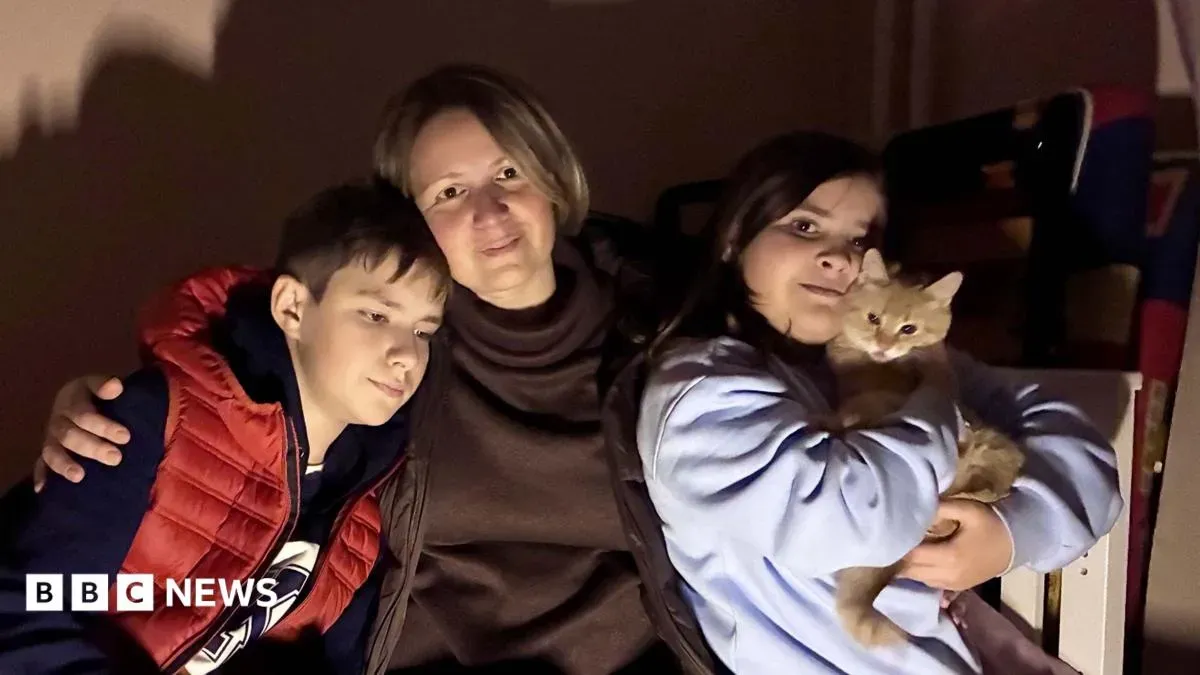
Daryna Kulchytska's daily routine has become increasingly challenging as she navigates the uncertainty of Ukraine's power supply. A single mother to two energetic children, Daryna is struggling to balance her responsibilities while trying to cope with the unpredictable schedule of electricity outages.
The strain on families like hers is evident in the rolling schedule of planned power cuts, implemented due to Russia's intensified attacks on Ukraine's energy grid. These targeted strikes have left Ukrainians facing a constant battle to access basic necessities, including electricity, water, and internet connectivity.
Ukraine has responded by launching counterattacks against Russian oil refineries, but officials remain concerned about the long-term sustainability of power supplies for millions of people. They warn that life will become increasingly difficult if daily power outages cannot be reduced to at least four hours.
In Kyiv, some families are already experiencing outages lasting up to 20 hours, making it challenging for residents like Daryna to maintain a semblance of normalcy. The introduction of power cuts earlier this year has resulted in longer durations without electricity, leaving homes darker and colder than before.
The situation is further exacerbated by the drop in temperature, forcing residents to resort to layers of clothing and heavy coats just to stay warm indoors. This added burden on families is taking a toll, with many struggling to cope with the uncertainty surrounding their power supply.
As peace talks continue between US envoys and leaders from Russia and Ukraine, the plight of Daryna and millions like her remains a pressing concern. The stability of Ukraine's power grid will be crucial in determining the fate of these families, who are fighting to survive amidst the ongoing conflict.
As night falls in Kyiv, households are plunged into darkness due to the ongoing Russian strikes on Ukraine's power grid.
Families like Daryna's are forced to rely on makeshift lighting, such as torches and LED candles, which provide a meager substitute for electricity. The absence of power has significant implications, including the failure of water supply systems that require electricity to function. Without functioning elevators, residents in high-rise buildings are confined to their flats until morning.
The impact is felt by children like Kyryll, who have to adapt to life without the usual amenities. "There's no light, no water, no heat, no electricity," he says matter-of-factly, reflecting on the disruption caused by the Russian strikes.
Many families in Ukraine are experiencing similar hardships as blackouts sweep entire neighborhoods, leaving homes and streets shrouded in darkness. The absence of lighting makes it difficult for residents to navigate their surroundings, with some reporting that they can see nothing outside their windows due to the lack of illumination.
The situation is particularly dire in Kyiv, where metro trains and trolleybuses have been brought to a standstill at times. Nationwide, hundreds of thousands of Ukrainians have gone without power in recent weeks, highlighting the devastating effects of Russia's campaign against Ukraine's energy infrastructure.
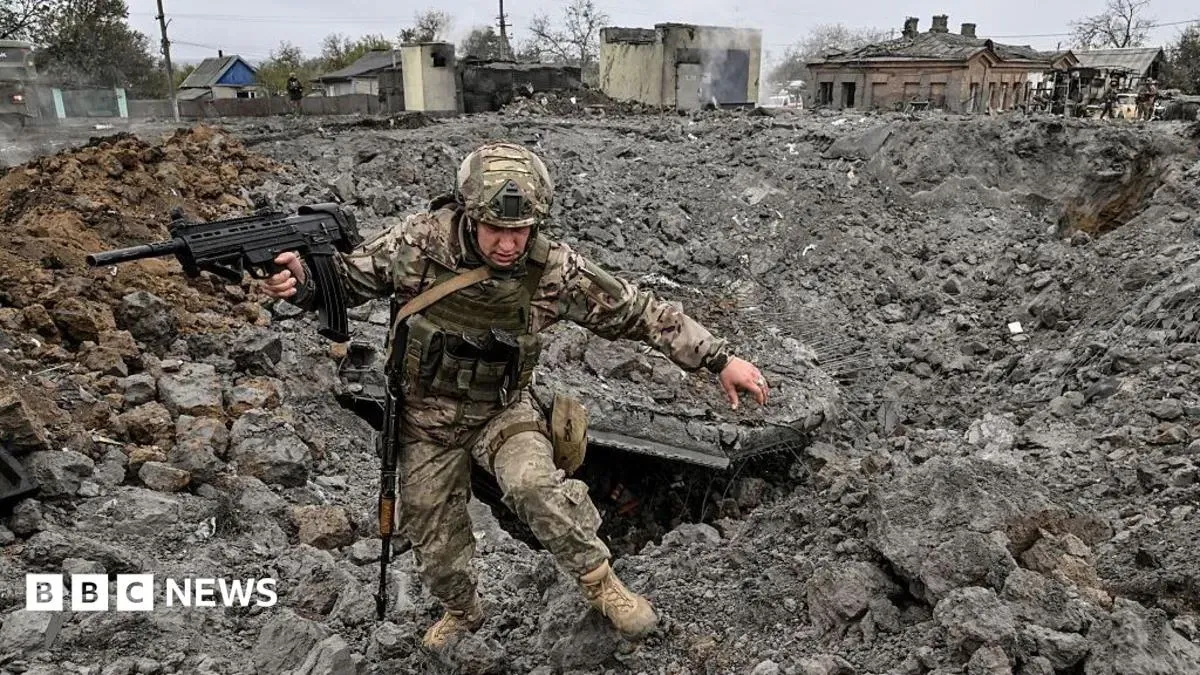
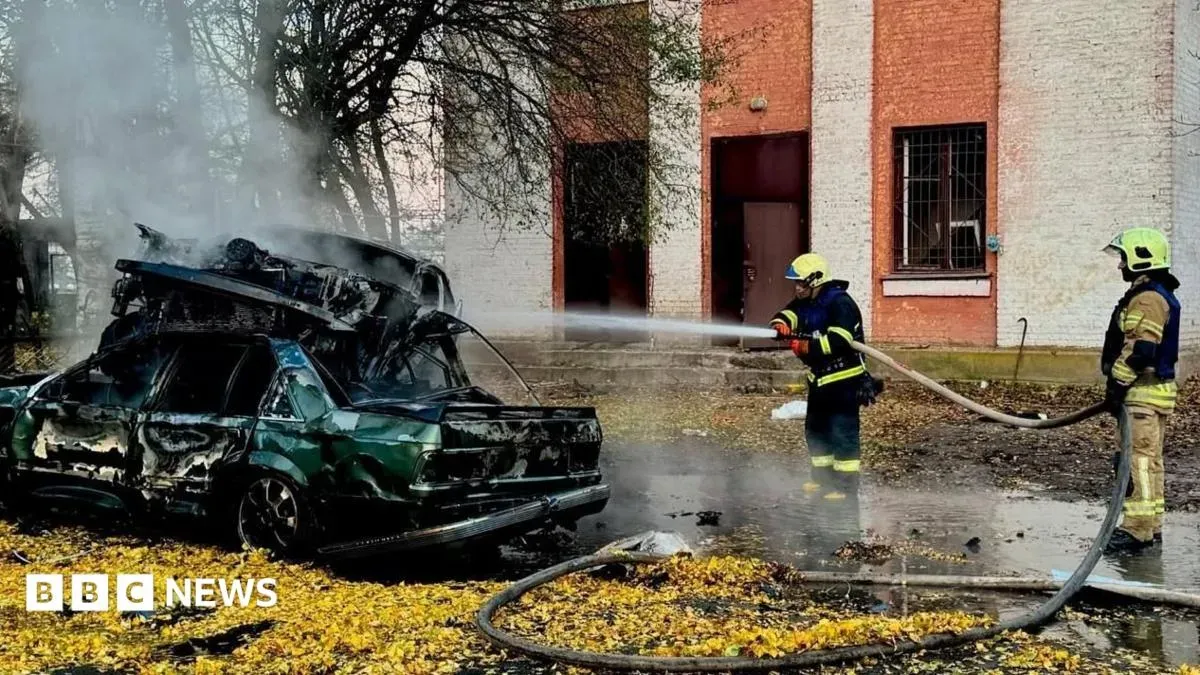
The destruction caused by recent Russian strikes on Ukraine's energy infrastructure has left one of the country's major power plants severely damaged.
A critical piece of equipment at the facility, which cannot be named for security reasons, lies in ruins after being hit by missiles early last morning.
Volodymyr Kovalenko, a veteran employee who has worked at the site for 25 years, was on duty when the attack occurred. He described it as "very powerful" and unlike anything he had experienced before.
The control room where Kovalenko worked suffered significant damage during the strike, and its turbines are now buried under rubble.
Despite his confidence that the plant can be repaired, Kovalenko admits the destruction is heartbreaking to see.
Air raids continue to disrupt recovery efforts at the site, with teams forced to abandon work every 15-30 minutes due to warnings of incoming drones or missiles.
The workers at the plant are facing an uphill battle as they attempt to restore power in the midst of ongoing attacks by Russian forces.
Their task is made even more daunting by the constant threat of incoming missiles and drones, which have become a daily occurrence since August. Despite this danger, energy workers continue to risk their lives to repair damaged facilities and get electricity flowing again.
The plant's infrastructure has been severely impacted, with many power lines and substations targeted in the attacks. As a result, getting electricity from the shattered plant to homes and businesses is becoming increasingly difficult.
President Volodymyr Zelensky has acknowledged that Ukraine still has enough generating capacity to meet electricity demand, but the challenge lies in distributing it safely given the destruction of so many power lines and substations.
The strain on Ukraine's electricity grid is intensifying as Russia continues its campaign of strikes against critical infrastructure. The attacks have pushed the already degraded grid to its limits, according to Maxim Timchenko, CEO of DTEK, Ukraine's largest private energy company.
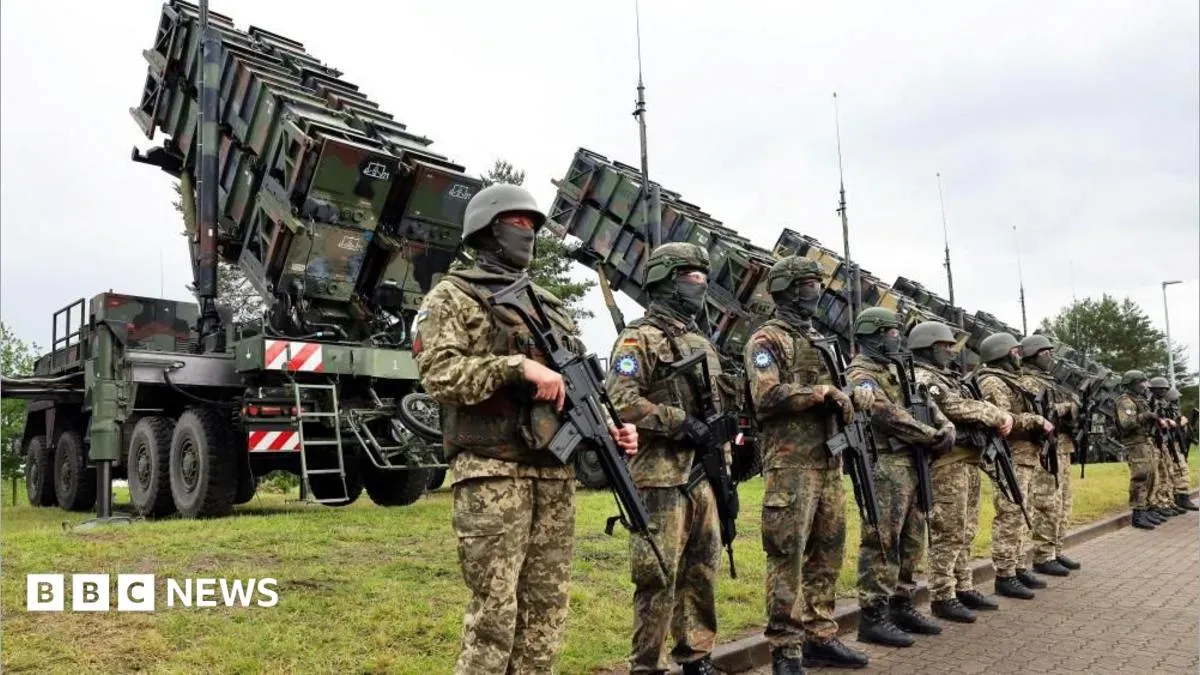
Timchenko points out that this year's strikes are more powerful and widespread than last year's, with a significant increase in scale. This is making it even harder for Ukraine's overstretched air defences to protect the country's vital infrastructure from destruction.
The rebuilding of damaged power stations will be a long and difficult process. According to Timchenko, workers are currently limited to only one or two productive hours per day due to sustained attacks, which means that repairs will not be completed until at least next summer.
As Ukraine struggles to keep the lights on, many residents are facing a bleak winter ahead. The absence of electricity is causing significant disruptions to daily life, with families having to endure prolonged power outages and the associated challenges they bring.
Some people are taking drastic measures to cope with the situation, including leaving the capital or even the country altogether. For those who remain, the cold and darkness are taking a toll on their physical and mental well-being.
The prolonged darkness is taking a heavy toll on Daryna, who is struggling to cope with her own mental health issues amidst the chaos.
In an act of defiance, she and many others are willing to endure the cold and darkness rather than surrender to Russian forces. As one person put it, being without power is preferable to living under Russian occupation.
The resilience of those affected by the crisis is a testament to their determination to preserve their way of life despite the unimaginable hardships they face every day.
Facts based on reporting originally published by BBC News World.
You may republish this story, in full or in part, if you credit Noti Group and link to it (licence CC BY 4.0). Photos are not included.