





Google Researcher's Claim About Discovering New Maya Site Disputed
A Google researcher's claim about discovering a previously unknown Maya site in Mexico using artificial intelligence agents has been disputed after it was revealed that the site had already been identified and documented by experts last year.
A Google researcher has made a high-profile claim about discovering a previously unknown Maya site in Mexico using artificial intelligence agents. However, this assertion is now being disputed after it was revealed that the site had already been identified and documented by experts last year.
The incident highlights the growing concern among archaeologists about amateurs with advanced AI tools entering specialized fields without proper expertise or understanding of their findings. This development has sparked heated discussions online, with many experts expressing skepticism about the use of AI in archaeological research.
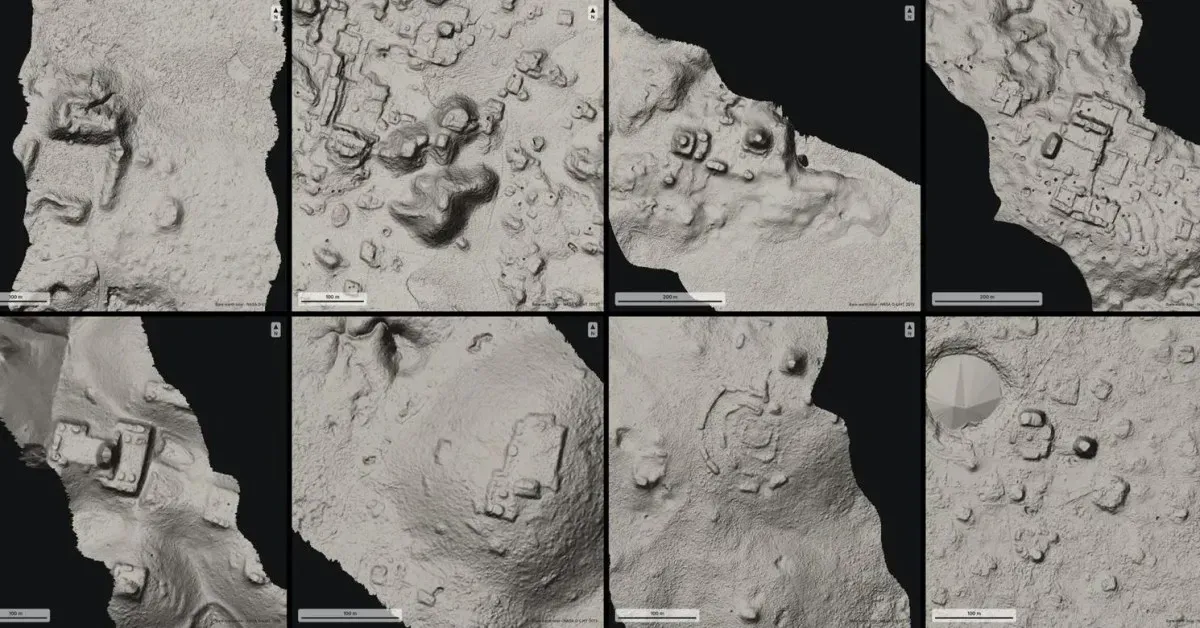
Google researcher Pietro Miotti had been experimenting with using lidar technology, which creates detailed 3D images of environments using laser-based mapping, to search for undocumented sites. He claimed that this approach was inspired by his own experiences traveling in Peru, where he wondered what historical explorers might have achieved if they had access to modern technology.
Miotti's team used a team of 48 AI agents to scour NASA lidar data for signs of previously unrecorded Maya ruins, initially focusing on areas with limited public coverage.
The AI agents used by Miotti's team had flagged several promising locations during their search of NASA lidar data, including one major village that didn't appear to be registered in existing records.
Miotti reached out to Mexico's National Institute of Anthropology and History (INAH) to verify whether the apparent discovery was already known, using his AI agents to translate correspondence into Spanish.
The Mexican government responded promptly, stating it had no record of a registered site at that location, despite Miotti's initial findings.
Miotti acknowledged that he is not an archaeologist and emphasized that further fieldwork would be necessary to verify the finding, which was later revealed to be incorrect due to its prior documentation in an academic journal.
The discovery of a supposed new Maya site by an AI project has sparked controversy among archaeologists on social media.
Several experts pointed out that the finding was not as groundbreaking as claimed, highlighting the importance of thorough research and verification before making announcements.
As Sarah Parcak noted in her posts on Bluesky, simply because information is not readily available in a database does not mean it is unknown or unmapped - existing research must be carefully checked to confirm new findings.
This oversight has sparked criticism of the project for spreading misinformation and undermining the work of archaeologists who have been utilizing advanced digital tools for years.
The use of artificial intelligence agents in archaeology has been touted as a game-changer for discovering new sites and excavating previously unknown areas. However, experts are pointing out that this approach can be misleading and oversimplify the complexities of archaeological research.
According to Elizabeth Graham, a professor of Mesoamerican archaeology at University College London, the real challenge is not discovering new sites but rather exploring and mapping those already known. Many of these sites have been found by local communities who have been aware of them for years.
The problem with using AI agents in this context is that it can give the impression that they are capable of doing something that humans cannot. Graham notes that interpreting lidar data, a key component of many AI-powered archaeological projects, can be tricky and requires a deep understanding of the subject matter.
As researchers continue to push the boundaries of what AI can do in science, they must also consider the limitations and potential pitfalls of these tools. By neglecting to engage with existing research, AI agents can perpetuate misconceptions and undermine the work of experts who have spent years studying these topics.
The lack of engagement with existing research can lead to AI agents making claims of breakthroughs that have already been made by others or failing to credit earlier work.
This oversight is not limited to cases where findings are actually new; even in these instances, the context provided by an expert may be missing, leaving a gap that specialists would normally fill when making scientific discoveries.
The amateur use of AI tools can shift the burden from establishing what has been found and why it matters onto actual experts, work that is essential for verifying the validity of claims made through such tools.
Šprajc expressed his concerns about the growing reliance on AI by amateurs, pointing out that archeologists may be overwhelmed with unsubstantiated claims of new discoveries.
Concerns are growing about the potential consequences of amateur AI agents publicizing archeological discoveries without proper verification.
These unverified claims could attract looters to previously unknown sites, posing a significant risk to their preservation. The increasing reliance on AI by non-experts has raised concerns that archeologists may be overwhelmed with unsubstantiated claims, which could lead to the exploitation of these sensitive locations.
Facts based on reporting originally published by The Verge.
You may republish this story, in full or in part, if you credit Noti Group and link to it (licence CC BY 4.0). Photos are not included.