




Google Launches New Smartglasses with Focus on Privacy
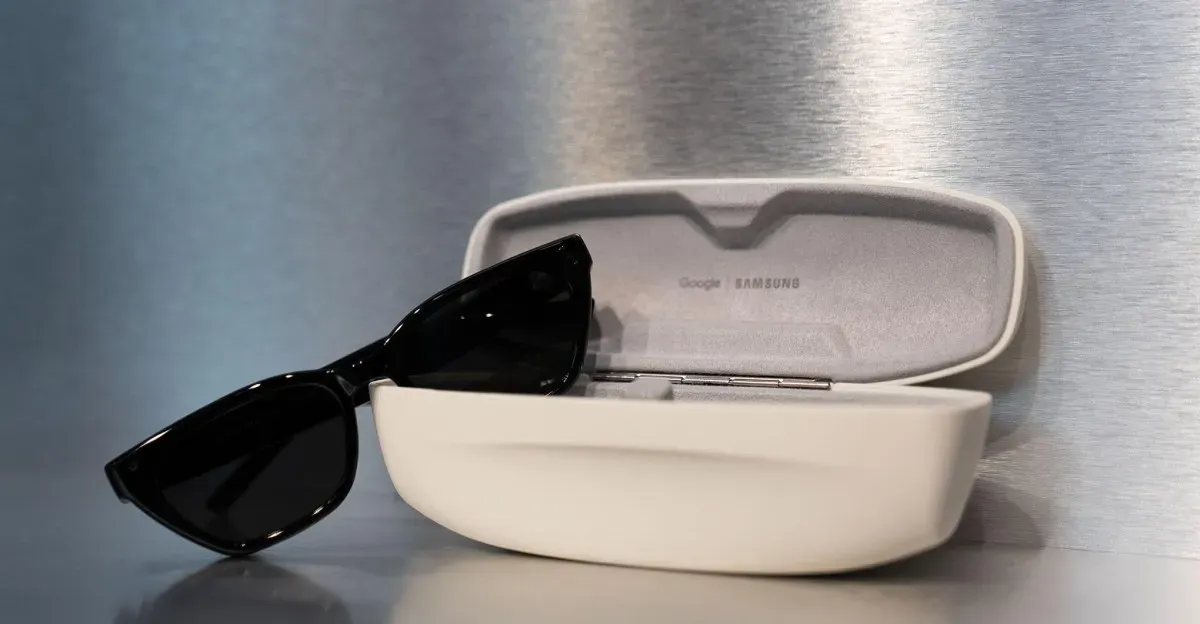
Google's new smartglasses are a collaboration between Google and Samsung, with frames designed by Gentle Monster and Warby Parker.

Google is launching its latest attempt at smartglasses, but this time it's focusing on the privacy aspect to win over consumers.
The new glasses, previewed a couple of times by Google, are a collaboration between the tech giant and Samsung, with eyewear designers Gentle Monster and Warby Parker creating frames for them. The devices will be available for preorder today from both companies, but they're not cheap - prices start at $395.
Warby Parker has designed three styles called Alden, Reid, and Wren, which come in various colors and lens options, including standard optical and sun lenses. They are only being sold in the US and cost between $395 and higher.
Gentle Monster is offering six different frames, but Google hasn't revealed their names yet. The Gentle Monster styles come in a range of colors, including dark red, pink, gray, and yellow, and can be paired with clear, tinted, blue, or brown lenses. They start at $449 and will be available in the US and South Korea.
The prices for both companies' offerings are significantly higher than expected, which may deter some potential buyers from making an impulse purchase. The high cost is likely due to the advanced technology inside the glasses, provided by Samsung.
While Google has not yet revealed any details about the features or capabilities of its new smartglasses, it's clear that the company is trying to address concerns about privacy and user control.
The frames of Google's new smartglasses weigh around 41 grams each, a relatively heavy load considering standard glasses. This weight will be significantly increased when lenses are added, which in turn affects the final price. For now, only the starting prices for these devices with non-prescription lenses have been revealed.
The design and functionality of these smartglasses bear some resemblance to Ray-Ban Meta glasses that hit the market a few years ago. Unlike those models, however, Google's new glasses don't feature screens in their lenses but allow interaction with the AI system through voice commands or by activating the integrated camera. This setup is meant to provide an experience similar to using Gemini Live on a smartphone.
The fact that these smartglasses run on Gemini means they'll have access to users' data and preferences across the Google ecosystem. Users can ask questions, receive personalized answers, navigate with Google Maps via voice commands, or simply engage in conversations with the AI for entertainment purposes. The glasses also come equipped with custom open-ear speakers designed to minimize distractions.
The directional microphones on these smartglasses are intended to pick up only the user's speech and not that of others nearby. This is meant to ensure a more seamless experience, especially when interacting with Gemini in public spaces. Google has highlighted this feature as an important aspect of its new smartglasses design.
Adding visual input through the camera enables the AI to take on more tasks on behalf of the user. For instance, users can ask Gemini for recommendations while browsing a bookshelf or looking at an event poster, prompting the AI to add it to their calendar. The glasses will also support Gemini Guided Vision, which offers conversational audio descriptions for visually impaired individuals.
The integration of visual input through the camera is where these smartglasses truly come into their own. By allowing the AI to see what the user sees, a wide range of tasks can be automated or made more efficient. Google suggests that users will find this feature particularly useful when browsing through unfamiliar environments, such as public spaces or foreign cities.
The success of these smartglasses relies heavily on the performance of Gemini, its AI system.
Gemini's limitations are evident in its tendency to make mistakes, even when faced with relatively simple tasks such as scheduling appointments or identifying objects in images.
When testing the device, it became clear that relying solely on Gemini can be a challenge, especially if there is no screen available to verify its output. This lack of transparency can erode trust in the system.
The potential for errors is compounded by the fact that users will often have limited visibility into what the AI is doing behind the scenes, making it difficult to discern whether the output is accurate or not.
In an effort to mitigate these concerns, Google has implemented various safeguards to prevent misuse of its intelligent eyewear.
The terms of use for Gemini eyewear impose strict requirements on users regarding video recording. They must obtain consent before capturing people in sensitive areas or without their permission. Failure to comply may result in remote disabling of the glasses by Google.
In a move that sets it apart from Meta, Google has restricted video functionality even further. No apps in the Play Store are allowed to live stream video directly from the glasses to social media platforms - not even YouTube Live is an exception. Users can still record and upload content from their gallery, but real-time streaming is not supported.
Google's stance on user privacy emphasizes that it will not store images or videos captured by the glasses in the Gemini history. This means users won't have to worry about their data being used for AI model training or targeted advertising purposes. However, voice interactions with Gemini via the glasses are subject to a different level of protection.
While Google encrypts data on the glasses during transit to the cloud, it remains unencrypted once it reaches the company's servers. To address this concern, Google is working to integrate Private AI Compute into the glasses, which would isolate data during processing and prevent even Google from accessing it.
Google's efforts to balance innovation with user concerns are evident in its approach to Gemini eyewear. By implementing safeguards and restrictions on video functionality, the company aims to mitigate potential misuse of its intelligent eyewear technology.
Preorders for Google's Gemini-powered smartglasses are now available through Gentle Monster and Warby Parker, allowing customers to test the company's touted emphasis on user privacy. The devices will begin shipping on December 10.
Support for these advanced eyewear is initially limited, with compatibility restricted to specific iPhone models from the 13 Pro onward, as well as certain Android devices such as Pixel 7 or newer and Samsung Galaxy S or Z series handsets running One UI 9 or later.
Facts based on reporting originally published by Ars Technica.
You may republish this story, in full or in part, if you credit Noti Group and link to it (licence CC BY 4.0). Photos are not included.