






Bladder Cancer Detection Improved with Artificial Intelligence System
Researchers at the University of Plymouth have developed a new artificial intelligence system to aid doctors in identifying individuals at risk of bladder cancer years before they receive a diagnosis.
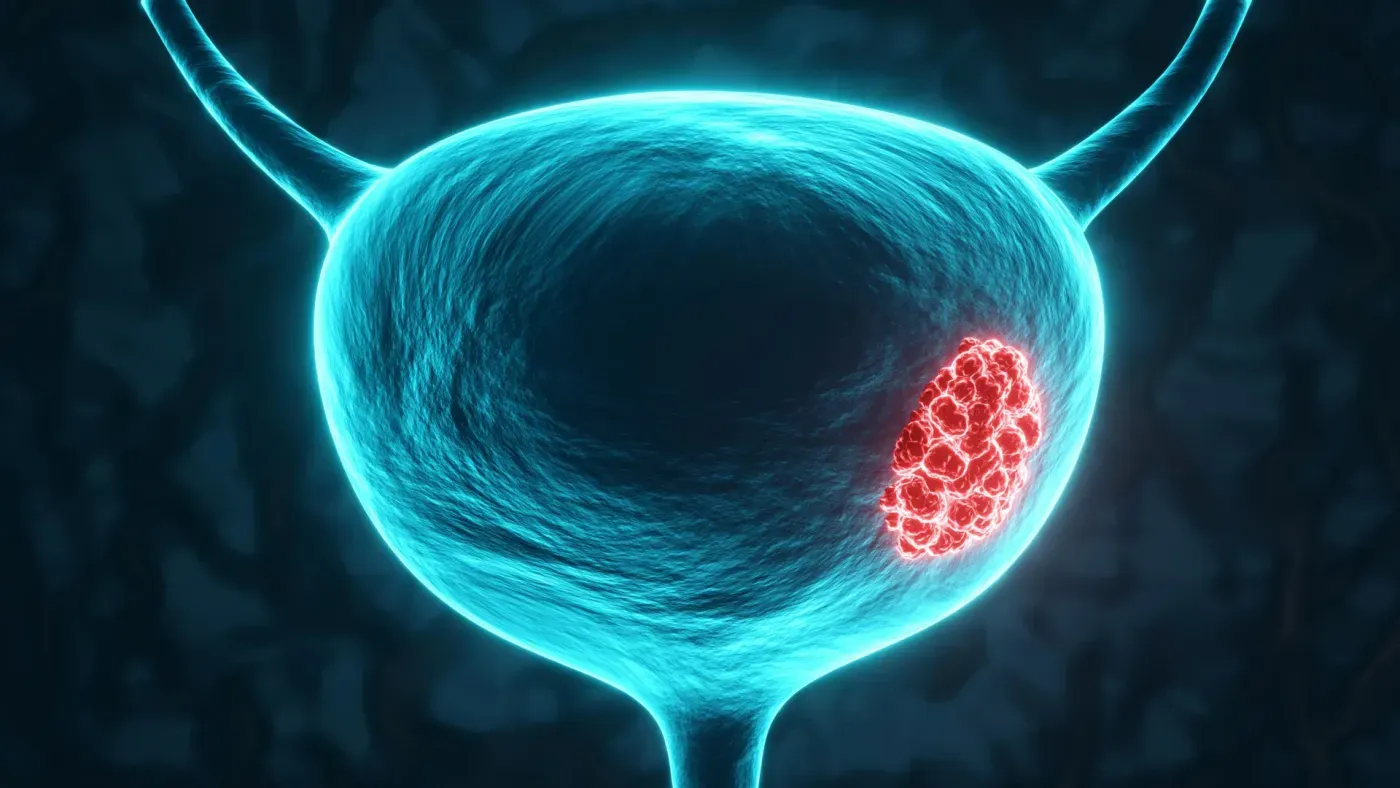
Bladder cancer claims approximately 220,000 lives globally each year, yet pinpointing the disease early on can be a challenging task due to its often vague symptoms. The condition frequently mimics less severe conditions such as kidney stones, allowing potential warning signs to go unnoticed.
Researchers at the University of Plymouth have developed an artificial intelligence system designed to aid doctors in identifying individuals at risk of bladder cancer years before they receive a diagnosis. In some cases, the technology detected subtle warning signals dating back up to five years.
Electronic health records are scrutinized by AI using this new approach, searching for patterns that may have been overlooked such as combinations of symptoms, medical conditions, and healthcare activity. By uncovering these underlying connections, researchers aim to make bladder cancer screening more accurate and enable doctors to find the disease at a stage where treatment is most likely effective.
Under current guidelines, one of the primary warning signs of bladder cancer is visible blood in urine, also known as hematuria. However, this symptom can be caused by noncancerous issues such as kidney stones or prostate conditions, making it difficult for doctors to determine which patients require further investigation and contributing to missed cases.
The current method of confirming bladder cancer involves a procedure called cystoscopy, where a thin tube with a camera is inserted into the urethra and bladder. Although effective, this examination is invasive, underscoring the need for better methods to identify patients who are most likely to have the disease.
Researchers at the University of Plymouth's Centre for Health Technology have been investigating ways to improve bladder cancer diagnosis through the use of artificial intelligence. To this end, a team led by Professor Shang-Ming Zhou studied electronic medical records from nearly 70,000 patients over a period of 25 years.
The study's focus was on identifying potential warning signs that could indicate the presence of bladder cancer before it is officially diagnosed. The researchers created an AI model called PRECISE-AGZ to analyze the vast amount of data available in the electronic medical records.
Using this system, they narrowed down a list of 48,261 possible health indicators to 38 features that were most relevant for predicting bladder cancer risk. These factors included everything from smoking and exercise habits to medication use, providing a comprehensive picture of each patient's health status.
The AI model achieved impressive results in identifying patients with bladder cancer, correctly classifying 85% of cases and accurately excluding those without the disease in 91% of instances. Furthermore, it outperformed existing NHS referral guidelines in detecting bladder cancer.
The study's findings also highlighted some unexpected associations between certain factors and an increased risk of bladder cancer, which conventional screening methods might miss. These insights could help identify high-risk patients earlier on, potentially leading to more effective treatment outcomes.
Research has revealed some intriguing connections between bladder cancer and other medical conditions. For instance, patients diagnosed with Parkinson's disease or dementia seem to have a lower risk of developing bladder cancer compared to others. Conversely, long-term use of tamoxifen, a medication commonly prescribed for breast cancer, appears to increase the likelihood of bladder cancer.
These correlations do not necessarily imply that Parkinson's disease or dementia offer protection against bladder cancer, nor does it mean that tamoxifen directly causes the condition. Rather, they highlight potential shared biological mechanisms that warrant further investigation by researchers.
One unexpected finding has been the varying significance of blood in the urine as a warning sign for bladder cancer. In patients with benign prostate enlargement, for instance, this symptom is associated with a lower risk of bladder cancer. This suggests that the presence or absence of other medical conditions can influence the importance of this particular symptom.
The relationships between these factors are complex and not yet fully understood. Further research could help doctors better distinguish between patients who require urgent investigation and those who may not need invasive testing. By shedding light on these dynamics, healthcare providers might be able to allocate resources more effectively.
The AI system has also identified three distinct categories of patients based on their likelihood of having bladder cancer: low-risk (below 7% probability), uncertain (a grey zone with a 7-55% probability), and high-risk (above 55%). This classification could enable healthcare providers to prioritize their attention, focusing on those at greatest risk while monitoring others before proceeding with further examination.
A new analysis of data has shed light on the warning signs of bladder cancer years before diagnosis.
According to the study, bladder cancer is a relatively common condition worldwide, with over 614,000 new cases diagnosed in 2022 alone. This makes it the ninth most prevalent form of cancer globally. The fact that no routine screening program exists for the general population means that detection often relies on invasive procedures after symptoms have appeared.
Researchers used AI to analyze various factors, including medication histories and seemingly unrelated conditions, to identify patterns invisible to conventional screening methods. By combining these multiple factors, the system was able to uncover new warning signs of bladder cancer years before diagnosis.
The potential benefits of detecting bladder cancer earlier are numerous. Not only could it lead to more treatment options for patients, but also better survival outcomes and fewer unnecessary invasive procedures. This is particularly significant given that bladder cancer has a major unmet need in early detection.
Developing better screening methods is crucial according to Dr. Helen Winter, Clinical Director of the Somerset, Wiltshire, Avon and Gloucestershire (SWAG) Cancer Alliance. A more individualized approach to cancer screening could be on the horizon, one that relies on AI to interpret a patient's broader medical history rather than just their symptoms.
The study's findings suggest that AI can identify warning signs of bladder cancer years before a patient is diagnosed. This breakthrough has the potential to revolutionize cancer screening by enabling doctors to detect the disease at its earliest stages.
The researchers used interpretable machine learning and comprehensive health records from the SAIL database in Wales to develop their model. By harnessing this technology, they were able to identify patterns that may have gone unnoticed by human clinicians.
Further validation of the model is crucial before it can be introduced into other healthcare settings. The researchers caution that the technology is not yet ready for widespread clinical use. They plan to investigate whether the model performs equally well with different patient populations and medical record systems.
Professor Zhou emphasized the importance of further testing in various healthcare systems. He noted that all the data analyzed came from the SAIL database in Wales, highlighting the need for additional studies across diverse datasets.
The study's findings have significant implications for bladder cancer diagnosis and treatment. Advanced feature engineering and swarm intelligence optimization techniques were used to analyze electronic health records (EHRs) in search of hidden warning signs.
Researchers from the University of Plymouth collaborated with healthcare professionals from North Bristol NHS Trust and University Hospitals Bristol NHS Foundation Trust to uncover new insights into bladder cancer detection. This collaboration allowed for a more comprehensive understanding of the disease's progression, ultimately leading to improved diagnostic methods.
Facts based on reporting originally published by ScienceDaily Health.
You may republish this story, in full or in part, if you credit Noti Group and link to it (licence CC BY 4.0). Photos are not included.