








Bitchat Removed from Apple App Store in India Following Government Order
The Indian government has ordered Apple to remove Bitchat, a decentralized messaging app developed by Jack Dorsey, from its App Store in India.
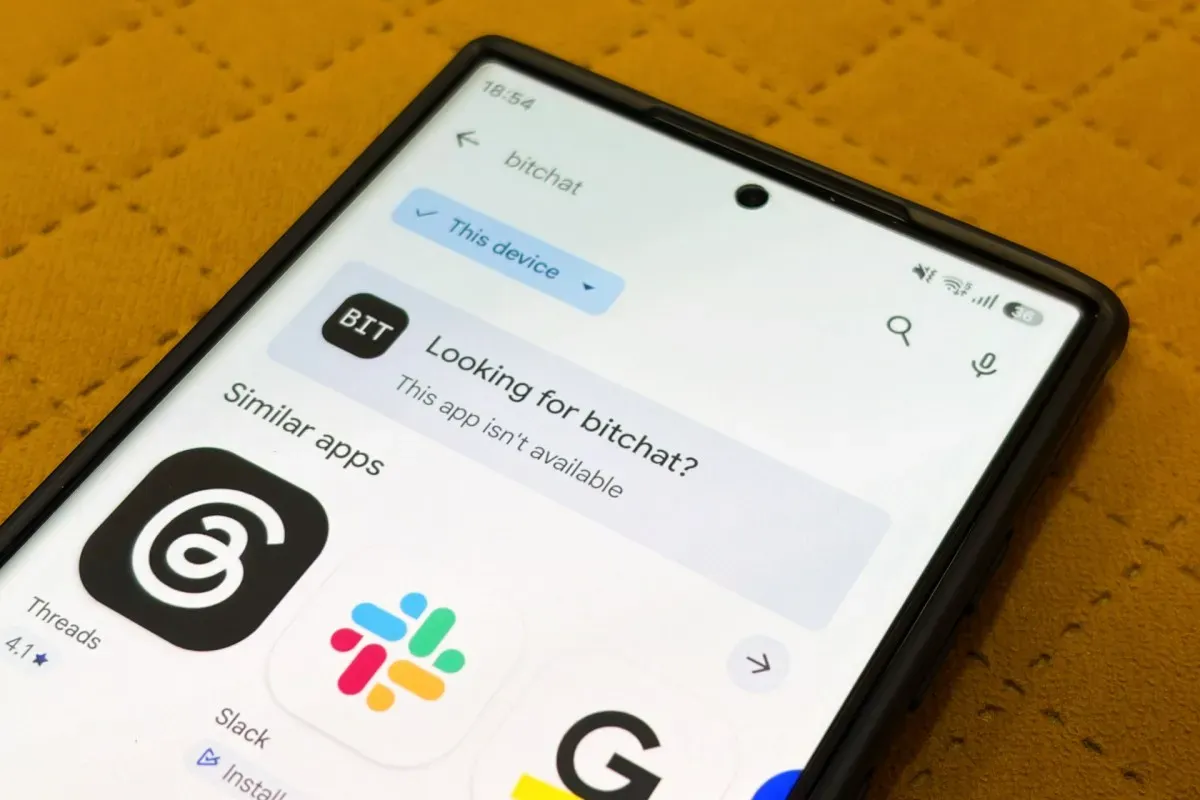
Bitchat, a decentralized messaging app developed by Jack Dorsey, has been removed from Apple's App Store in India following an order from the Indian government. This move comes months after New Delhi first sought to restrict access to the open-source software.
The Indian government issued the demand under Section 69A of the Information Technology Act, which is the country's primary legal provision for government-ordered online blocking. Apple received a notice from the Ministry of Electronics and Information Technology, as posted by Dorsey on X, indicating that Bitchat would be removed from its App Store in India.
Bitchat remains available on Apple's App Store outside of India, but access to the app through Apple's TestFlight beta-testing service is also blocked within the country. Furthermore, when checked on Saturday, Bitchat was no longer accessible for download through Google Play in India.
The removal of Bitchat from app stores and its website has raised questions about whether other companies and internet service providers have received similar instructions from the Indian government. Apple, Google, and India's IT ministry did not respond to requests for comment on this matter.
Bitchat, an open-source messaging app launched in July last year by Jack Dorsey, has vanished from Indian app stores following a government order. The app's architecture allows nearby devices to exchange encrypted messages using Bluetooth mesh networking, bypassing cellular networks and centralized servers. This feature has raised concerns among law enforcement agencies, who claim it hinders their ability to intercept communications or track users.
The Indian government had previously ordered GitHub to remove Bitchat repositories in July 2026, citing a provision of the country's information technology law that deals with intermediaries' liability for third-party content. The government claimed that Bitchat's architecture makes it difficult for authorities to monitor and trace users, particularly during internet shutdowns.
The order was based on Section A of India's IT law, which allows the government to block unlawful information but not necessarily a messaging app due to its ability to function offline. Digital rights advocates have questioned the legal basis for restricting software based on its functionality, arguing that it sets a worrying precedent.
The Internet Freedom Foundation, a digital rights advocacy group in New Delhi, has described the latest order as unconstitutional, pointing out that neither the blocking order nor the allegedly illicit content cited as justification have been made public.
The recent surge in protests across India has led to increased scrutiny of social media platforms, including Bitchat. Demonstrators have been using these apps to organize and share information during the protests. The government's decision to block Bitchat comes as authorities are struggling to contain the growing unrest.
Protesters in New Delhi took to the streets on Saturday, demanding the resignation of India's chief election commissioner over allegations of electoral roll manipulation. Police detained several individuals during the demonstrations. Internet services were suspended for 12 hours around Jantar Mantar on Friday, further limiting protesters' ability to communicate and organize.
The protests have led to a significant increase in interest in Bitchat among Indian users. Data from market intelligence firm Sensor Tower shows that India accounted for approximately 85% of the app's global downloads between July 17 and July 23. This is a notable shift, as just 30 days prior, the country made up only about 1% of Bitchat's downloads.
The block on Bitchat has sparked concerns among digital rights advocates in India. The Internet Freedom Foundation has described the move as unconstitutional, pointing out that neither the blocking order nor the allegedly illicit content cited as justification have been clearly specified.
As protests continue across India, social media platforms like Bitchat and Briar remain a crucial tool for demonstrators to stay connected and share information. The government's decision to block Bitchat has raised questions about the limits of online censorship in India.
The tech industry is abuzz with a flurry of announcements and developments that have left some wondering about the pace of innovation in various fields. Google has unveiled its latest Gemini 4 Argon model, touted as its most powerful one yet.
AMD has made a significant move by acquiring World Labs, a company founded by Fei-Fei Li, for $8.2 billion. This acquisition underscores the growing importance of AI and machine learning in the tech sector.
Facts based on reporting originally published by TechCrunch.
You may republish this story, in full or in part, if you credit Noti Group and link to it (licence CC BY 4.0). Photos are not included.