




Beverage Startup Jetty Enters Market with Everyday Hydration Focus
Jetty is launching a new line of electrolyte drinks and packets, initially available at Whole Foods and online through Target and Amazon.
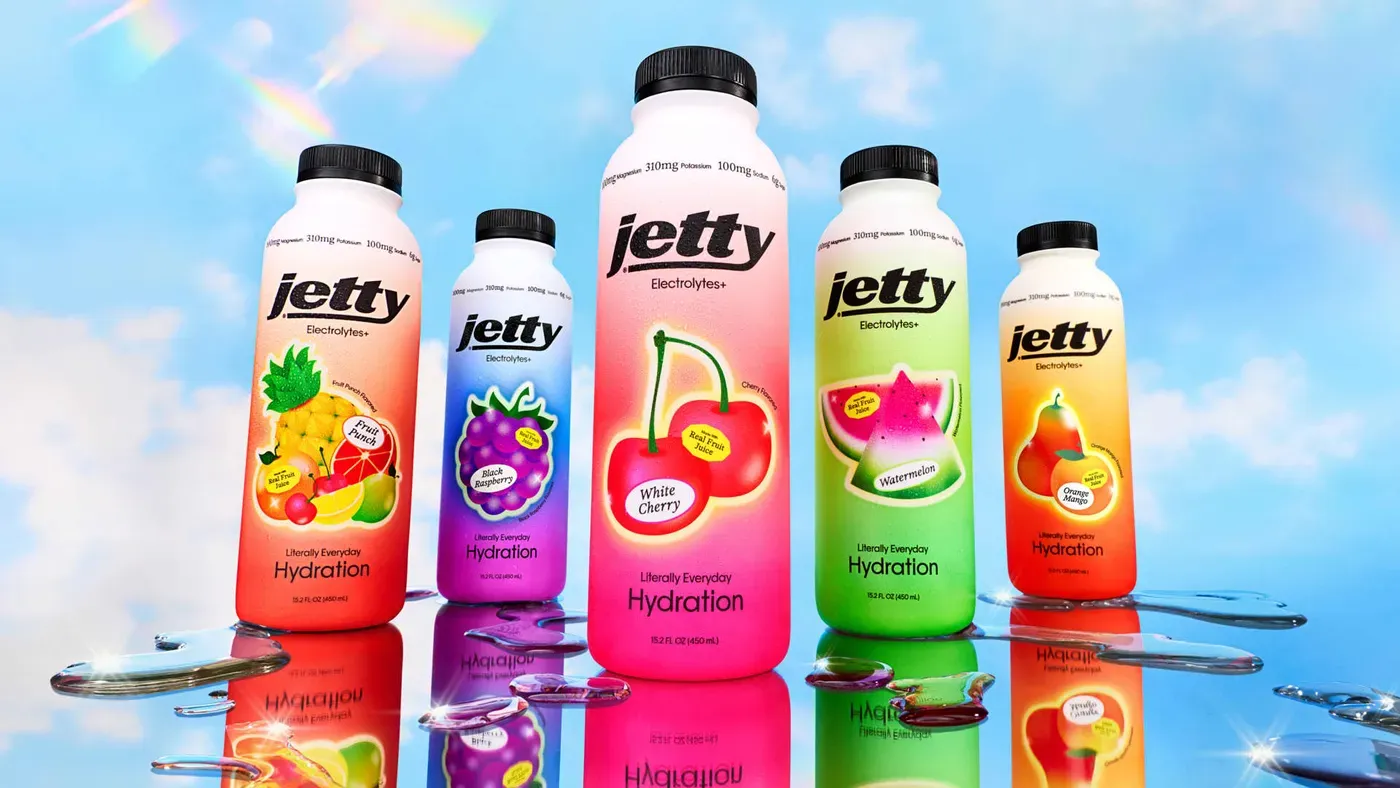
The founders of Poppi are launching a new beverage startup called Jetty, which targets everyday hydration rather than the high-performance needs of athletes.
Jetty's products will initially be available at Whole Foods grocery stores and online through Target and Amazon, offering drinks and ready-to-mix electrolyte packets for customers to purchase starting this Monday.
The company is taking on a formidable competitor in PepsiCo, owner of Gatorade, which dominates the US sports drink market with approximately 60% market share according to Numerator data. This marks a direct challenge between the Ellsworths' new venture and their previous employer's brand.
Gatorade has traditionally focused on providing electrolytes for athletes after intense exercise, but many consumers now drink sports drinks regularly even without engaging in strenuous physical activity. Jetty is positioned as an alternative to traditional sports drinks for people seeking a hydration boost without excessive sugar or electrolytes.
By targeting everyday hydration needs rather than high-performance requirements, Jetty aims to disrupt the market and carve out its own niche alongside other emerging brands in the electrolyte-fueled trend.
After stepping down from day-to-day operations at Poppi, Ellsworth had some free time on her hands for the first time in a decade. This newfound freedom allowed her to visit her doctor, where she began using a GLP-1 medication that helped her shed 60 pounds.
As Ellsworth's weight loss journey progressed, her husband Stephen noticed an unexpected side effect: his wife wasn't drinking enough water, even after working out at the gym. This observation sparked an idea for their new business venture, Jetty.
GLP-1 medications like Ozempic and Mounjaro can suppress thirst, which may seem counterintuitive given that staying hydrated is crucial to mitigating side effects such as nausea and headaches. In fact, many users of these medications struggle to drink enough water, making it essential for them to find more appealing hydration options.
Research suggests that GLP-1 users are more likely to consume functional beverages, with a staggering 44% of respondents in an EY-Parthenon survey reporting increased consumption of such drinks. This trend is not limited to users of these medications alone, as many consumers seek out flavorful and beneficial beverages regardless of their hydration needs.
Ellsworth believes that Jetty's target audience will be millennial mothers and Gen Z individuals who are increasingly disenchanted with traditional sports drink brands like Gatorade and Powerade. According to Ellsworth, this younger demographic craves more modern and appealing beverage options.
The demand for hydration products has been on the rise in recent years.
Data from SPINS reveals that dollar sales of hydration and electrolyte products surged 20% to $2.6 billion over the 52 weeks ending October 4.
This growth is not limited to a single demographic, as the category boasts a strong repeat buyer rate of 62%.
New entrants are also flooding into the market, with the number of new items in the hydration category increasing by 41% over the past two years.
The trend has caught the attention of major food and beverage companies, which are now looking to capitalize on the growing interest in hydration.
Companies like Kraft Heinz have introduced their own versions of electrolyte-rich beverages, such as Capri Sun juice pouches with added electrolytes.
The sports drink market has been experiencing a decline in sales as consumers increasingly opt for alternative hydration options. According to Numerator data, unit sales of sports drinks have dropped by 9.1% between 2022 and 2026.
This trend is evident even among major players in the industry. Coca-Cola took a significant hit when it wrote down the value of BodyArmor by over $1.7 billion after acquiring control of the brand for $5.6 billion in late 2021.
Jetty, a new beverage startup, aims to capitalize on this shift in consumer preferences with its range of electrolyte-rich drinks. The company's founders claim expertise in creating ready-to-drink beverages and are launching Jetty with five flavors: watermelon, orange mango, fruit punch, black raspberry, and white cherry.
Each 15.2-ounce bottle or 15-gram packet of Jetty contains a blend of essential minerals including sodium, potassium, and magnesium. Additionally, the products contain B vitamins, 3 grams of fiber, and 6 grams of sugar, without artificial sweeteners or dyes.
In comparison to traditional sports drinks like Gatorade Thirst Quencher, Jetty offers a lower-sugar alternative with comparable electrolyte levels. A 20-ounce bottle of Gatorade contains significantly less sodium and potassium than Jetty, along with 34 grams of sugar.
The founders of Jetty are aware that their new beverage is being positioned as a competitor to PepsiCo's Gatorade brand in the market for healthier sports drinks.
This knowledge likely comes from Ellsworth's experience with Poppi, which was acquired by PepsiCo and has since struggled to meet sales targets. The company's advertising efforts have been criticized for failing to resonate with Gen Z consumers across its portfolio of brands.
In particular, some critics argue that PepsiCo's attempts to rebrand its products as healthier options are insufficient, citing the example of Starry, a competitor to Sprite that has also failed to gain traction among younger audiences. This perceived lack of understanding of consumer preferences may be contributing to Poppi's underwhelming performance under PepsiCo's ownership.
The financial implications of this poor performance have been made clear by PepsiCo's recent regulatory filing, which estimates the fair value of potential performance-based payments to Poppi's prior owners at $12 million. This is significantly lower than the $300 million payment that was promised if certain targets were met by the third quarter of 2027.
Jetty's founders are confident that they have learned from past mistakes and are better equipped to succeed with their new brand, which has undergone rigorous testing and review before its launch at a larger scale than Poppi.
Jetty's funding has been entirely self-managed so far, with a total of $2.5 million invested in the brand.
The founders are now looking to secure additional funding, but this time they aim to attract investors who can bring more than just financial support. Instead of seeking venture capitalists willing to invest large sums, Ellsworth wants to partner with investors who have connections to celebrities and can help promote the brand at a lower cost.
Jetty has taken note of Gatorade's original flavor, lemon-lime, and is working on developing its own version. However, the brand has chosen to prioritize flavors that it believes will resonate with customers, ensuring that its products taste good from the start.
Facts based on reporting originally published by CNBC.
You may republish this story, in full or in part, if you credit Noti Group and link to it (licence CC BY 4.0). Photos are not included.