







Barclays Under Investigation for Private Credit Loan Practices
The Bank of England is conducting an investigation into Barclays' handling of private credit loans following a tip-off from a Barclays insider earlier this year.
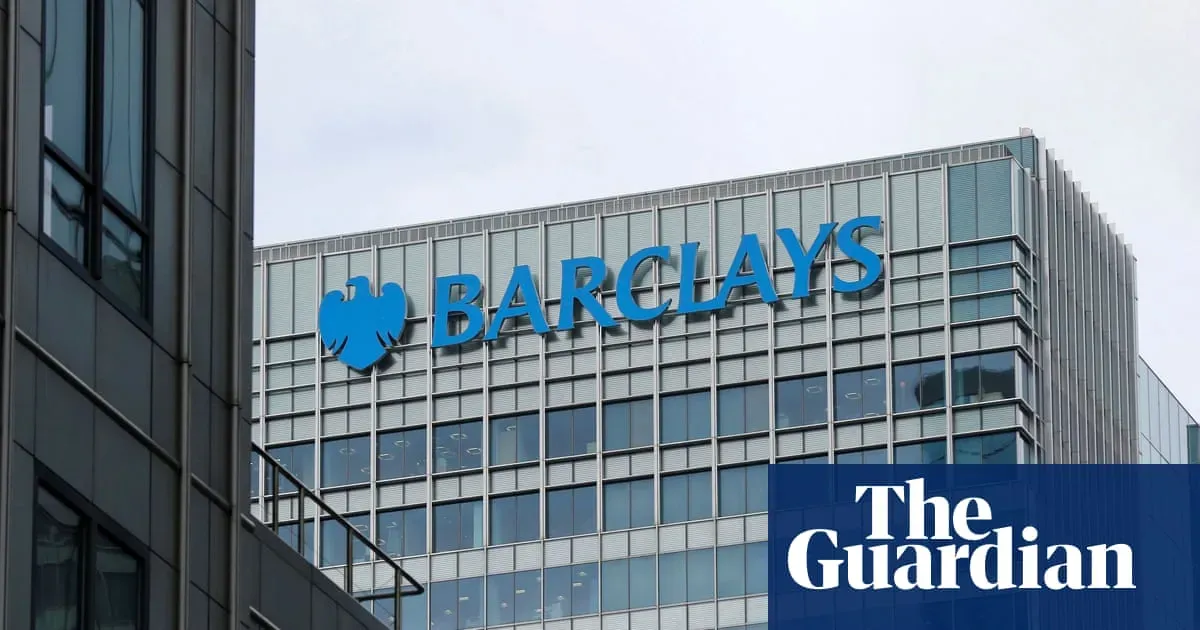
The Bank of England is conducting an investigation into Barclays' handling of private credit loans, a move that has sparked concerns about the bank's financial practices.
Regulatory authorities have been reviewing Barclays' management of derivatives used to finance its private credit lending business, following a tip-off from a Barclays insider earlier this year. These derivatives are complex financial contracts tied to underlying assets, and it appears they were incorrectly logged in Barclays' portfolio system.
As a result, the bank may not have held sufficient capital reserves to cover potential losses on these loans, potentially inflating its profits. The review is focused on the accuracy of Barclays' accounting for these derivatives, which could have led to an understatement of the bank's risk exposure.
Barclays has built up significant exposure to private credit lending, with sources suggesting billions of dollars in derivatives linked to these loans.
The recent downturn in Barclays' stock price has raised concerns about the bank's handling of private credit lending. Shares fell by 3.5% on Monday, making it the second-biggest faller on the FTSE 100 index amidst a broader sell-off in the banking sector.
This week's financial results are likely to be closely watched, with Barclays set to report its latest figures on Thursday. The release may prove particularly awkward for Katherine Braddick, who now heads the Prudential Regulation Authority after previously serving as a senior figure at Barclays.
Braddick has been recused from all matters related to Barclays until 2026, according to the Bank of England. Critics have raised concerns about lending standards in the private credit industry, where firms rely on investor money rather than customer deposits or loans.
Private credit firms operate with relatively less regulation compared to traditional banks, and have become increasingly important players in the shadow banking sector. As a result, many traditional banks have begun partnering with these firms or asset managers on private credit deals, seeking to tap into this booming market.
Regulators are sounding alarm bells over the private credit industry's lenient lending practices, warning that any fallout could have far-reaching consequences for traditional banks now heavily invested in this market.
Concerns have been exacerbated by a recent multibillion-pound surge in withdrawals from some private credit funds, prompting several to impose withdrawal limits on clients. This sudden shift in investor sentiment has left many in the industry scrambling to reassure their clients and maintain stability within their funds.
The private credit sector is still reeling from high-profile company failures, including Tricolor and First Brands, two US automotive companies that collapsed last year amid allegations of fraud. Barclays was among the banks hit by these collapses, suffering significant losses on both occasions, with a particularly severe £228m blow following the failure of Market Financial Solutions in February.
Facts based on reporting originally published by The Guardian Business.
You may republish this story, in full or in part, if you credit Noti Group and link to it (licence CC BY 4.0). Photos are not included.