





French Bond and Stock Markets Experience Selling Spree
Thousands of arrests were made across France over the weekend, leading to a wave of selling on its bond and stock markets.

France's bond and stock markets have experienced a fresh wave of selling, following violent protests that led to thousands of arrests and widespread destruction across the country over the weekend.
The unrest has unnerved investors, who are concerned that it will undermine Paris's efforts to cut spending and reduce its debt burden. This concern is reflected in the rising yield on France's 10-year government bonds, which reached a high of 4.94% on Monday after increasing by as much as 16 basis points.
The bond market sell-off has pushed France's borrowing costs close to their highest level in 24 years, making it more expensive for the country to raise funds. This development is significant because it widens the difference between French and German 10-year borrowing costs, which serves as a key indicator of the risk premium attached to French debt.
The widening gap in borrowing costs between France and Germany has been attributed to concerns about France's fiscal situation, with analysts warning that Europe may be heading back into a sovereign debt crisis.
The rise in France's two-year bond yield has accelerated, increasing by nine basis points to 3.64%. This development is likely linked to growing concerns about the country's fiscal situation.
France's instability has had a ripple effect on currency markets, with the euro plummeting to a 17-month low against sterling on Monday morning. The pound's value rose to €1.188, as investors reassess their confidence in France's economic prospects.
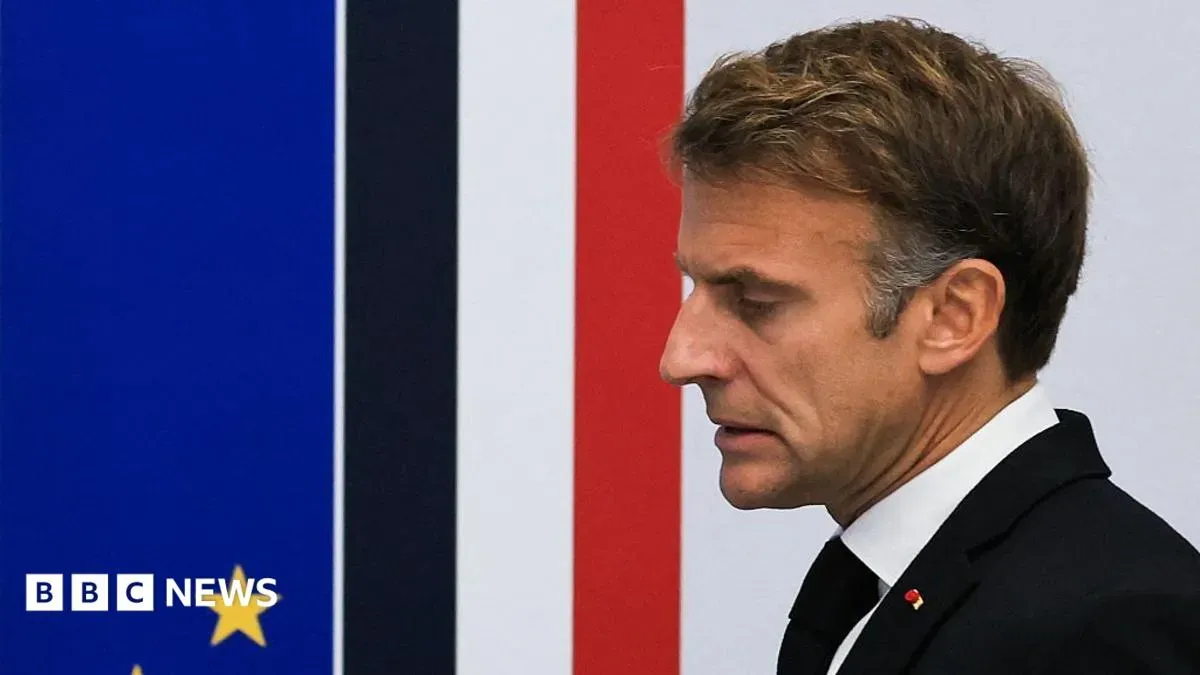
Violent clashes between protesters and police have become increasingly frequent across France, following weeks of peaceful demonstrations over school conditions and living costs. President Emmanuel Macron condemned the "unbridled violence" in a televised address on Sunday night.
The protests are putting pressure on international investors to reconsider buying French government bonds, known as OATs. Deutsche Bank's Jim Reid noted that the unrest will make it difficult for investors to feel entirely comfortable purchasing these securities.
France's already fragile economic situation has been dealt another blow as investors become increasingly uneasy about purchasing French government securities due to the ongoing unrest.
The 30-year bond, a benchmark for France's long-term borrowing costs, saw its yield rise by ten basis points to 5.46%, making it more expensive for the country to borrow money in the long term.
This increase will put additional pressure on France's public finances as the government prepares to pass a budget for next year that aims to rein in its deficit, which currently stands at 5.1% of GDP.
France's debt-to-GDP ratio is already high, standing at 115.6% in 2025, compared with 94.3% for the UK, and any further strain on its finances could have serious consequences for the country's economic stability.
The euro weakened against the US dollar on Monday, dipping by 0.4% at one point to $1.1197.
France's main stock market index, the Cac 40, took a hit, falling by 1.4% compared to a smaller decline of 1.1% on the pan-European Stoxx 600 index. This downward trend was mirrored in other European markets, with Italy's FTSE Mib dropping by 1.6% and Spain's Ibex losing 1.9%.
French bank stocks were among the hardest hit, with Société Générale and BNP Paribas experiencing losses of over 3%. Market analysts point to concerns about higher borrowing costs driving up France's debt-servicing expenses, which would further reduce its fiscal flexibility in a sluggish economic environment.
Facts based on reporting originally published by The Guardian Business.
You may republish this story, in full or in part, if you credit Noti Group and link to it (licence CC BY 4.0). Photos are not included.