




Unexpected Discovery Revealed About Vanilla's Properties
Scientists at Flinders University have discovered that the compound responsible for vanilla's flavor and aroma, vanillin, has antioxidant, anti-inflammatory, and antibacterial properties.
Scientists have made an unexpected discovery about vanilla's properties, revealing its potential to aid in healing chronic wounds and infections.
The research team at Flinders University identified vanillin, the compound responsible for vanilla's distinctive sweet flavor and aroma, as having notable antioxidant, anti-inflammatory, and antibacterial properties.
These properties make vanillin a promising ingredient in wound care products that can address several challenges associated with healing. The researchers found that vanillin's chemical structure allows it to interact effectively with other substances.
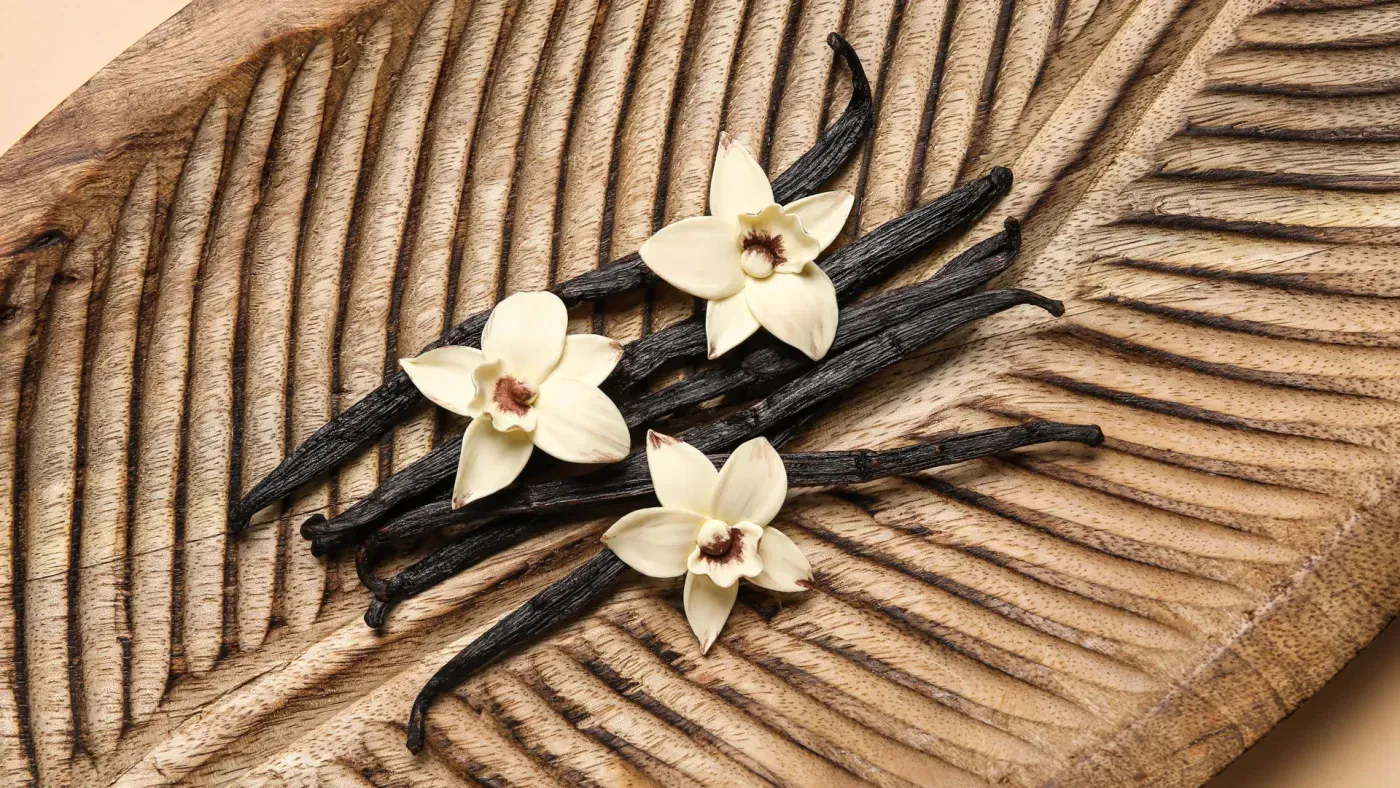
Vanillin is not only derived from natural vanilla pods but also manufactured synthetically using materials like clove oil or rice. Its versatility and widespread availability make it a valuable candidate for further medical exploration.
The molecular properties of vanillin have sparked interest in its potential use in developing specialized medical formulations, including materials that carry drugs or support tissue repair.
The researchers at Flinders University are exploring the potential of vanillin to address various medical challenges. By examining the molecular properties of this widely used flavor compound, they aim to unlock its hidden healing potential and apply it in innovative ways.
Professor Krasimir Vasilev, a leading expert in biomedical nanotechnology, emphasizes that vanillin's unique characteristics make it an attractive candidate for transfer into other areas, such as medicine. Its long history of safe use in the food industry lends credibility to its potential medical applications.
Chronic wounds and ulcers pose significant treatment challenges due to persistent inflammation, bacterial contamination, and oxidative stress. These conditions can lead to tissue damage and hinder the body's natural repair processes. A material capable of addressing these issues could offer a breakthrough in wound care.
Vanillin-based formulations may provide safe and multifunctional solutions for ulcer treatment, particularly when it comes to delivering hydrophobic compounds. The synthetic form of vanillin is abundant and cost-effective, making it an attractive option for targeted drug delivery and wound care applications.
Vanillin's chemical structure has been found to have unique properties that make it an attractive component for various medical applications. Specifically, its amphiphilic molecular arrangement enables it to interact with reactive oxygen species, cellular membranes, and polymeric matrices.
This interaction potential provides a foundation for incorporating vanillin into functional formulations designed to target specific health concerns. Researchers are now exploring the use of vanillin in treatments that require delivering hydrophobic compounds, which often struggle to dissolve in water and thus pose challenges for effective medication design.
To develop vanillin-based wound treatments, further research is needed to establish their efficacy and safety in patients through clinical testing. The investigation into vanillin builds on a broader effort at a university to identify medical properties in everyday food ingredients.
This initiative has already led to the development of a medical coating created from peppermint oil, which was published in the journal Small in February 2026. This nanoscale coating offers protection against bacterial infection, inflammation, and oxidative stress while remaining compatible with human tissue.
Professor Vasilev's experience with peppermint leaves sparked a curiosity about the biological explanation behind its beneficial effects on sore throats. He began investigating whether the properties of peppermint could be incorporated into a durable protective coating using advanced technology.
This inquiry led him to explore plasma technology, an area he has studied extensively for over two decades. Plasma processing enables the modification of material surfaces and the creation of thin functional coatings that can potentially integrate biologically active compounds into medical products.
The approach developed with peppermint is now being adapted to vanillin, a compound that holds significant promise in medicine. Its incorporation into medical products could be facilitated by its relatively simple molecular structure and compatibility with established manufacturing processes.
Vanillin's potential benefits extend beyond its biological properties, as it is an inexpensive and readily available substance. This accessibility makes it easier to incorporate into commercially manufactured medical products compared to more expensive or hard-to-source compounds.
The researchers' vision for vanillin's future applications includes advanced wound dressings, ulcer treatments, targeted drug delivery systems, and therapies supporting tissue regeneration. These practical considerations are crucial when transitioning promising scientific concepts from the laboratory to real-world medical uses.
Researchers believe that vanillin, commonly used in desserts and fragrances, could have a significant impact on wound care and regenerative medicine.
The compound's potential was highlighted by a recent study published in the International Journal of Pharmaceutics, which explored its use as a bioactive component in biomedical formulations. According to Professor Vasilev, coordinated engagement between academia, clinicians, and industry is crucial for bringing vanillin from the laboratory to real-world medical applications.
Vanillin's unique properties make it an attractive candidate for wound care and tissue regeneration. The study suggests that it could be used to develop more effective treatments for damaged tissue and support the healing process. This has significant implications for patients with chronic wounds, who often struggle with prolonged recovery times.
The successful transition of vanillin from a laboratory concept to a clinically deployable component will depend on collaboration between various stakeholders. With further research and development, this underutilized bioactive compound could make a meaningful contribution to the field of regenerative therapeutics.
Facts based on reporting originally published by ScienceDaily Health.
You may republish this story, in full or in part, if you credit Noti Group and link to it (licence CC BY 4.0). Photos are not included.