

Childhood Cancer Symptoms Often Overlooked by Parents
A recent survey suggests that nearly a third of parents feel uncertain about identifying cancer symptoms in their children.
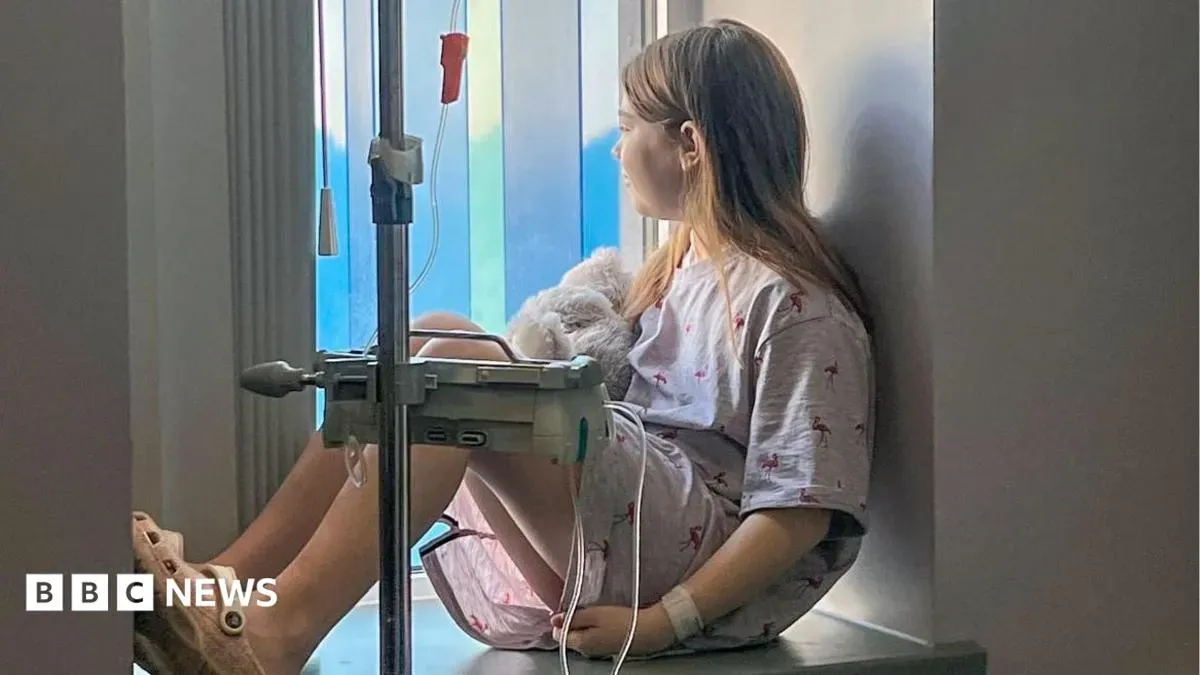
A recent survey suggests that nearly a third of parents feel uncertain about identifying cancer symptoms in their children, despite it being a leading cause of death from disease among those under 15 in the UK.
Each year, approximately 1,900 children between the ages of 0 and 14 are diagnosed with cancer, according to Cancer Research UK. This alarming statistic underscores the importance of recognizing early warning signs.
For some families, the journey to diagnosis can be long and winding. For instance, 13-year-old Amelia Carroll was initially misattributed her symptoms to fatigue and being out of breath after mild exercise. Her mother Gemma recalls thinking these were typical symptoms of being unfit and post-school exhaustion.
However, when Amelia began displaying unusual bruising, Gemma's concerns escalated - within a decade, Amelia received a diagnosis of acute myeloid leukaemia (AML).
A child's health can be unpredictable, making it crucial for parents and caregivers to recognize signs of potential issues early on.
According to medical guidelines, professionals should consider referring a child if they have experienced three persistent symptoms, visited their doctor three times, or had unexplained symptoms for over three weeks.
Despite advances in cancer treatment, many parents are still left wondering how to identify the warning signs. The statistics are reassuring, however: eight out of ten children diagnosed with cancer now survive beyond five to ten years after diagnosis.
Amelia's case highlights the often-subtle nature of childhood cancer symptoms. A single red bruise on her skin initially caught Gemma's attention, followed by increasingly severe bruising that left her child in pain and discomfort.
The optician who noticed Amelia's unusual blood vessels during a routine appointment inadvertently sparked further investigation into her condition, ultimately leading to a diagnosis of acute myeloid leukaemia.
Survival rates for childhood cancer in the UK are significantly high, exceeding 80%. However, even quicker diagnosis could lead to less intensive treatments, according to experts.
The time it takes for a child to receive a cancer diagnosis can vary greatly. In the UK, about half of children diagnosed with cancer get their diagnosis within two weeks. This means that nearly half of the children are waiting for an extended period, often up to 25 weeks, from experiencing initial symptoms to receiving a diagnosis.
The statistics on cancer diagnosis in the UK are staggering. New data reveals that there are over 400,000 new cases of cancer diagnosed every year, with only 54% being told within the 28-day NHS target window. Furthermore, an additional 2,300 teenagers and young adults between the ages of 15 and 24 are diagnosed each year.
The experiences of some families highlight the challenges of recognizing childhood cancer symptoms. Lynsey Swinscoe's son Jake was initially misdiagnosed with hayfever and fatigue before being diagnosed with stage three soft tissue cancer at the age of 13. His initial symptoms included a stuffy nose, watery eyes, and falling asleep after school.
The case of Jake highlights the importance of vigilance in recognizing childhood cancer symptoms. Even seemingly minor symptoms can be indicative of a more serious underlying condition. Experts emphasize the need for quicker diagnosis to minimize the impact on children's lives.
A mass discovered in Jake's nasal cavity led to a diagnosis of soft tissue sarcoma, and he underwent an extensive course of treatment.
This included nine rounds of chemotherapy and proton beam radiation, but unfortunately, the side effects were severe, causing seizures and making him feel extremely unwell.
Jake ultimately decided not to continue with further treatment and passed away at home on April 26, 2024, just two weeks shy of his 14th birthday.
His mother has chosen to honor Jake's memory by writing a book aimed at raising awareness about childhood cancer and ensuring that children like her son do not suffer in silence.
Facts based on reporting originally published by BBC News Health.
You may republish this story, in full or in part, if you credit Noti Group and link to it (licence CC BY 4.0). Photos are not included.