







Retainer Sacrifice Theory Gains Support in Ancient Egypt's First Dynasty
A new study re-examines skulls excavated from ancient tombs and finds signs of blunt force trauma, suggesting retainer sacrifice may have occurred.
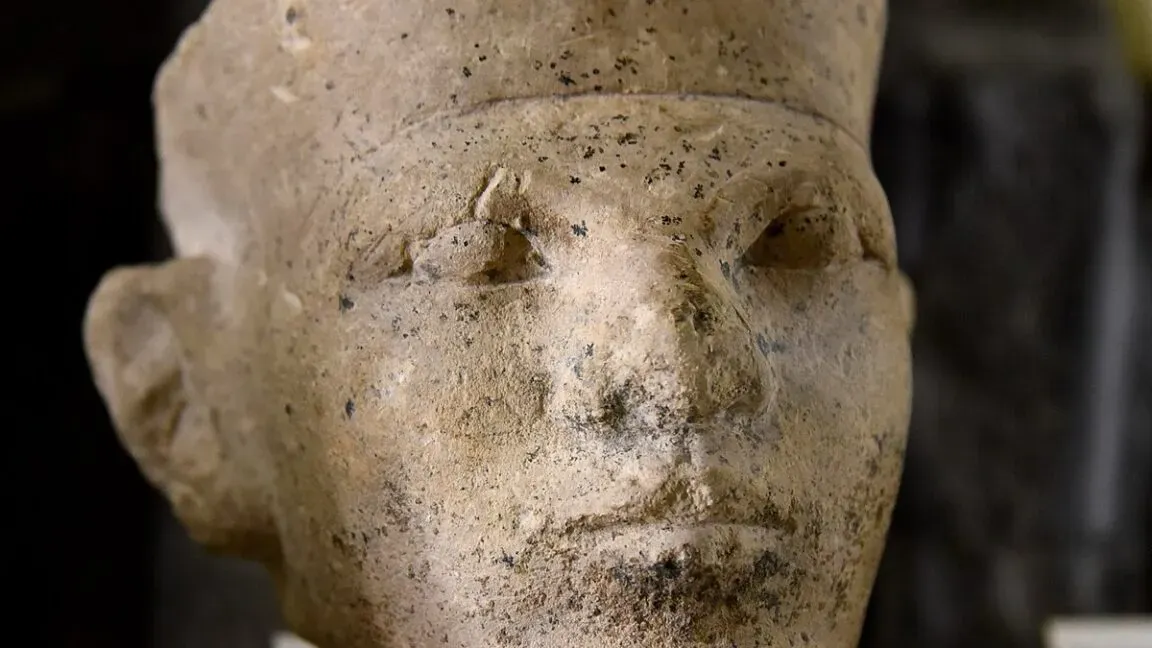
New forensic evidence has emerged that could support the long-debated theory of "retainer sacrifice in ancient Egypt's First Dynasty.
The earliest pharaohs were said to be buried with servants and officials who would serve them in the afterlife, but there is limited archaeological evidence due to the plundering and hasty excavation of many early Egyptian tombs.
A new study published in Frontiers in Environmental Archaeology re-examines a collection of skulls excavated from ancient tombs in the 1920s and found that over one-third show signs of blunt force trauma, suggesting they may have been victims of retainer sacrifice.
Bioarchaeologist Roselyn Campbell, who has studied human sacrifice for years, says that understanding violence is highly context-dependent. We have to be careful not to project our own ideas about violence onto other cultures, she warns, citing the legacy of colonial archaeology in Egypt where European excavators imposed their own interpretations on ancient Egyptian culture.
The study's findings are significant given the limited archaeological evidence available for this period and highlight the importance of re-examining existing data with a nuanced understanding of cultural context.
The debate over retainer sacrifice among ancient Egyptians has long been contentious, with some firmly convinced that it occurred and others dismissing the idea outright. However, Campbell suggests that a lack of thorough examination of the remains may be to blame for the stalemate.
Forensic science has made significant strides in recent centuries, and re-analyzing old evidence could provide valuable insights. Unfortunately, older sets of remains are often incomplete or have been modified for preservation purposes, destroying crucial forensic information in the process.
Campbell selected a set of human remains from the Abydos site in southern Egypt as a case study. The collection was first excavated by Flinders Petrie in the 1920s and includes 46 crania stored at Cambridge University.
The remains come from the Umm el-Qaab cemetery, which is believed to contain subsidiary burials of retainers for deceased First Dynasty rulers. Many grave markers bear names and official titles, mostly indicating lower to mid-level officials and artisans.
This particular site may offer the strongest evidence of retainer sacrifice in Egypt due to the large number of subsidiary graves surrounding royal tombs and enclosures. The graves were often filled and sealed simultaneously, which is less common in shared Egyptian burial sites.
Petrie initially believed that this site provided strong evidence for retainer sacrifice, given the unique characteristics of the graves and their relationship to the royal burials.
The meticulous notes and photographs taken by Petrie during his excavations provided valuable insights into the graves of ancient Egyptian retainer sacrifices.
Petrie's methods were a product of their time, as he focused primarily on analyzing human skulls, which was a common practice in the field at that period.
Phrenology, an outdated theory that linked cranial capacity to racial phenotype and intelligence, held significant sway during Petrie's era, with many researchers subscribing to its principles.
Campbell highlights that Petrie was not only influenced by these ideas but also actively promoted them, believing that a foreign culture must have contributed to the construction of Egypt's monumental architecture due to the supposed intellectual limitations of native Egyptians.
The mass reburial of long bones in a single pit was likely a consequence of the sheer volume of remains discovered during Petrie's excavations, with the focus being on preserving and analyzing the skulls rather than the rest of the skeletons.
Campbell acknowledges that while Petrie's attention to detail and note-taking were ahead of his time, they also reflect the biases and shortcomings prevalent in scientific research during that period.
Campbell's re-examination of the 46 crania revealed intriguing details about their biological sex, which aligned largely with Petrie's findings despite some limitations in making definitive conclusions based solely on skull analysis.
The skulls showed signs of linear fractures in approximately 39 percent of cases, suggesting blunt force trauma that would have knocked individuals unconscious and led to internal bleeding and likely death. Some skulls also exhibited sharp-force trauma, including chopping wounds to one eye socket.
Campbell's study highlighted the significant advancements made in forensic science over the past century, allowing for more accurate analysis of traumatic injuries on remains. She attributed Petrie's failure to note fatal trauma to his lack of knowledge about differentiating injury timing rather than any carelessness on his part.
The field has made considerable strides in understanding how bone reacts to various types of forces and insults at different stages of decomposition, which has improved the accuracy of forensic analysis. This increased awareness is crucial for distinguishing between injuries sustained during life or death versus those that occurred post-mortem, such as during excavation.
Campbell emphasized that her findings were not necessarily a criticism of Petrie's work but rather an acknowledgment of the limitations and biases inherent in scientific research during his time. The study aimed to provide a more nuanced understanding of the evidence available.
The presence of linear fractures on nearly 40 percent of the skulls underscores the significance of blunt force trauma as a likely cause of death for these individuals, lending further support to the theory of retainer sacrifice.
The type of weapon used in retainer sacrifice remains a topic of debate among experts. While it's often depicted as a mace wielded by Egyptian rulers, this would likely have caused depressed fractures, not linear ones. As such, it's more plausible that a flat, wide, and lighter instrument was employed.
Possible candidates for this type of weapon include a board or a makeshift wooden club. According to Campbell, even something as simple as a sandbag could have been used, although its weight might have caused excessive damage. The use of improvised weapons highlights the ingenuity and resourcefulness of ancient societies.
The emergence of retainer sacrifice can be attributed in part to the need for a new form of government to establish its authority over a large population. By controlling life or death, rulers could demonstrate their power and convince their subjects of their divine right to rule. It's likely that pre-existing beliefs in an afterlife also played a role.
The idea is that if retainer sacrifice were simply about demonstrating power through violence, it would have been easier to target low-status individuals without significant repercussions. However, the fact that officials and servants were often buried with their rulers suggests a more complex understanding of death and the afterlife.
Egypt's First Dynasty did not arise in isolation, but rather built upon existing societies along the Nile River. These earlier civilizations may have had evidence of violence or human sacrifice, which would have laid the groundwork for retainer sacrifice. What sets the First Dynasty apart is the scale of its burials, which quickly declined and became unsustainable.
The economic costs of regularly killing hundreds of people every 20 to 40 years would have been substantial, making it an impractical practice in the long term. This fact underscores the importance of understanding the context and motivations behind retainer sacrifice, rather than simply viewing it as a brutal practice.
New forensic evidence has been discovered that supports the theory of retainer sacrifice" in ancient Egyptian society. The practice, where loyal servants were killed to accompany their masters into the afterlife, has long been debated among historians and archaeologists.
This new evidence comes from a study published in Frontiers in Environmental Archaeology, which analyzed the remains of three individuals found in a tomb near Luxor. The researchers detected high levels of arsenic in the hair and nails of these individuals, suggesting they had ingested large amounts of the toxic substance before their deaths.
The presence of arsenic is significant because it has been linked to deliberate poisoning in ancient cultures. It's also worth noting that the study found no evidence of trauma or violence at the time of death, which further supports the theory of retainer sacrifice.
Facts based on reporting originally published by Ars Technica.
You may republish this story, in full or in part, if you credit Noti Group and link to it (licence CC BY 4.0). Photos are not included.