






Permanent Daylight Saving Time Proposal Stalls in Senate
A proposal to adopt permanent daylight saving time has sparked debate due to concerns over school start times and potential consequences for children traveling to school during darker mornings.
A proposal to adopt permanent daylight saving time has sparked debate in Washington D.C., with some lawmakers pushing for the change that would eliminate the annual return to standard time. However, researchers have sounded a warning about the potential consequences of such a shift.
The legislation, which has already been approved by 19 states including Washington, remains stalled in the Senate due to concerns over school start times. If implemented nationwide, permanent daylight saving time would result in later winter sunrises, leaving mornings darker from November through March.
This change would affect not only adults but also children traveling to school during these early morning hours. To understand the impact on kids, researchers at the University of Washington studied 14 states that have already approved measures supporting the change.
The study focused on combining data about school enrollment, start times, and geographic locations to determine how often students would need to travel before sunrise under permanent daylight saving time. The research team used this information to calculate the total number of trips in darkness that would occur if the proposal were implemented.
The researchers compared their findings with current practices where clocks are adjusted twice a year. This comparison aims to highlight the potential consequences for children traveling to school during darker mornings.
The results suggest that adopting permanent daylight saving time could lead to billions of additional trips to school in the dark, potentially increasing safety risks and reducing morning sunlight exposure for American children.
The study's findings suggest that implementing permanent daylight saving time would result in millions of additional school commutes taking place in darkness across several US states.
Washington state is among those heavily affected, with nearly 35 million extra trips to school happening before sunrise if the switch were made. This trend is echoed across other states, including Georgia, which stands out for having an estimated 71 million more dark morning commutes under a permanent daylight saving time system.
Nationwide, researchers estimate that permanent daylight saving time would lead to at least 2 billion extra trips to school before dawn compared to the current system. These numbers reflect a significant increase in morning darkness and its associated risks.
A review of US traffic records reveals a disturbing pattern: fatal crashes involving pedestrians are twice as likely to occur during dark mornings than after sunrise. This correlation underscores the potential dangers of permanent daylight saving time.
"It's called the 'Sunshine Protection Act' because you get an extra hour of light at the end of the day, but you take it from the morning," noted senior author Horacio de la Iglesia. "These dark mornings will inequitably affect children who have to go to school at a certain time."
The internal timing system, or circadian clock, plays a crucial role in regulating various bodily functions, including sleep, mood, and appetite. This delicate balance can be disrupted when individuals are deprived of morning sunlight, which has been shown to help synchronize the body's natural rhythms.
Children, in particular, may struggle to maintain their biological rhythms due to fixed school schedules that often clash with reduced daylight hours. As a result, they miss out on an essential opportunity to receive the morning light their bodies need to function optimally.
Researchers emphasize that sending children to school in the dark deprives them of valuable exposure to daylight during a critical period. This deprivation can have far-reaching consequences for their health and well-being.
The impact of permanent daylight saving time is not uniform across all communities, with some areas experiencing more pronounced effects than others. Schools situated near the western boundaries of time zones are particularly vulnerable due to late sunrise times in these regions.
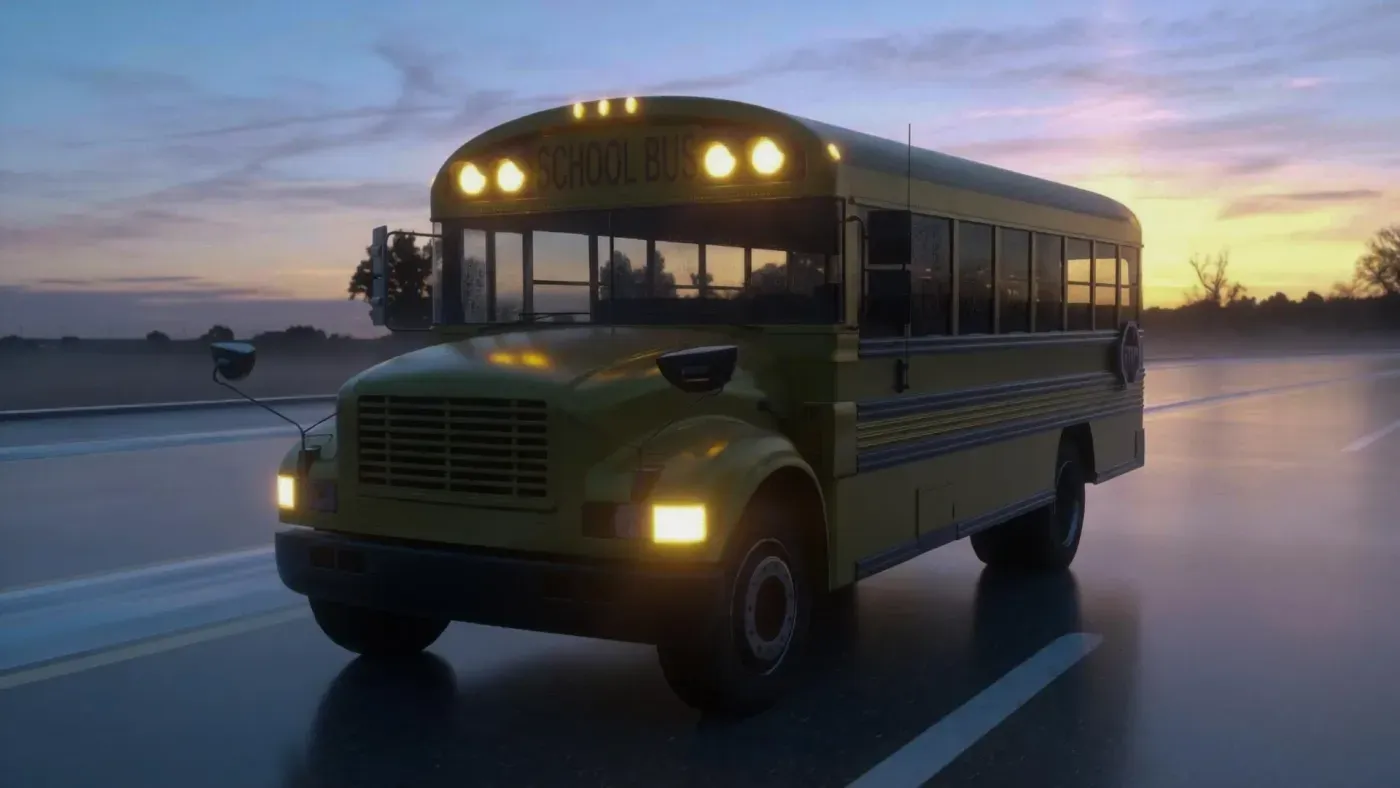
Schools that start classes early in the morning would face significant increases in dark commutes under a permanent daylight saving regime. This is exemplified by districts in states such as Mississippi and Alabama, where schools begin their day before 8 a.m.
In Mississippi and Alabama, for instance, an average of over 20 million school trips per state would take place in darkness with permanent daylight saving time. Under the current clock system, each state has approximately 2 million school trips in darkness.
Some districts may not currently experience dark commutes, but adopting permanent daylight saving time would change this reality for them. Schools in these areas would suddenly have to contend with students traveling to school in the dark.
The researchers' nationwide estimate of 2 billion additional dark commutes might be too low due to its broad assumptions. To make their projections, they relied on general assumptions about when students typically leave for school. This contrasts with the more detailed information used when calculating changes in specific states.
Students often start traveling to school even earlier than the assumed 8 a.m., which could lead to an underestimation of the actual impact. By assuming this later departure time, the researchers may have inadvertently downplayed the true extent of the problem.
The findings also raise questions about efforts to improve teenagers' sleep by delaying high school start times. As it stands, adolescents often have biological clocks that shift later than those of younger children and adults, making later school schedules beneficial.
Adolescents' biological clocks tend to run later than those of younger children and adults, which is why later school schedules are often beneficial. However, introducing such a change could have far-reaching consequences for daily routines. Families and workplaces might need to adjust their schedules accordingly, potentially disrupting the entire fabric of daily life.
According to Dr de la Iglesia, delaying school start times alone may not be enough to mitigate the effects of permanent daylight saving time. "If we do that, you will end up going to work later," he notes. This would lead to a ripple effect, causing everything to become delayed and potentially resulting in missed opportunities for evening activities.
The researchers' findings suggest that eliminating seasonal clock changes would come at a cost. While it's true that permanent daylight saving time would provide more evening sunlight during winter, this additional light would have to be taken from the morning hours. This could have significant consequences for children's safety, sleep patterns, and daily routines.
One of the key challenges in addressing these issues is finding a solution that doesn't disrupt the entire system. If school start times are delayed, it's likely that workplaces will need to adjust their schedules as well. This could lead to a situation where everyone becomes "realigned" to solar time, essentially reverting back to standard time.
The study's authors include several high school students and University of Washington biology undergraduates who contributed to the research. Their work highlights the complex trade-offs involved in debating permanent daylight saving time.
The debate over permanent daylight saving time has been ongoing, with proponents arguing it boosts productivity and safety, while opponents claim it disrupts sleep patterns and mental health.
This complex issue is further complicated by the fact that different regions experience varying effects of permanent daylight saving time due to factors such as latitude and climate.
Facts based on reporting originally published by ScienceDaily Health.
You may republish this story, in full or in part, if you credit Noti Group and link to it (licence CC BY 4.0). Photos are not included.