





UK Energy Regulators Poised to Fund China-Linked Battery Projects
Energy regulators in the UK are set to provide state funding for several battery projects linked to China, despite concerns about foreign interference in European energy systems.
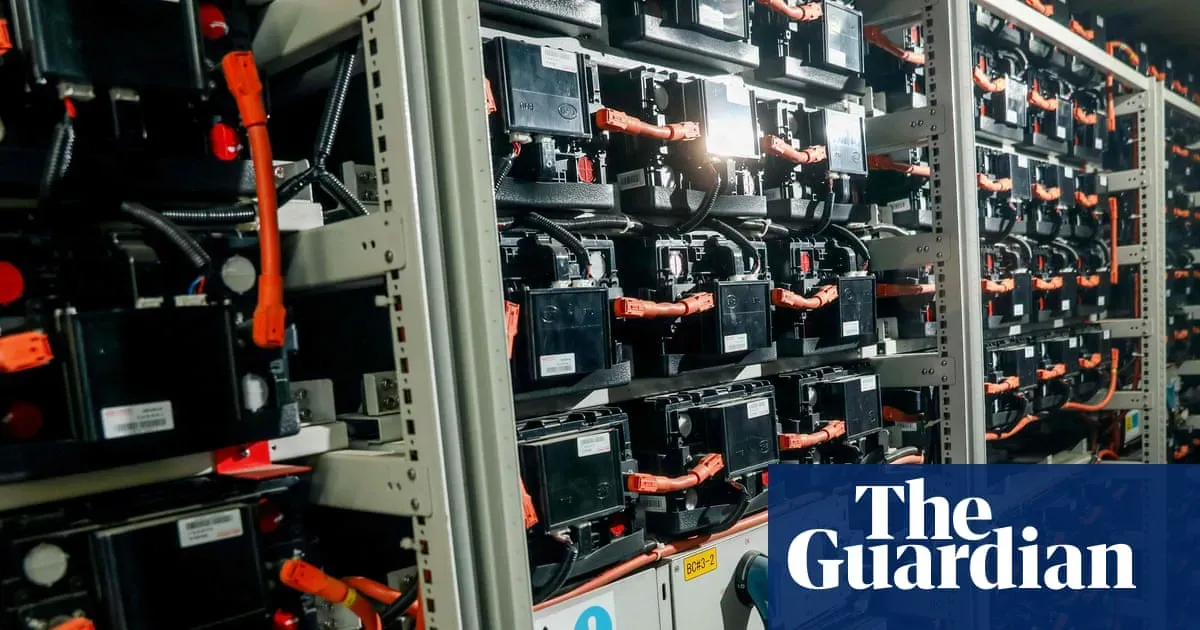
Energy regulators in the UK are poised to provide state funding to a number of battery projects linked to China, despite growing concerns about potential foreign interference in European energy systems.
The dominance of lithium-ion batteries, typically manufactured in China and operated with Chinese software, is evident on Ofgem's provisional shortlist for a new "long duration energy storage scheme. This list was published in June and features 16 projects vying for financial support from the UK government.
A total of 11 battery projects were able to outcompete homegrown renewable energy storage technologies due to their relatively low cost, which made them more attractive to investors. The selected projects include some backed by developers that regularly rely on Chinese battery makers.
One such project was recently targeted by a German cybersecurity company in an ethical hack" that claimed to have accessed hundreds of thousands of solar installations across Europe. This move has further highlighted the risks associated with relying on foreign technology in energy storage systems.
Ofgem's assessment criteria for its new battery support scheme are under scrutiny from industry experts, who argue that they do not adequately consider the security and economic benefits of backing British storage technologies over cheaper Chinese imports.
The selection process for the UK's new battery support scheme has been met with skepticism from industry experts, who argue that it doesn't adequately consider the security implications of backing Chinese-linked projects.
Several British companies have expressed concern about the government's approach to selecting winners in the scheme, including Invinity Energy Systems, which had initially planned to manufacture its vanadium flow batteries in the UK. The company is now reconsidering this decision due to Ofgem's limited selection of battery technology.
A recent report by Michael Collins warned that Europe was vulnerable to economic and national security risks due to its reliance on Chinese-made green technology. While Ofgem takes into account each project's proposed IT and security measures, these are primarily assessed in terms of their potential impact on delivery timelines rather than the risk of security breaches during the projects' lifetime.
The regulatory body doesn't appear to specifically consider the long-term security risks associated with Chinese-linked battery projects, despite developers being expected to comply with general cybersecurity guidelines. This omission has raised concerns among industry experts who argue that Ofgem's approach is too narrow in scope.
A spokesperson for Ofgem acknowledged that the regulator assessed projects against the government and parliament's legal and policy framework, but added that consultation responses are still being carefully considered before final decisions are made.
The UK government's plans to fund Chinese-linked battery projects have raised concerns about national security.
Field Energy, one of the companies vying for funding, has been shortlisted for five projects and has a history of sourcing its technology from Envision Energy, a company closely tied to the Chinese Communist party.
Statera, another contender, also has three shortlisted projects and has relied on Envision and Sungrow, a Chinese solar and battery maker, for batteries in the past. Sungrow was targeted in an ethical hack earlier this year.
The companies involved have insisted that they prioritize security and comply with national security guidance at their sites.
Facts based on reporting originally published by The Guardian Business.
You may republish this story, in full or in part, if you credit Noti Group and link to it (licence CC BY 4.0). Photos are not included.