Love Untangled Director Discusses Commercial vs Independent Film Experience
Netflix's Korean romance "Love Untangled" director Namkoong Sun discussed the challenges and benefits of working on a commercial film compared to her independent projects.
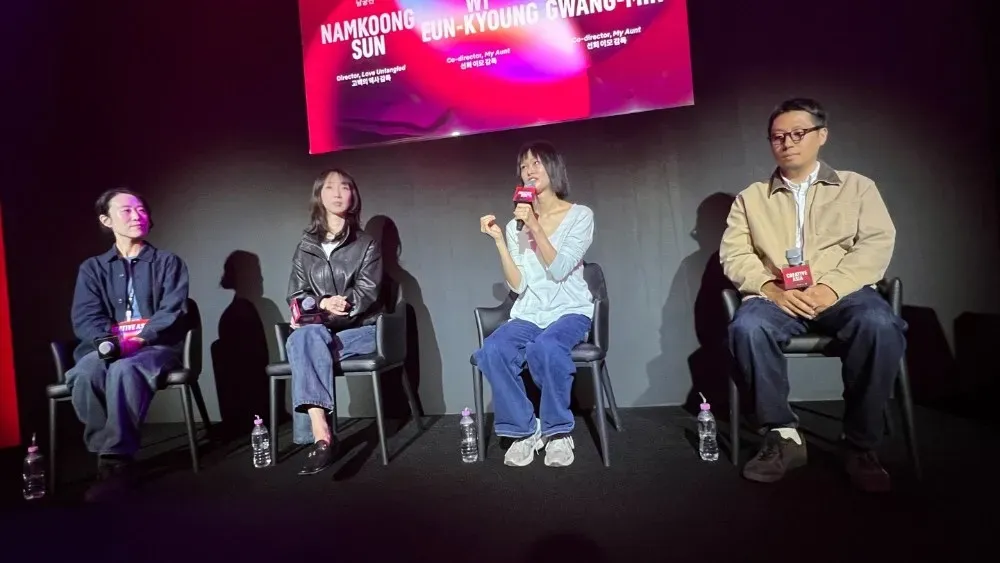
Netflix's Korean romance "Love Untangled director Namkoong Sun highlighted the paradox of working on a commercial feature compared to her independent films. While the scale and scope were vastly different, she said that once cameras started rolling, the experience felt surprisingly similar.
In conversation with industry peers at the Busan International Film Festival and Netflix's Creative Asia panel New Voices in Film, Namkoong spoke candidly about the freedom that came with working on a larger budget project. However, this freedom also brought its own set of pressures and responsibilities.
Namkoong's background is rooted in independent filmmaking, having directed two features, Ten Months" and "Time to Be Strong, which were released theatrically without major studio support. She joined the team for Love Untangled during the adaptation stage and was drawn to the project as a chance to take on something new after tackling complex social issues in her previous work.
According to Namkoong, she was offered the opportunity to join Love Untangled just when she was looking to shift gears creatively. With two years between the production office opening and release, the director had ample time to focus on bringing her vision to life within a relatively short timeframe.
Namkoong emphasized that working within a system that prioritized the film's success meant there were some creative liberties taken, but also raised questions about accountability and responsibility in the process.
The involvement of Netflix staff in the production process allowed for close collaboration between Namkoong and her team. This level of integration enabled them to make changes to the script that aligned with the film's central theme of happiness.
To recreate the atmosphere of 1990s Busan, the production team built a replica of the Gwangan Bridge under construction, adding a crucial element of authenticity to the period piece. The attention to detail was essential given the modest budget for such a specific setting.
As Namkoong emphasized the importance of creative freedom, she also acknowledged the responsibility that comes with it. She encouraged younger directors to take their role seriously and make the most of the opportunities available within a system that prioritizes success.
Despite the benefits of streaming releases, Namkoong expressed her longing for the traditional theater experience. The shared experience of watching a film together in a crowded cinema is something she missed during the release of Love Untangled.
The challenges faced by Namkoong Sun's earlier releases were compounded by unfortunate timing. Her film Ten Months premiered during the initial year of the pandemic, when festivals and cinemas were severely restricted. The press screening for Time to Be Strong coincided with the declaration of martial law in Korea, effectively overshadowing any attention it might have received.
This experience seems to have been particularly disheartening, given that My Aunt, a 24-minute short film directed by Namkoong, has found success on Netflix. The film tells the story of a dog groomer who takes care of an abandoned dog and is visited by her niece after 10 years. It won three prizes at this year's Mise-en-scène Short Film Festival.
Ryu, the lead actress in My Aunt, drew inspiration from her own childhood when she was raised by her fifth aunt and later cared for an abandoned dog. Despite initial reservations about acting in the film, Ryu took on a leading role and co-directed with her husband Song. The couple worked collaboratively throughout the production process.
The trust built between them through their partnership is evident in their recollections of past collaborations. They mentioned that previous experiences had been marked by disagreements over the phone, but this time they were able to communicate openly and honestly without filters getting in the way.
Song's role as co-director involved overseeing the directing on set, while Ryu took charge of post-production. The couple's shared experience and open communication seem to have contributed positively to the film's success.
The success of Love Untangled has been a game-changer for Korean independent filmmakers, who often struggle to find an audience and secure funding.
Namkoong Sun's experience as a director is a prime example of the challenges faced by indie filmmakers in Korea. The festival circuit can be unpredictable, with even well-received films struggling to secure a wider release.
The availability of digital platforms like YouTube has democratized film distribution, allowing anyone to upload their work and reach a global audience. However, this shift also creates new challenges for filmmakers, who must navigate the complexities of online promotion and discoverability.
Korean indie filmmakers often face significant hurdles in securing funding for their projects, with limited resources available to support emerging talent. The uncertainty surrounding a film's post-production fate is another major concern, as directors struggle to predict whether their work will be seen by a wider audience.
The lack of infrastructure in Korea to support independent filmmaking is a pressing issue, with many films struggling to secure theatrical releases due to the costs involved. This creates a difficult environment for filmmakers, who must rely on festivals and online platforms to showcase their work.
The financial constraints of independent filmmaking in Korea remain a significant challenge for creators like Ryu, who expressed concern over the cost of producing her film My Aunt". With limited platforms and interest in indie films, filmmakers often have to rely on their own funding to bring their projects to life.
Song, another Korean filmmaker, has personally funded all his films, citing capital as the main obstacle. However, he has no complaints about the process, instead enjoying the creative freedom that comes with shooting a film. For him, the experience of bringing a story to life is what matters most.
The three filmmakers are now focused on writing screenplays for their next projects, with Namkoong planning to set her next film in present-day Busan. She sees the city as a unique blend of modernity and traditional culture, offering a wealth of inspiration for her storytelling.
Facts based on reporting originally published by Variety.
You may republish this story, in full or in part, if you credit Noti Group and link to it (licence CC BY 4.0). Photos are not included.