





Groundbreaking Discovery Reveals Unexpected Link Between Viruses and Cellular Structures
University of Miami researchers have made a significant discovery about the origins of cellular structures known as encapsulins, suggesting an intricate dance of co-evolution between viruses and these tiny protein compartments.
A groundbreaking discovery by University of Miami researchers has shed new light on a long-standing mystery in the field of evolutionary biology. The team's findings reveal an unexpected connection between viruses and tiny protein compartments within cells, offering fresh insights into how some of life's earliest biological structures may have emerged.
The conventional understanding of the origins of cellular structures known as encapsulins had suggested they evolved from viruses. However, this new evidence paints a more complex picture, implying that viruses and encapsulins may have repeatedly evolved from one another over millions of years in an intricate dance of co-evolution.
This remarkable discovery has significant implications for biotechnology and our understanding of the origins and early evolution of life on Earth. It also raises intriguing possibilities about the biological functions of viruses, which scientists may have previously overlooked or underestimated.
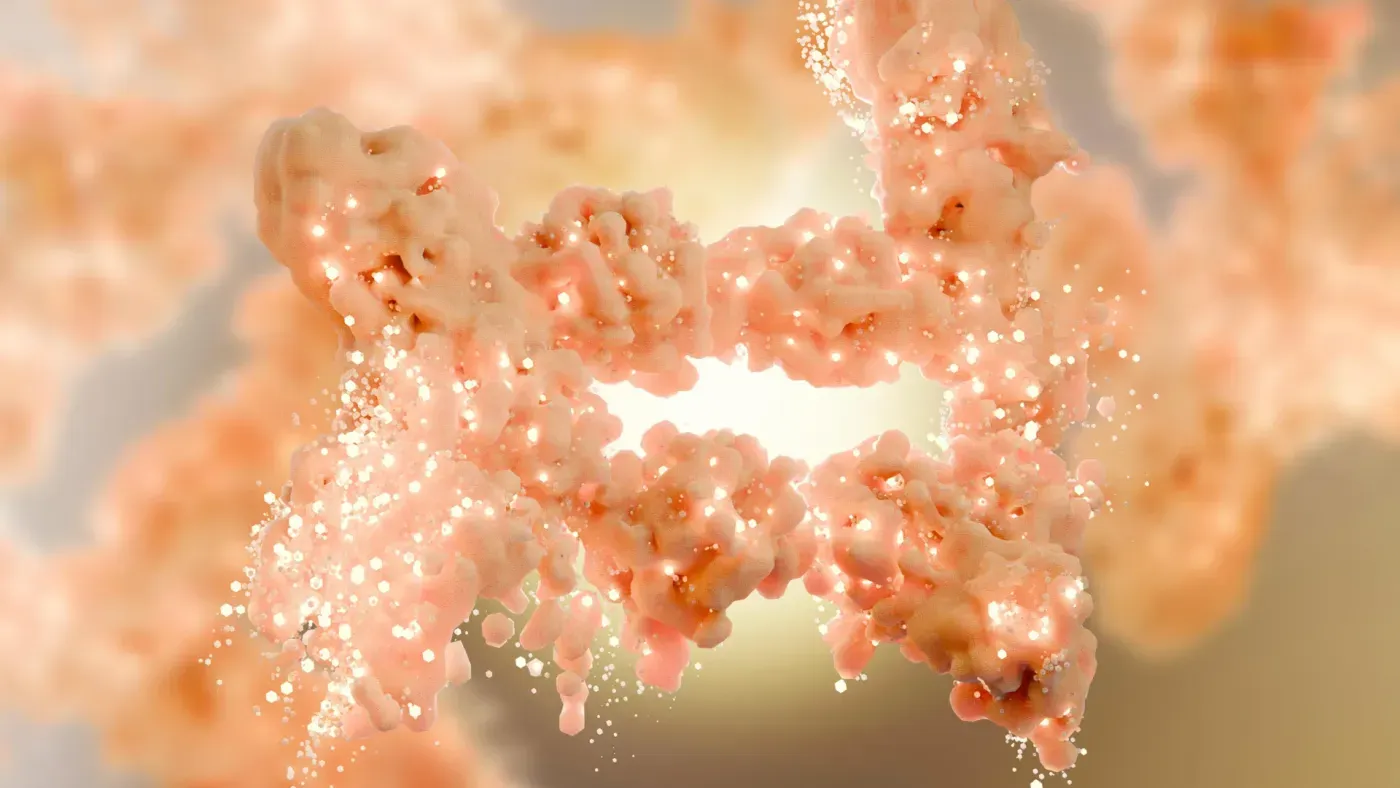
Researchers at the University of Miami identified proteins that fold into a unique three-dimensional structure known as the HK97-fold, found in both viruses and encapsulins. These proteins can assemble into protective shells, highlighting their crucial role in safeguarding cellular contents.
The newly discovered viruses possess characteristics associated with both viruses and encapsulins, making them potential evolutionary intermediates between the two. By studying these unusual viruses, researchers may gain valuable insights into how increasingly complex biological systems first arose on our planet.
The HK97-fold proteins have been found to play a crucial role in both cellular lineages and viruses, raising questions about their origins and functions.
These versatile proteins can form shells that enclose biochemical reactions, but they also serve as genetic protectors for viral genomes, highlighting their dual purpose in the world of biology.
According to Abelardo Aguilar, first author of the study, these proteins are particularly interesting because they can build compartments with two distinct roles - a characteristic that sheds light on the fundamental processes underlying life itself.
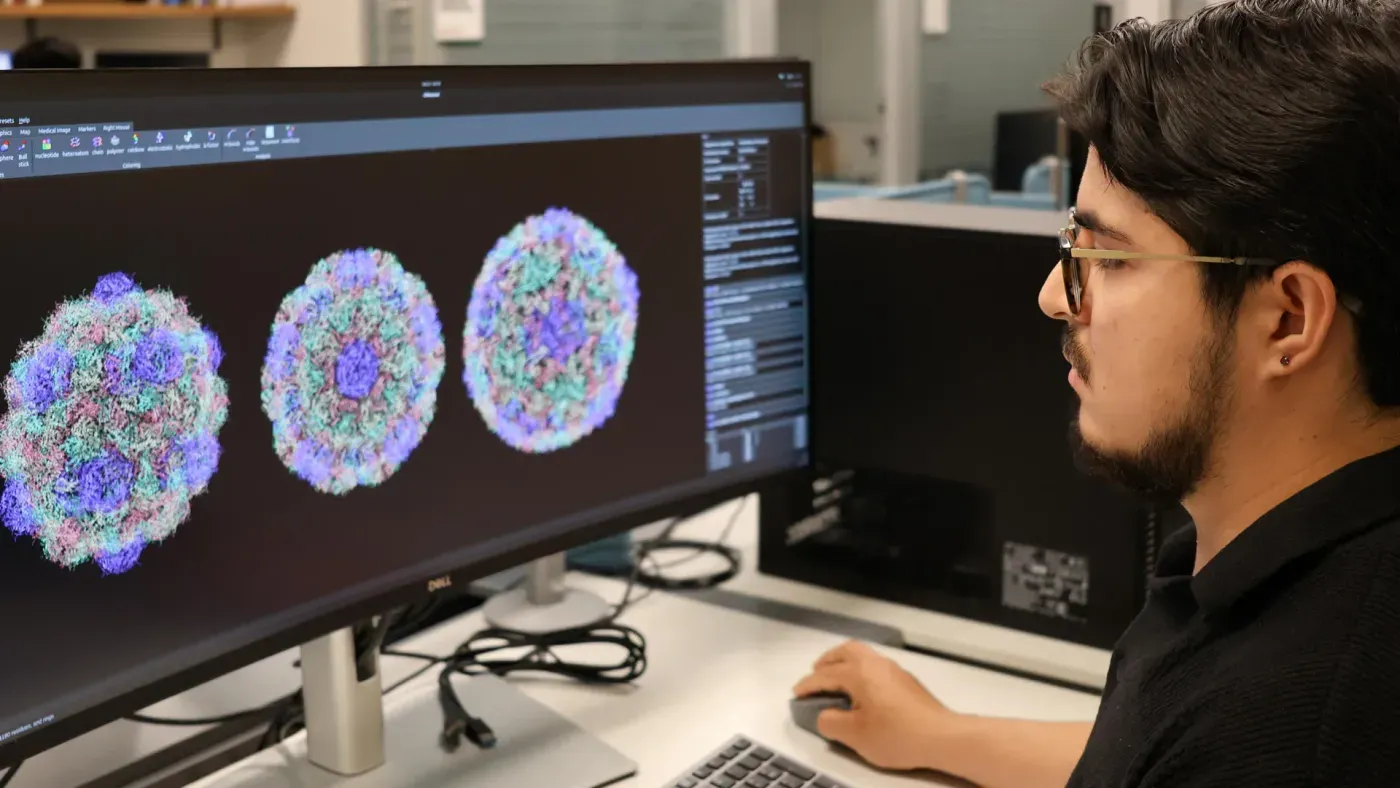
The team used artificial intelligence tools and bioinformatics techniques to analyze billions of DNA sequences and identify previously unknown viruses that contain HK97-fold proteins in their structures.
The research team's analysis of vast DNA sequences has uncovered a wealth of information on previously unknown viruses that contain HK97-fold proteins in their structures. This discovery is significant because it allows scientists to explore evolutionary relationships and adaptations that were previously inaccessible due to the inability to culture these viruses in a laboratory setting.
Genetic data from environmental samples collected worldwide, including soil, seawater, wastewater, the human gut, and other locations, have been integrated into databases such as IMG/M. These resources are associated with the U.S. Department of Energy's Joint Genome Institute and the University of California, Berkeley. This approach has greatly expanded the scope of viral research by enabling scientists to study viruses that were previously unexplored.
Luque noted that sequencing technology has provided unprecedented access to information on viruses whose hosts remain unknown or cannot be cultured in a lab. The majority of viruses are notoriously difficult to grow in a laboratory, Luque explained, but now we have the ability to investigate these elusive organisms. This newfound understanding is poised to revolutionize our comprehension of viral evolution and adaptation.
The researchers' findings also shed light on the possible functions of viral protein shells, which have traditionally been seen as mere containers for genetic material. However, their model proposes that procapsids, immature viral protein shells, may serve as a bridge between viruses and encapsulins, allowing them to share molecular properties and capabilities. This raises intriguing possibilities about the versatility of viral capsids.
In particular, certain forms of viral capsids might not only protect and package genetic material but also facilitate biochemical reactions within their structures. This suggests that the boundaries between viruses and encapsulins may be more fluid than previously thought, with significant implications for our understanding of evolutionary relationships and molecular functions.
The study's findings have sparked fresh discussions about the multifaceted roles of viral capsids in ecosystems. Researchers are now pondering the possibility that these protein structures could facilitate biochemical reactions, thereby expanding their potential functions beyond mere infection.
This idea challenges traditional views on viruses and highlights the need for a more comprehensive understanding of their behavior. Scientists may need to reevaluate their focus from solely infectious stages to consider the broader roles of viral particles in nature.
Viral capsids are often overlooked, but they could be crucial in various environments, according to Aguilar. He emphasizes that scientists should explore these structures further to uncover their hidden functions and capabilities.
The study's innovative approach combines AI tools with computational biology to analyze protein structure and physical behavior. This synergy has enabled researchers to tackle complex evolutionary questions that were previously difficult to address.
By applying this framework to poorly understood viruses, the project aims to shed light on their biological capabilities and potential impacts. The methods developed in this research could also have far-reaching applications in understanding emerging pathogens and newly discovered viruses.
The innovative research has opened up new avenues for studying viruses by combining advanced tools and physical insights with well-crafted questions.
This breakthrough approach allows scientists to tackle complex evolution-related queries as well as investigate emerging pathogens and newly discovered viruses. The versatility of the methods developed in this study enables researchers to adapt them to various contexts, making it a valuable tool for future research endeavors.
The successful integration of cutting-edge techniques and fundamental understanding has paved the way for significant advancements in the field of virology, ultimately shedding new light on the intricate mechanisms governing virus evolution.
Facts based on reporting originally published by ScienceDaily Health.
You may republish this story, in full or in part, if you credit Noti Group and link to it (licence CC BY 4.0). Photos are not included.