





General Motors Unveils Expansion of Super Cruise Technology Across Vehicle Lineup
General Motors has announced plans to expand its semi-autonomous driving system, Super Cruise, across nearly all vehicles in its lineup, including pickup trucks and crossovers.
General Motors (GM) is pushing back against criticism of its electric vehicle (EV) strategy, emphasizing its commitment to electrification and autonomy despite the current US market environment.
At this year's GM Forward event, company executives unveiled plans to expand Super Cruise technology across nearly all vehicles in their lineup. This semi-autonomous driving system will be available on a wide range of models, including pickup trucks and crossovers, not just the Escalade IQ as previously announced.
The company is putting its Super Cruise technology through rigorous testing, with over 1 million miles (1.6 million kilometers) covered each month in both virtual and real-world environments. This extensive testing aims to ensure that vehicles can not only navigate complex routes but also perform tasks independently.
According to GM's head of product, Sterling Anderson, the goal is for vehicles to become more than just transportation devices. By leveraging advanced technology, cars could potentially take on various tasks, enhancing daily convenience and productivity.
Anderson acknowledged that this vision might raise concerns about the potential for vehicles to assume too much autonomy, blurring the line between what a car can do and what a human should be responsible for. However, he emphasized that the technology is intended to augment user experience, not replace it.
The expansion of Super Cruise technology across GM's lineup reflects the company's focus on improving vehicle quality, reducing development time, and achieving its goals in electrification and autonomy despite industry headwinds.
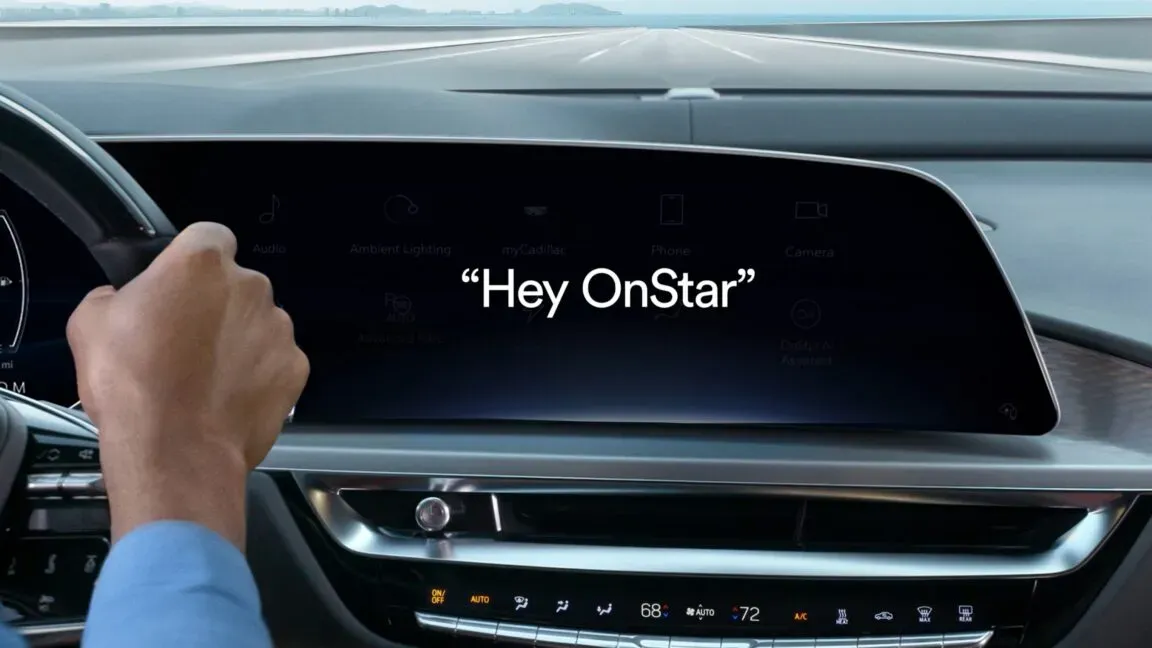
GM's newly announced OnStar AI is set to play a significant role in enhancing vehicle user experience. The system will utilize learning capabilities to understand drivers' habits and preferences. For instance, if a driver frequently orders takeout from a particular restaurant, the car may prompt them to place an order for pickup upon arrival.
Trust is a crucial factor here, with GM emphasizing that a car can be more trusted than other technologies like mobile phones. This is because people often form strong emotional bonds with their vehicles. Anderson suggests that if a car were to suggest a driver's favorite restaurant, it would likely be accepted as a legitimate recommendation.
OnStar AI will not only learn drivers' habits but also provide them with valuable insights into using their vehicle effectively. For example, if a driver is unsure about the meaning of a warning beep, they can ask OnStar for clarification. The system can then provide an explanation, such as a speed limit warning.
The specialized nature of OnStar AI allows it to be integrated seamlessly with the car's systems in a way that other models cannot. This integration enables the AI to access detailed information about the vehicle and its capabilities, making it more effective at providing helpful insights and recommendations.
As part of its efforts to enhance vehicle capabilities and customer experience, General Motors is taking advantage of new onboard computing power to perform complex tasks locally without relying on cloud connectivity. This local processing capability will enable vehicles to analyze and respond to their surroundings more quickly and efficiently, although a connection to the cloud could potentially provide additional benefits such as improved performance or increased safety features.
One example of this approach in action is the potential for vehicles to crowdsource data from other cars to anticipate road conditions. If multiple drivers have experienced traction control issues on a particular stretch of road, their vehicles can share that information with others approaching the same area, allowing them to receive warnings and adjust their driving accordingly.
In addition to these features, GM's ecosystem is designed to keep customers engaged within its own system. For instance, if a driver is running late to pick up their child from practice, OnStar AI could assess the situation and redirect the vehicle to a nearby takeout restaurant to grab dinner instead.
Building trust with customers remains a top priority for GM as it develops and implements these advanced features. This involves establishing a foundation of transparency and security that must be carefully maintained in order to earn and retain customer loyalty.
To this end, GM's new infotainment system will include the ability to record footage from onboard cameras, which can then be uploaded to the cloud for secure storage and access. However, these videos are encrypted end-to-end, meaning that even GM itself cannot decrypt them without compromising security.
GM's approach to data management is guided by a commitment to customer trust above all else. By prioritizing transparency and security, the company aims to build a relationship with its customers based on mutual understanding and respect.
GM's recent efforts to prioritize transparency and security are a significant departure from its past practices, particularly when it comes to handling customer data. The company has faced criticism in the past for selling customers' data without their knowledge or consent, often to insurance companies.
This shift in attitude is a welcome change, as it suggests that GM is taking steps to rebuild trust with its customers. By acknowledging and addressing concerns about data misuse head-on, the company is demonstrating a commitment to transparency and accountability.
GM's work on fully autonomous vehicles is also underway, with Rashed Haq, VP of Autonomous Vehicles, sharing insights into the development process. According to Haq, the company's approach to level 4 autonomy focuses on two key factors: safety and roadcraft.
Safety in this context encompasses not only the well-being of vehicle occupants but also that of the general public. To ensure this, GM is investing heavily in testing, both in the real world and digitally. This combination of training data and open vocabulary allows the company to assess complex scenarios and make informed driving decisions.
GM is keenly aware that its vehicles must not pose hazards or obstacles on the road, and this concern drives the development of its autonomous driving capabilities. To avoid congesting streets and blocking traffic, GM aims to create vehicles that can navigate roads safely and efficiently.
One potential benefit of self-driving cars is their ability to perform tasks beyond just transporting passengers from point A to point B. For example, a vehicle could be programmed to go pick up dry cleaning or drop off groceries while the owner is occupied with other activities.
However, this vision for the future depends on consumers trusting GM's vehicles and technology enough to rely on them for these types of errands. Until that level of trust is achieved, it remains to be seen how widely adopted such features will be.
GM has also announced its plans for a new generation of EV architecture, which utilizes LMR battery technology with lithium manganese-rich chemistry. This innovation promises energy densities comparable to those of nickel-manganese-cobalt batteries but without the high cost associated with cobalt.
The use of this more affordable battery chemistry could enable GM to offer a wider range of electric vehicles, potentially including some budget-friendly models such as the limited-run Bolt.
To remain competitive globally, General Motors must deliver affordable autonomy built on trust and safety, which would be a distinct offering from US automakers.
This approach could give GM an edge in taking on international competitors, as it would provide consumers with a unique value proposition that combines affordability with advanced technology features.
Facts based on reporting originally published by Ars Technica.
You may republish this story, in full or in part, if you credit Noti Group and link to it (licence CC BY 4.0). Photos are not included.